Horn types and genes
A Veilhorn can only have 1-2 horns, which must be located on their forehead or between the ears. The exception is if the Polycerate mutation is present, which can cause more than 2 horns to grow. The horns can be as large as you can fit within the design template canvas (without resizing/moving the lineart or resizing the canvas), or as small as you want as long as both the horn's shape and type is easily identifiable.
Horn range
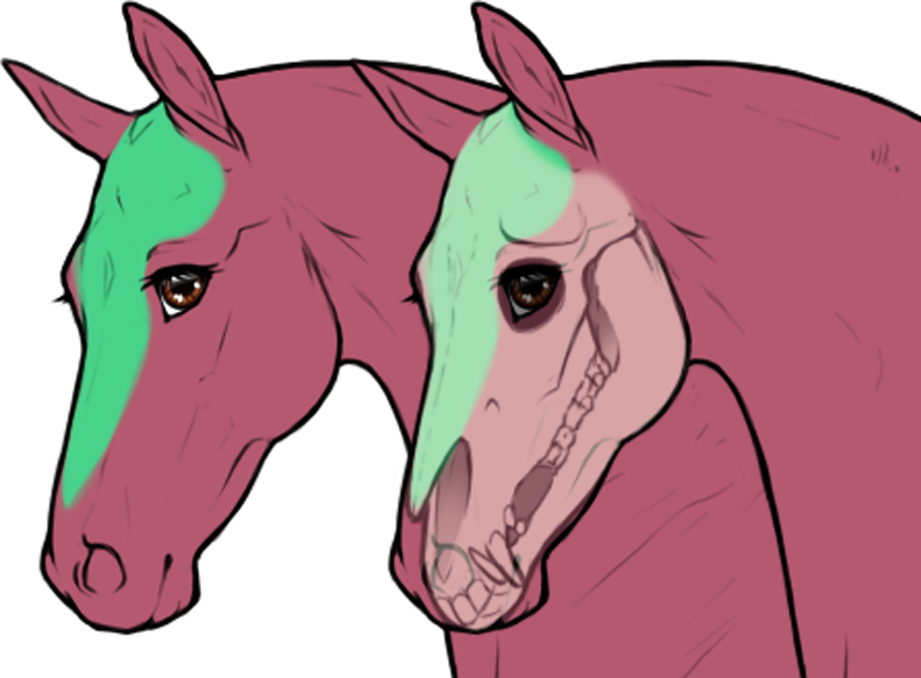
Veilhorn horns grow from the skull, the primary 1-2 horns need to be placed somewhere within the green range on the example.
Polycerate horns are allowed to grow outside the green range (for example on the jaw, neck or spine) as long as the primary 1-2 horns are still correctly placed within the allowed range.
Horn shape
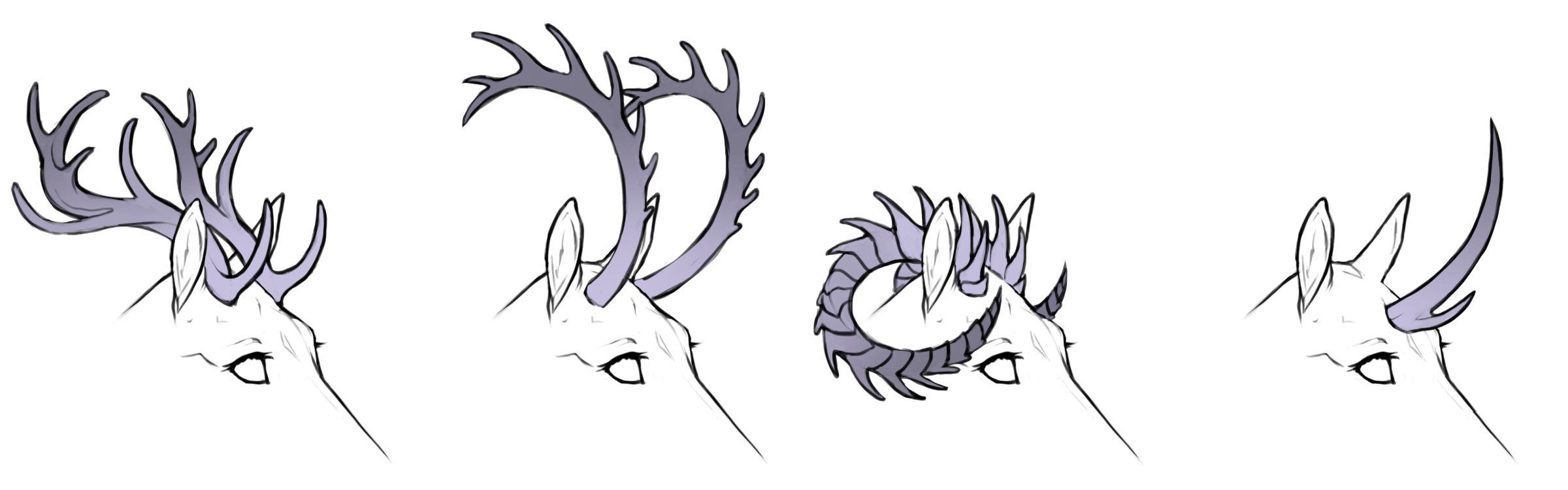
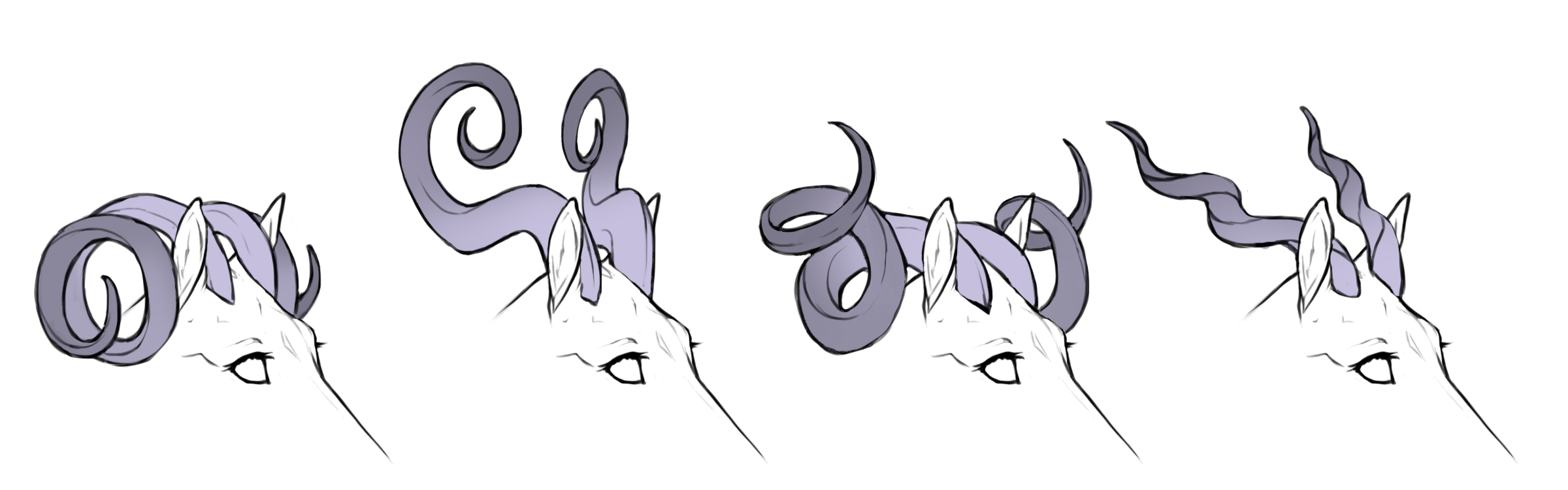
The horn shape is determined by the H/h/h+ gene, with the following possible combinations:
- Straight: HH or Hh
- Curved: hh or Hh+
- Coiled: hh+ or h+h+
Horn type
The horn type is determined by the A/a/B/b gene, with the following possible combinations:
- Smooth: aa, ab, or bb
- Twirled: Aa or Ab
- Ridged: Ba or Bb
- Spined: AA, AB or BB
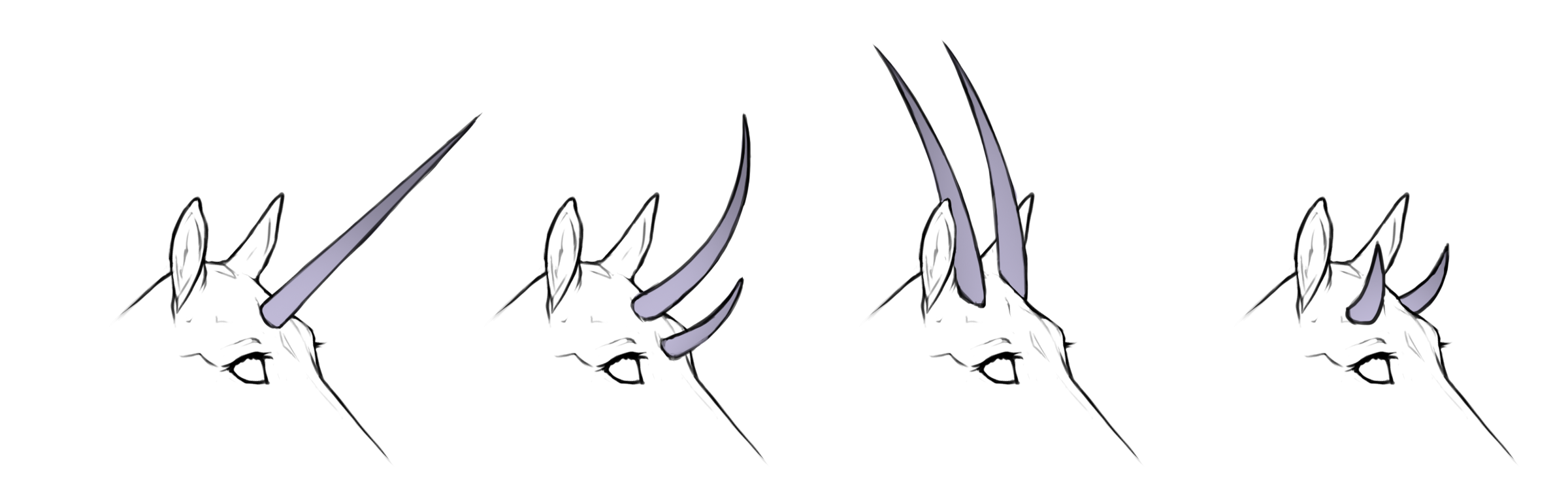
smooth straight
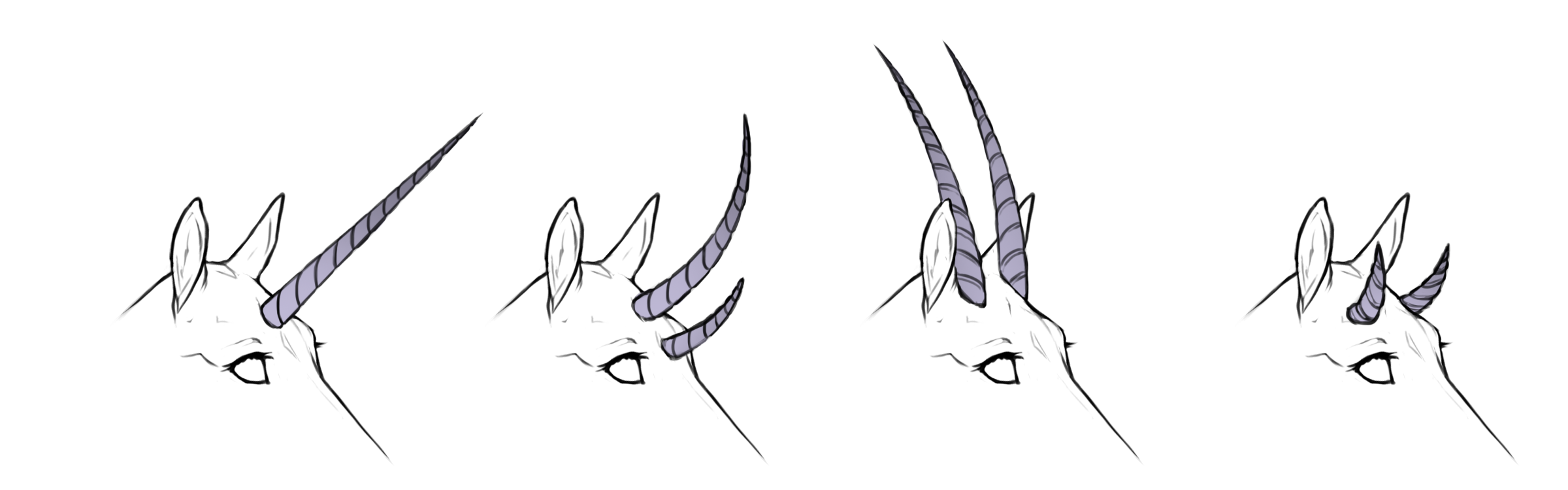
twirled straight
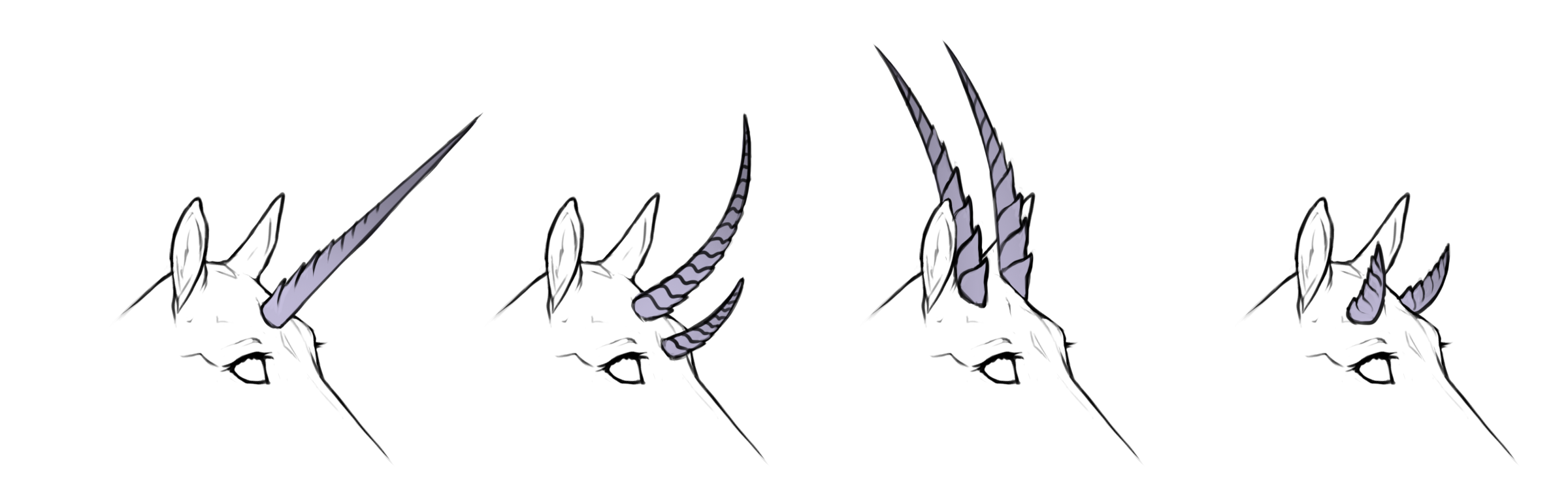
ridged straight
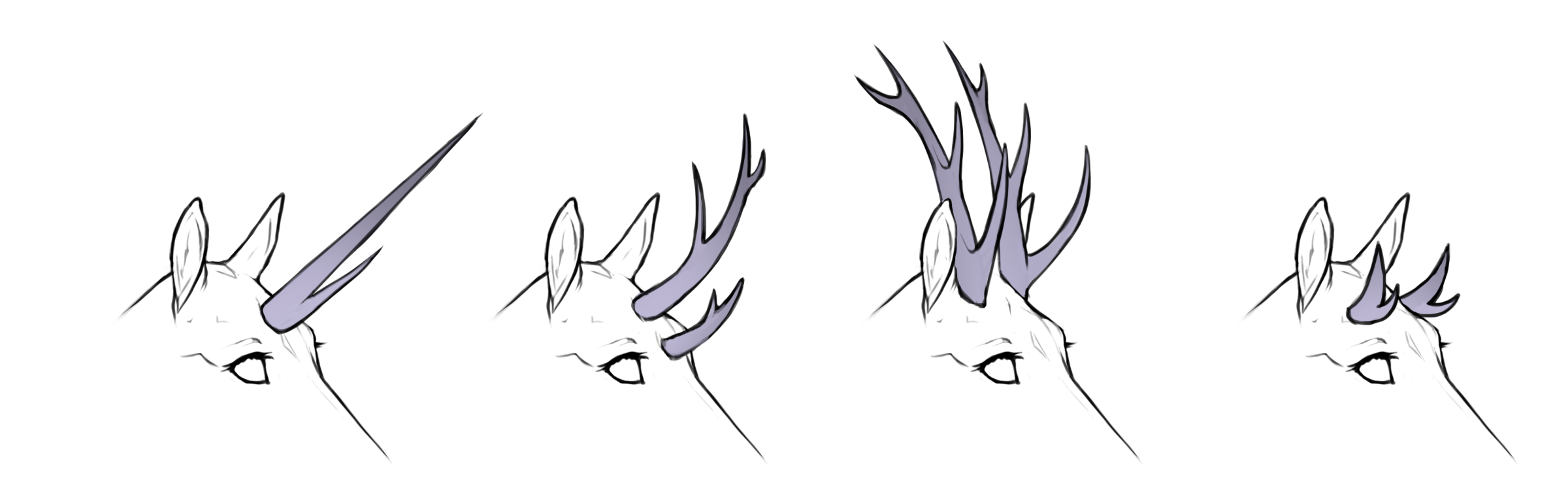
spined straight
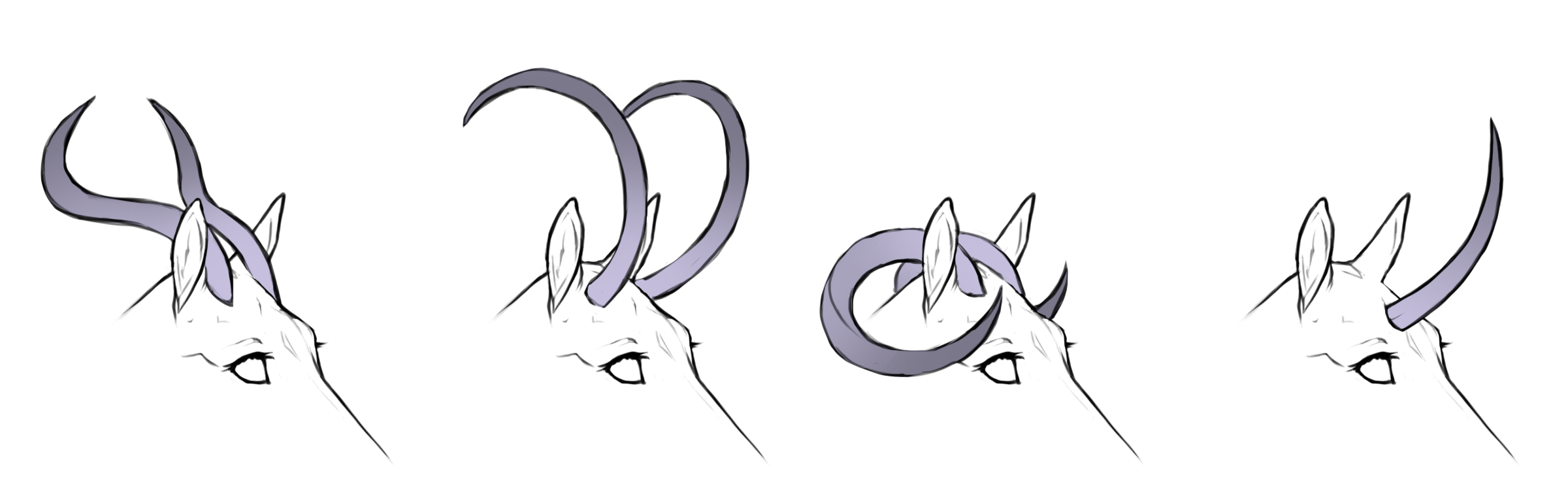
smooth curved
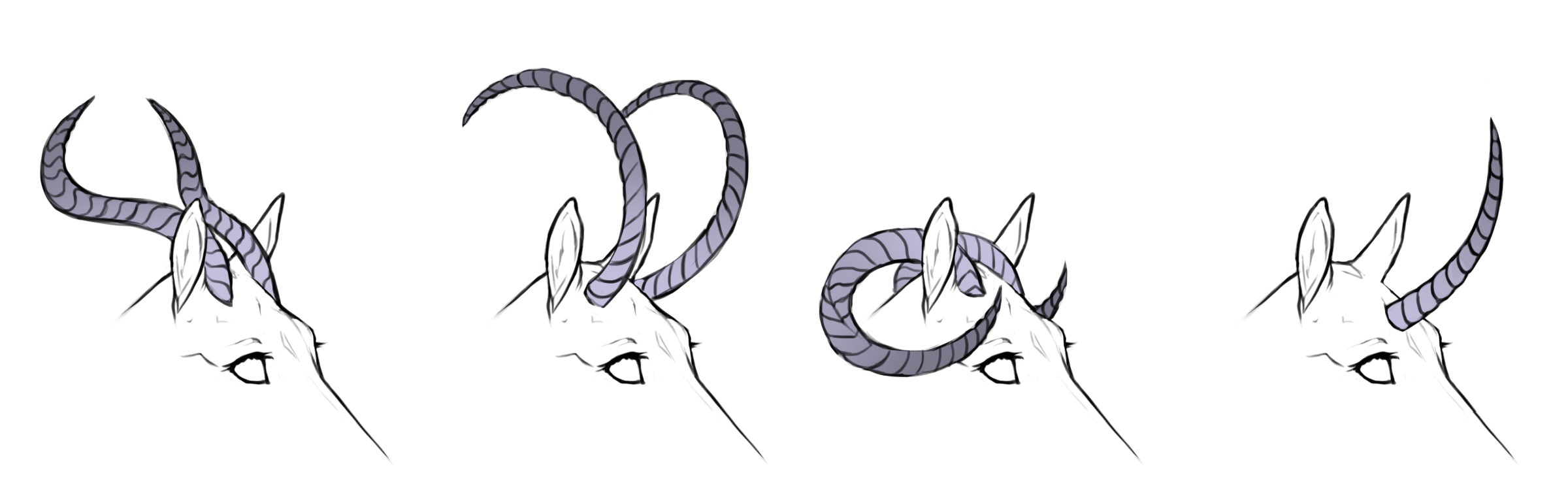
twirled curved
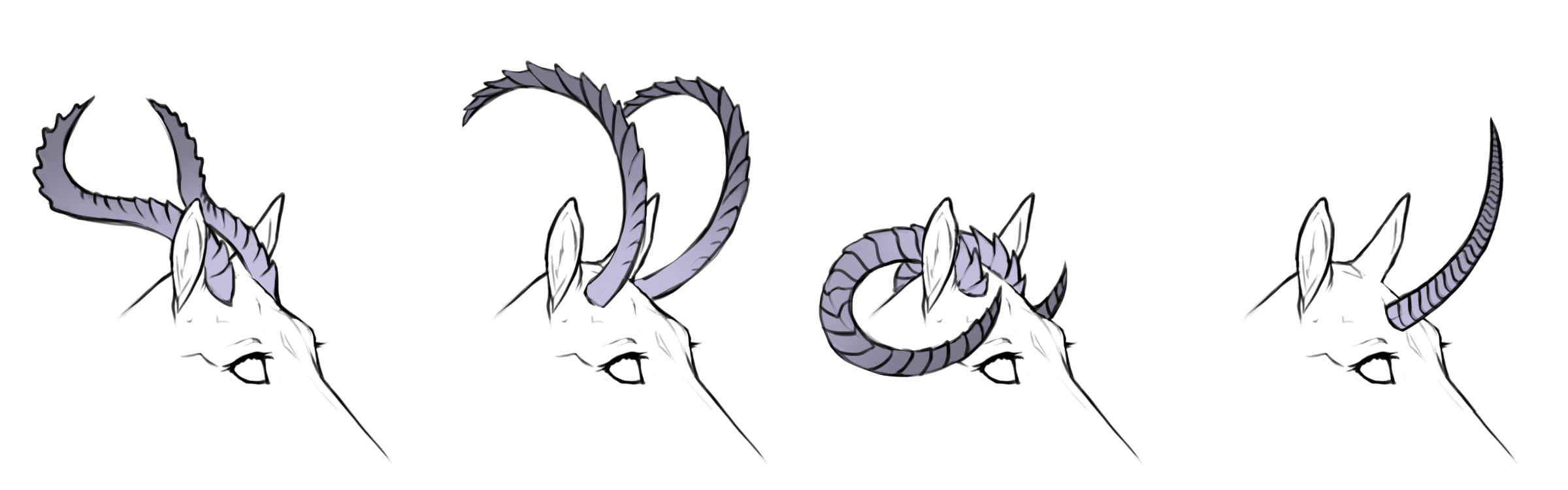
ridged curved
spined curved
smooth coiled
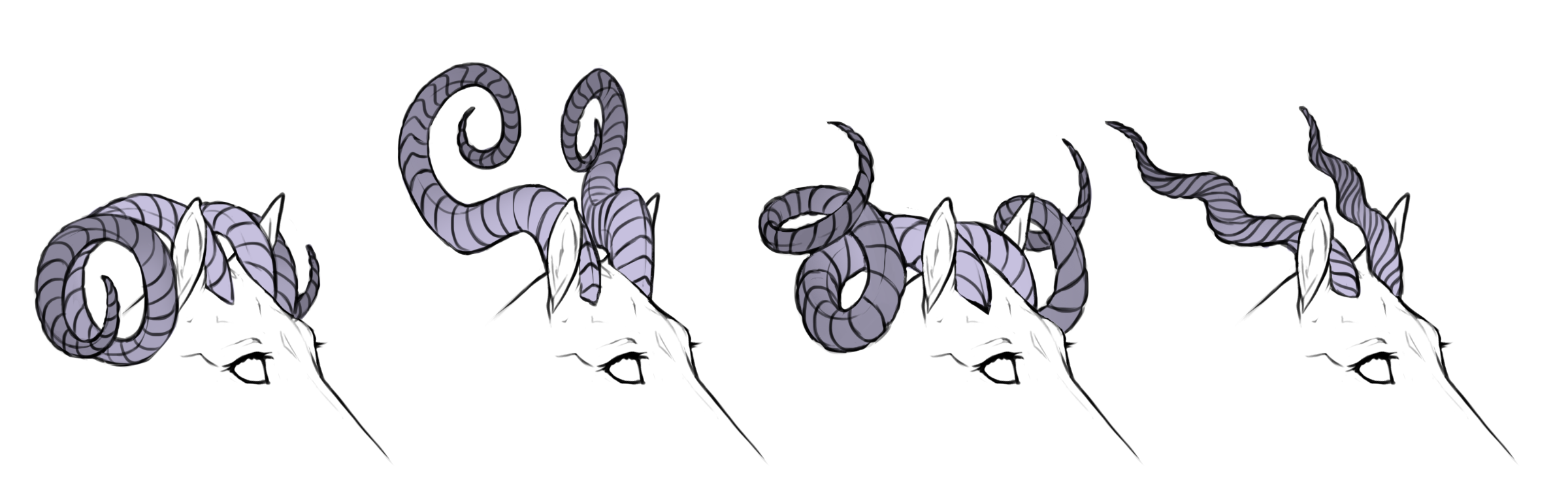
twirled coiled
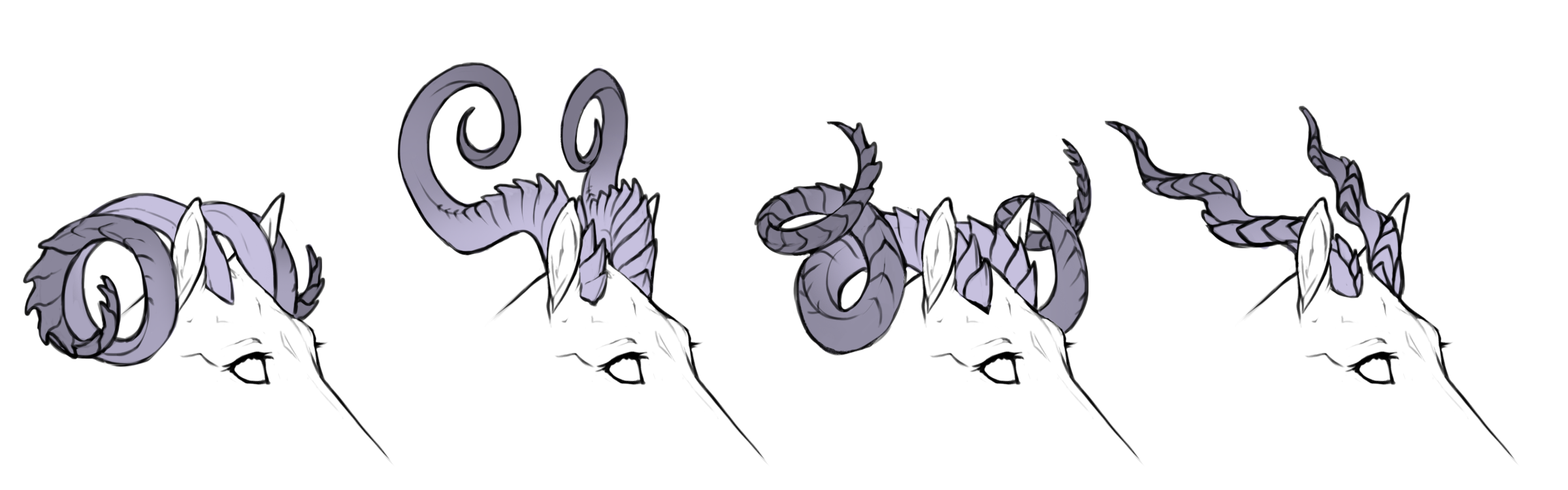
ridged coiled
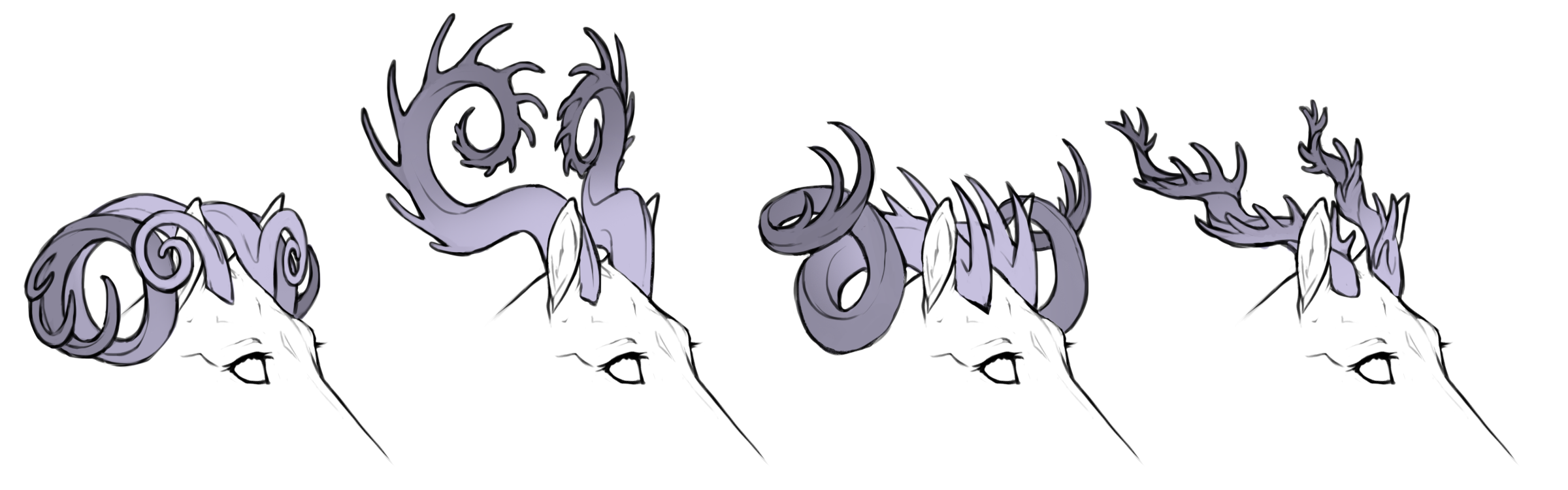
spined coiled
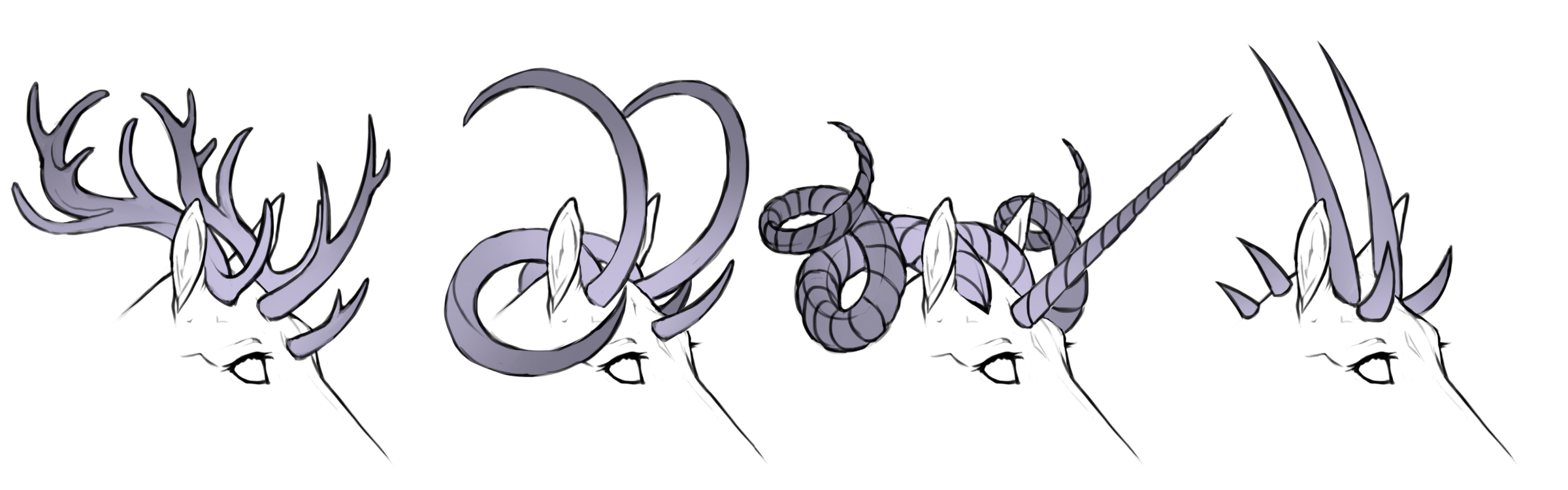
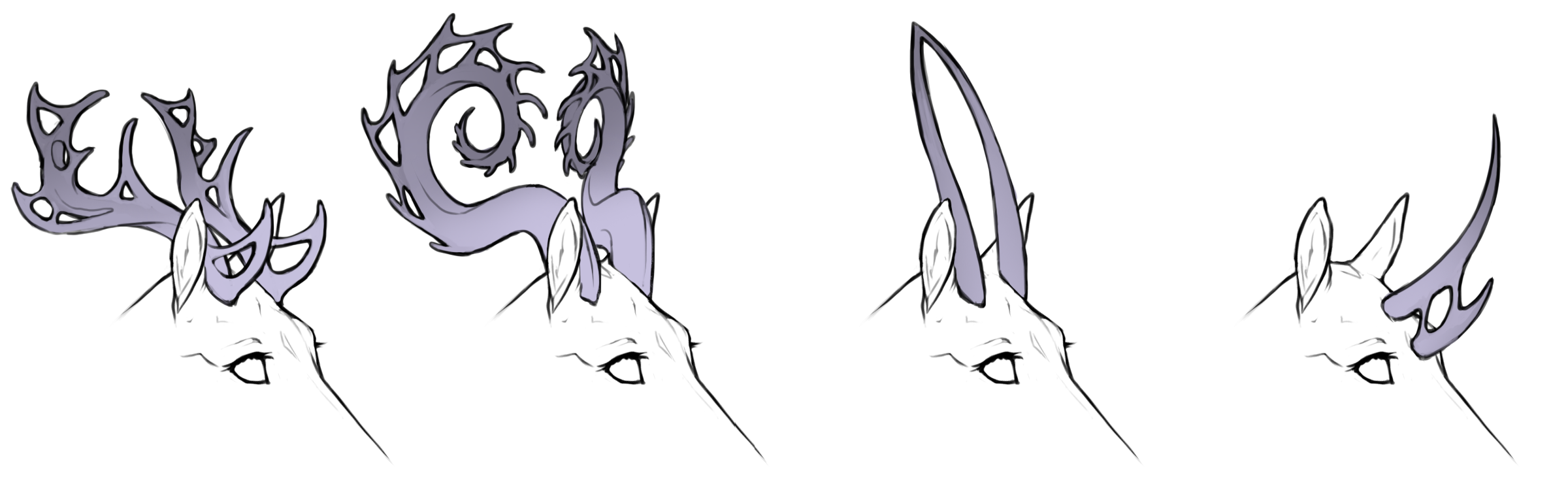
Horn mutations
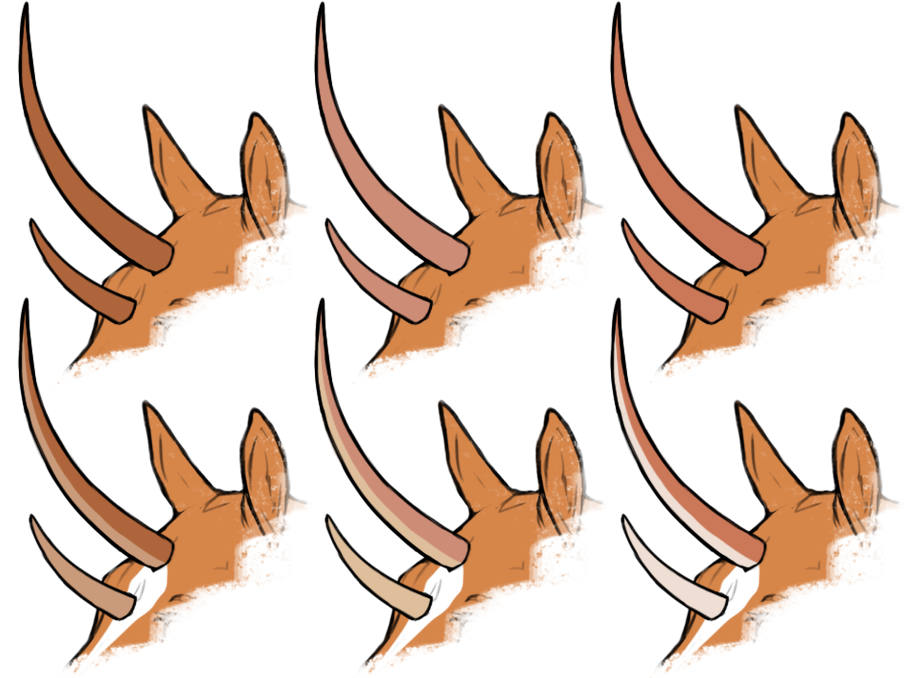
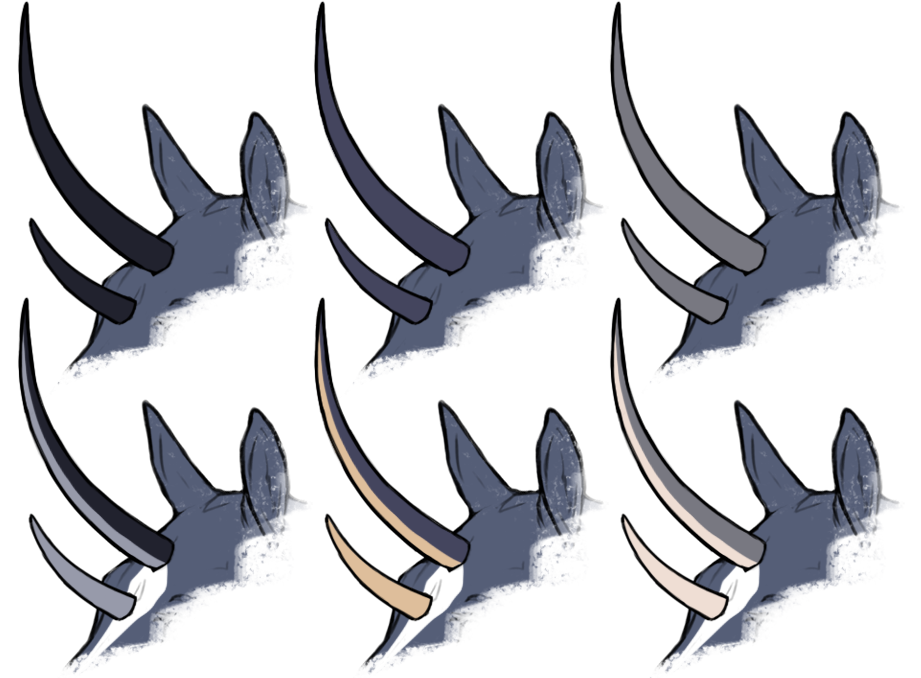
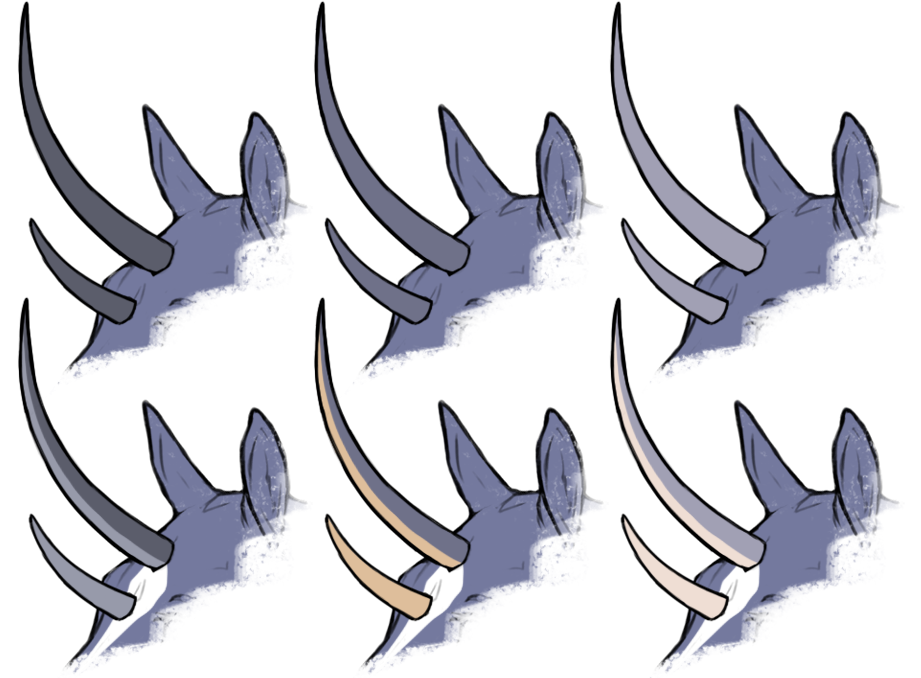
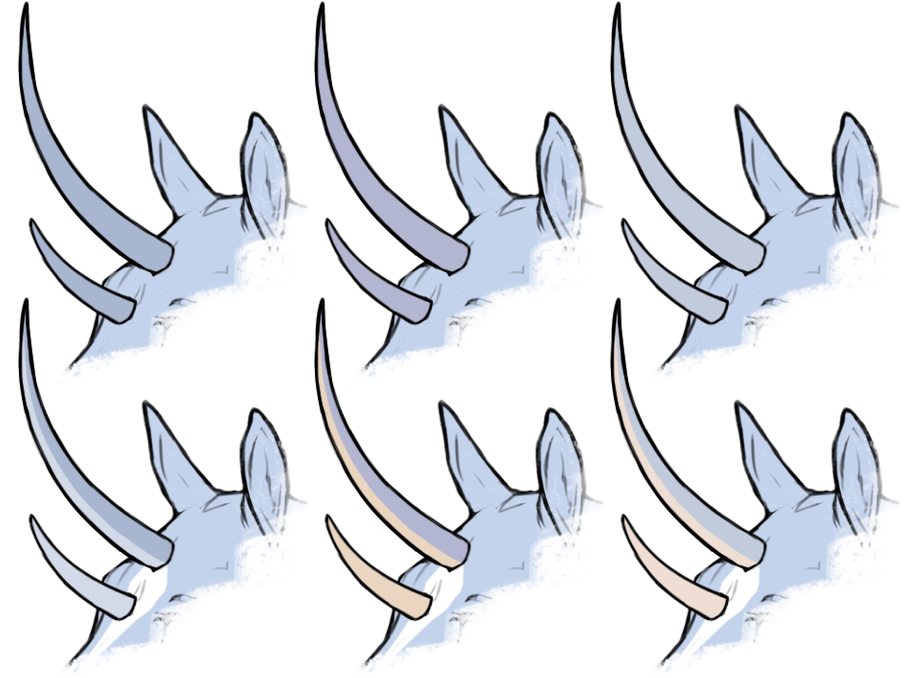
Horn colours
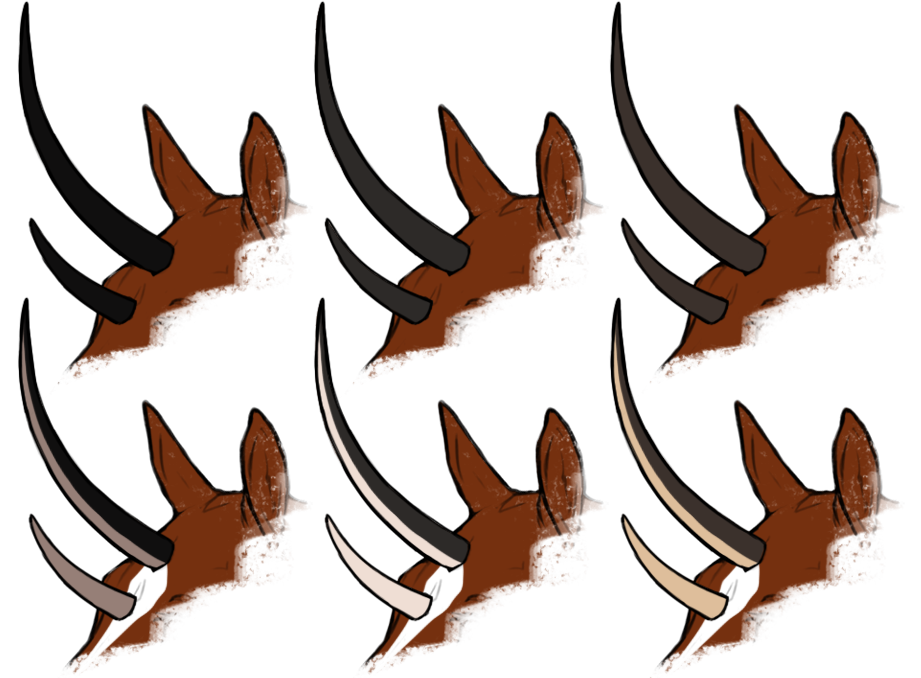
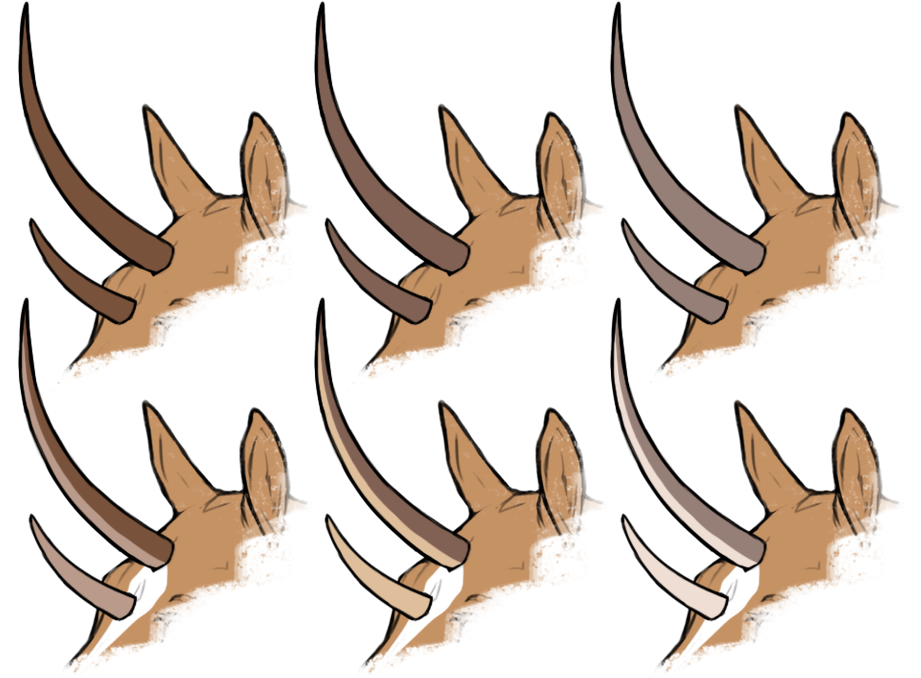
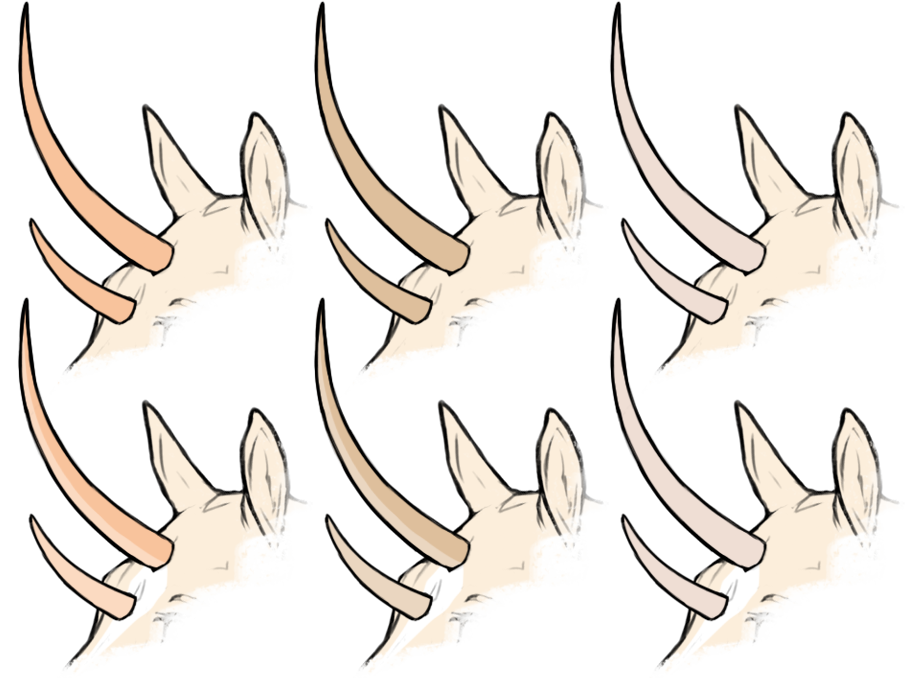
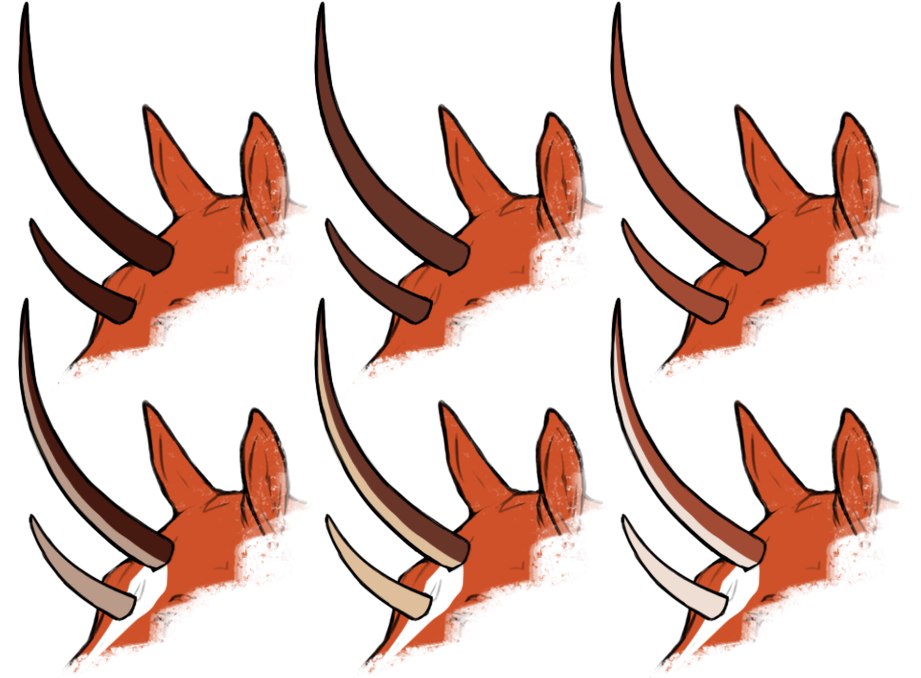
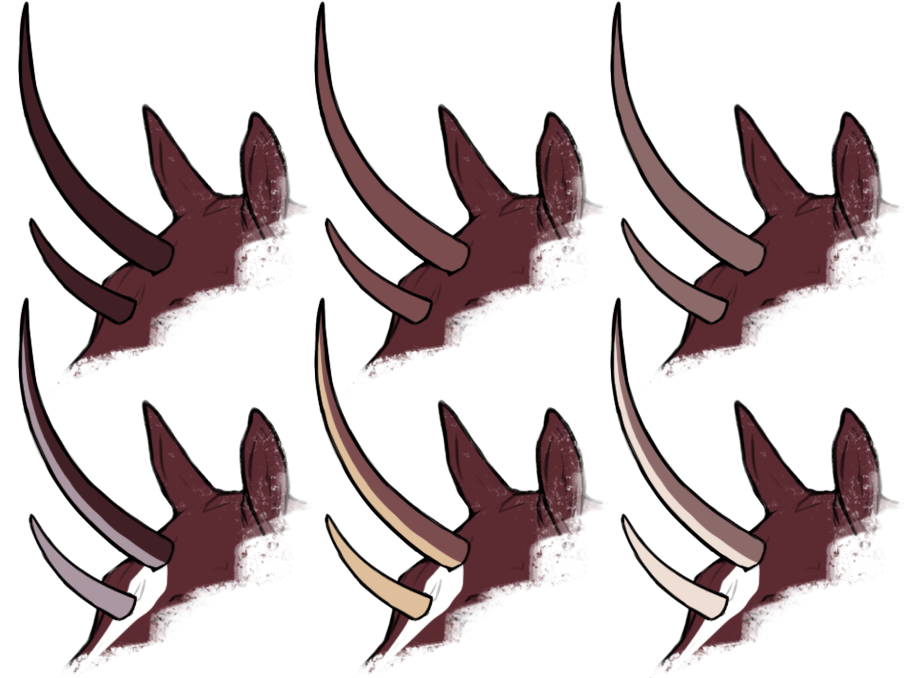
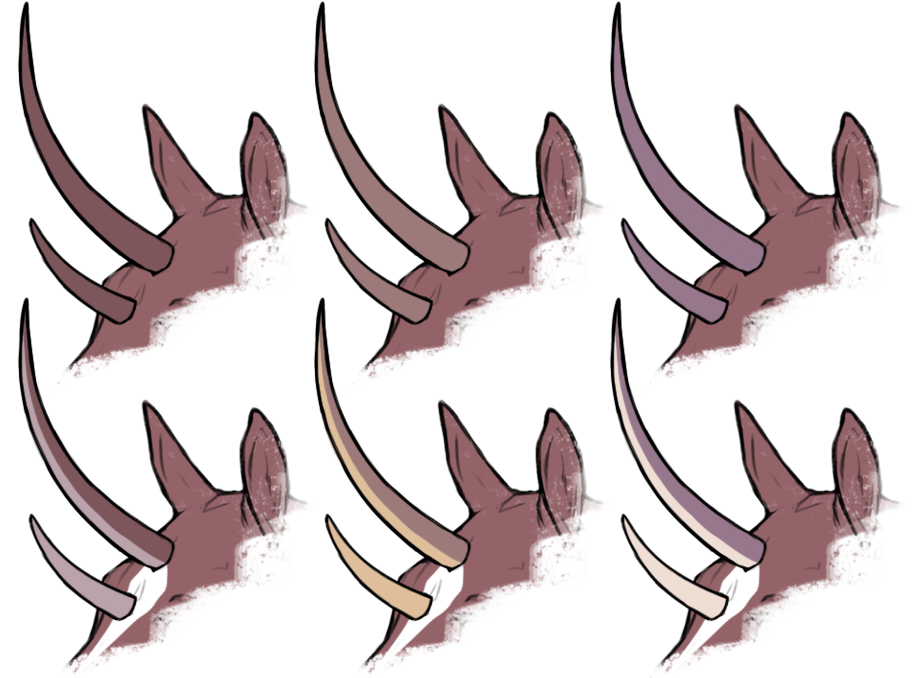
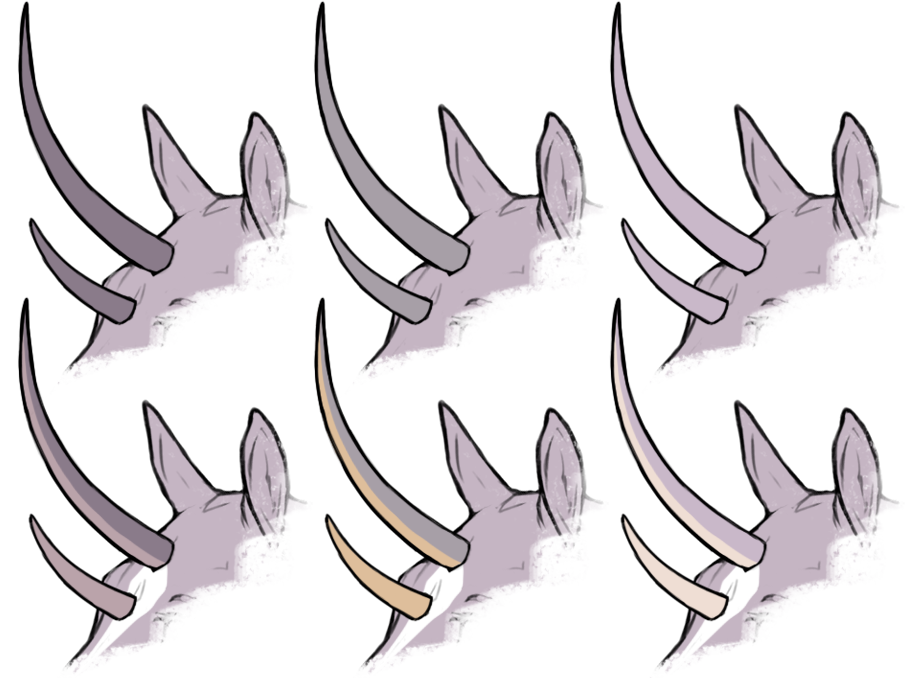
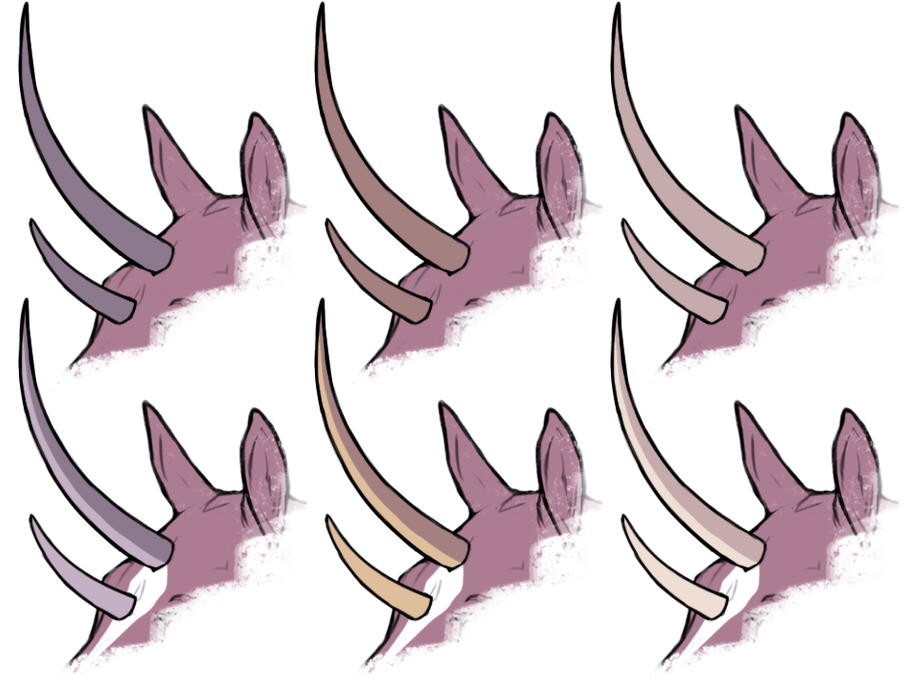
There are a multitude of different genes and factors that can affect the colour of your veilhorn's horns.
When designing your veilhorn you have two options:
- Do you want your veilhorn's horns to be the colour of their elemental alignment?
- Or do you want the horns to be naturally coloured, determined by their genes?
Click on any horn colour below for more info.
Some traits and mutations affect horn appearances. Multiple colours and genes can be combined through gradients, see the customization section under each horn colour's respective page.
Keep in mind that you can color the horn separate from the hooves, for example a bay veilhorn with the nature elemental alignment can have a bright green horn and natural dark hooves.
Natural horn colours
These horn colours can be found on natural Coat colours. Check each coat colour to see which horn colour it should have.
White patterns will always cause natural horns to be lighter or cream-coloured.