Blaise
BlsBls / nBls
Effects
- Skin: skin will be light pink under any white patterns
- Horns and hooves: blaise generally doesn't affect hoof color, because blaise markings shouldn't extend past the knees [Horn & hoof color guide]
- Eye color: eyes can optionally be blue if the white face markings reach the eyes [Eye color guide]
- White patterns cause a lack of color pigment in the coat, resulting in pink skin and white hairs. Skin will always be pink under white markings, the only exception is if the blue dilute is present, then the skin on white markings may be light baby blue (or light purple in the case of tawny+blue).
- Modifiers, Dilutions and Patterns must always go under white patterns, and are also not allowed to "appear" to go over white patterns.
- Can generally cause blue eyes if the white markings reach the eyes, unless otherwise specified.
- Hooves and horns will be lighter when affected by white.
- The minimum expression of each white pattern (except natural white which is optional) can only be reduced with Occlusion, which can partially or fully "turn off" or hide genes.
Appearance
Blaise causes smooth white markings starting from the belly and extending across the throat, underside of the body and insides of the legs, similar to tuxedo cats. The white markings can "reach" toward the topline of the horse and cause a framed appearance where the under- and topline is covered in white, and the sides of the horse show the base colour.
At minimal expression blaise needs a white marking on the chest or belly (it doesn't require both), it is allowed to be fairly small as long as it is blaise-shaped.
Blaise doesn't extend down the legs further than the knees or the front of the face.
White leg and facial markings are only allowed limited by Natural white expressions, or if other white pattern genes are present.
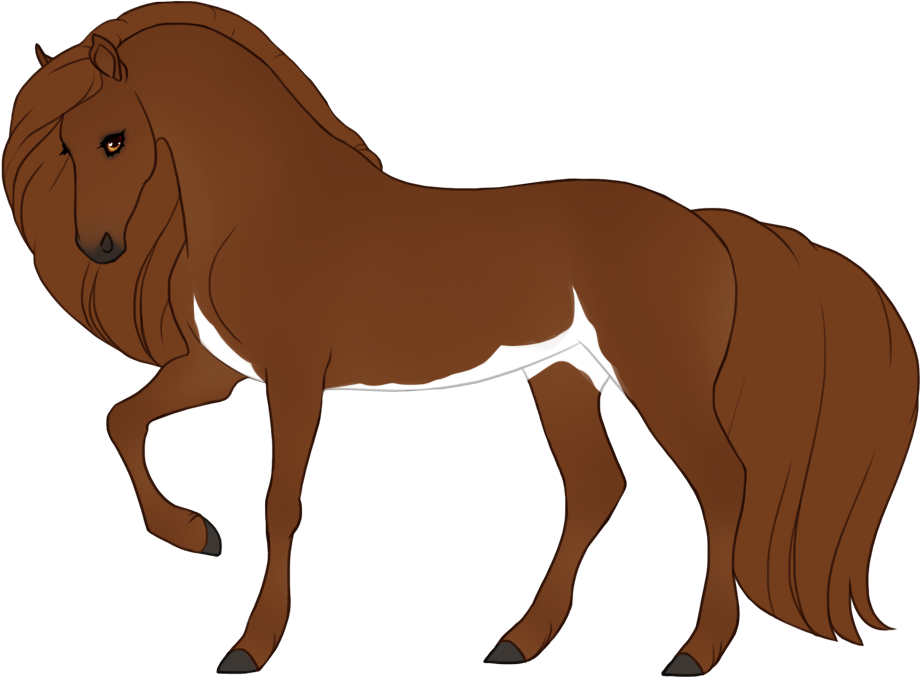
Minimal blaise
chestnut + blaise
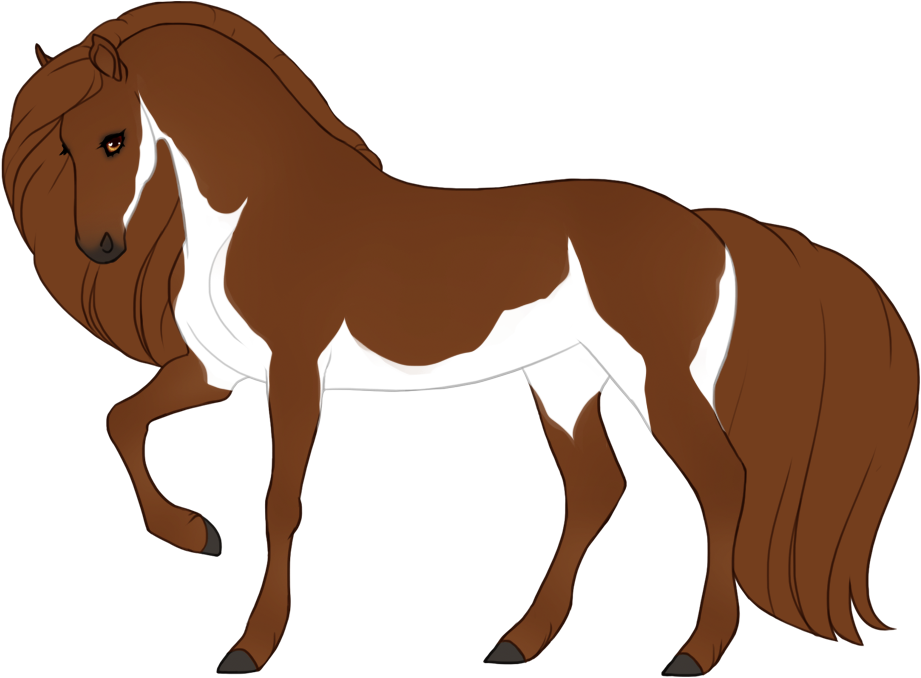
Blaise
chestnut + blaise
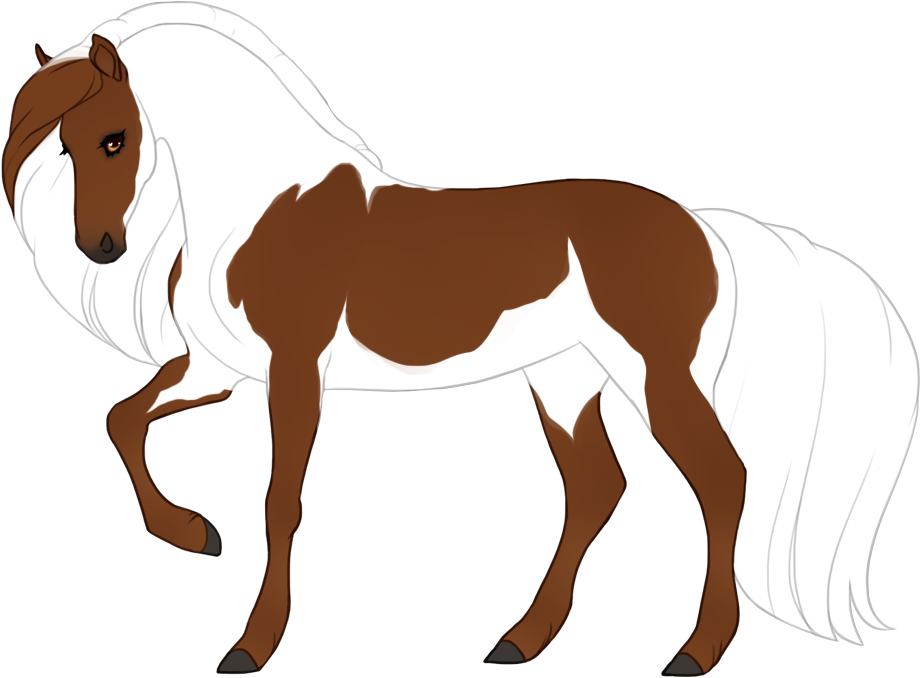
Collared blaise
chestnut + blaise
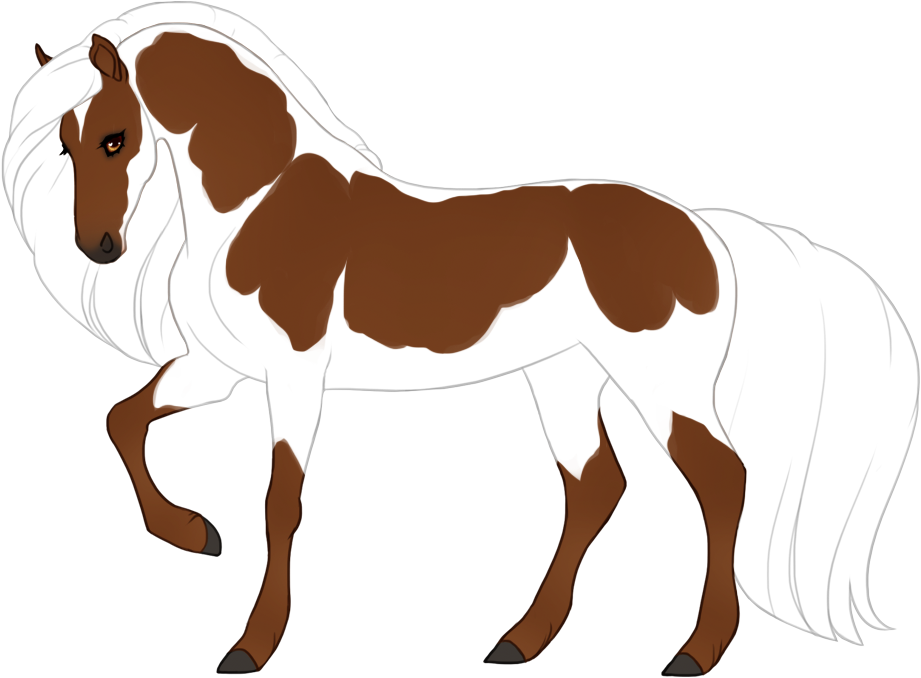
Topline blaise
chestnut + blaise
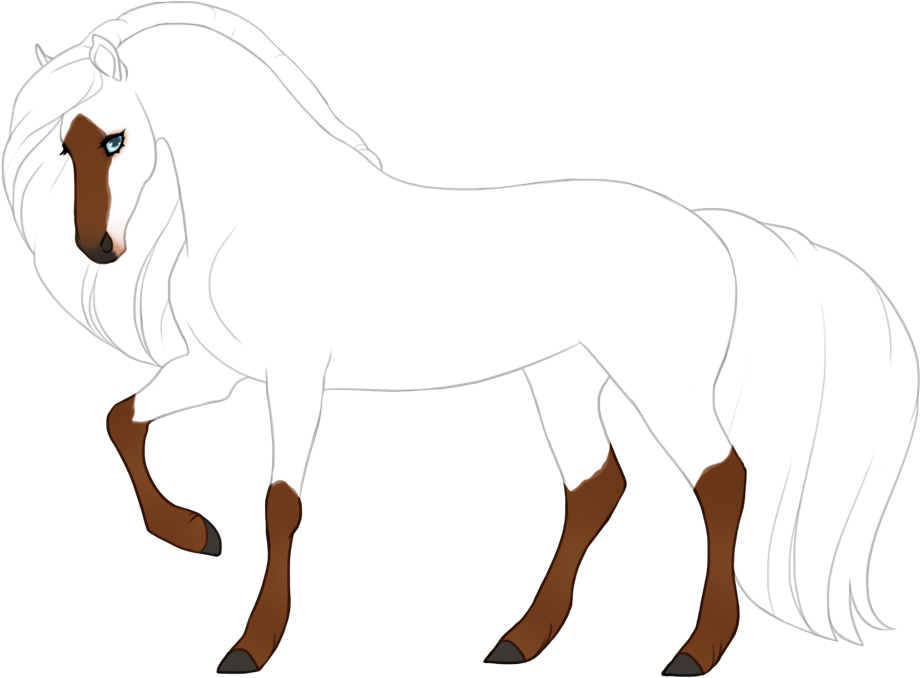
Maximal blaise
chestnut + blaise