Horn & hoof colors
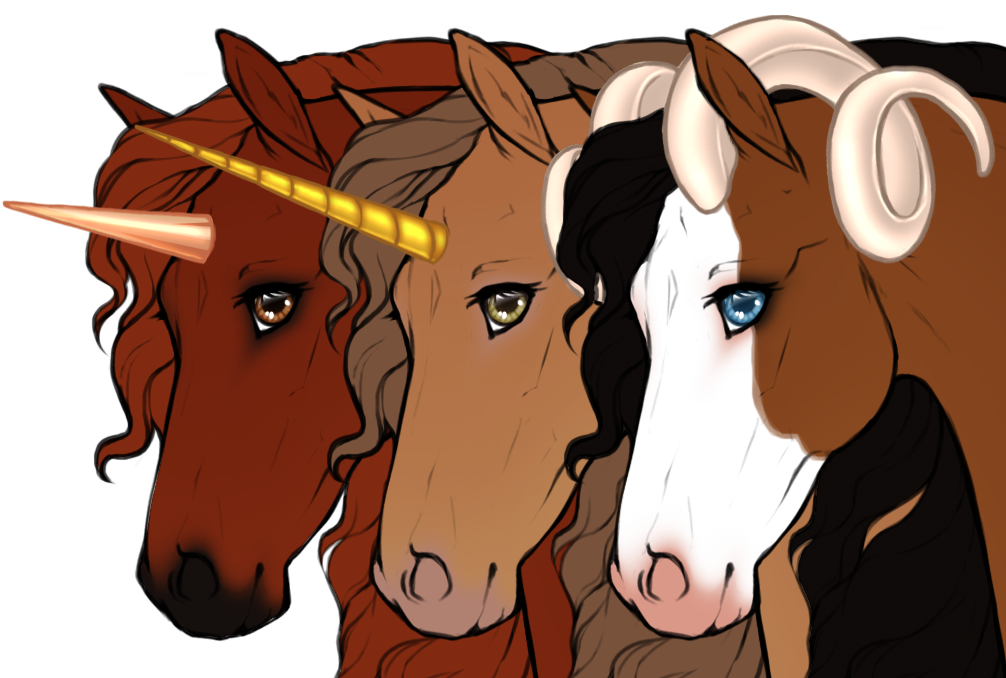
There are a multitude of different genes and factors that can affect the color of your veilhorn's horn and hooves.
When designing your veilhorn you have two options:
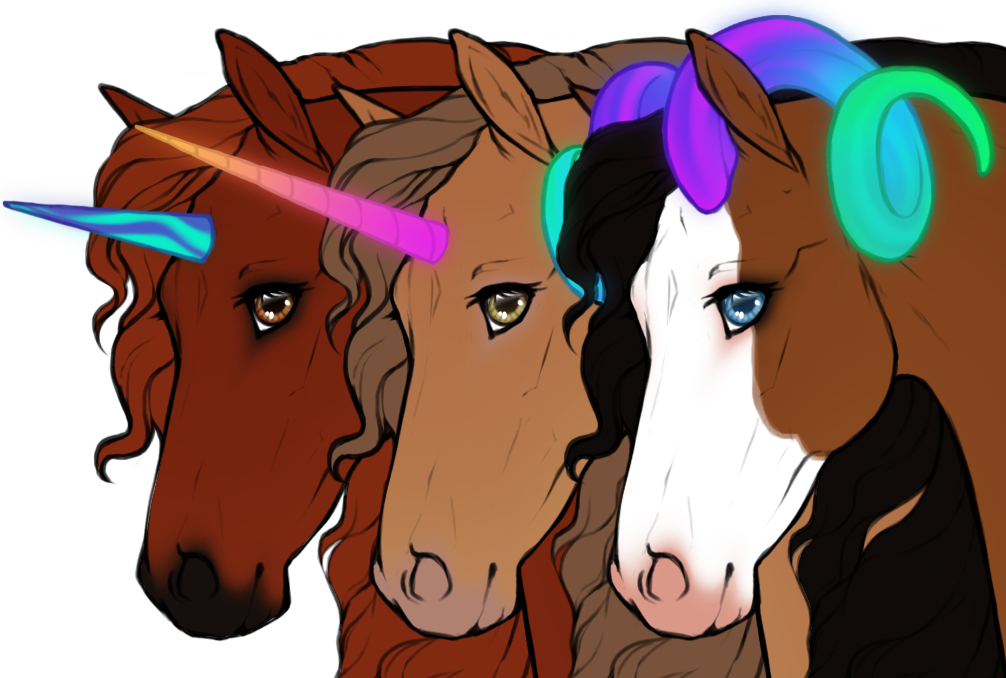
- Do you want your veilhorn's horn and/or hooves to be the color of their elemental alignment?
- Or do you want the horn and/or hooves to be naturally colored, determined by their genes?
- As a general rule, the more dilutions the horse has - the lighter the horns and hooves will be.
- Some mutations can optionally affect the horns and hooves in creative ways.
Keep in mind that you can color the horn separate from the hooves, for example a bay veilhorn with the nature elemental alignment can have a bright green horn and natural dark grey hooves.
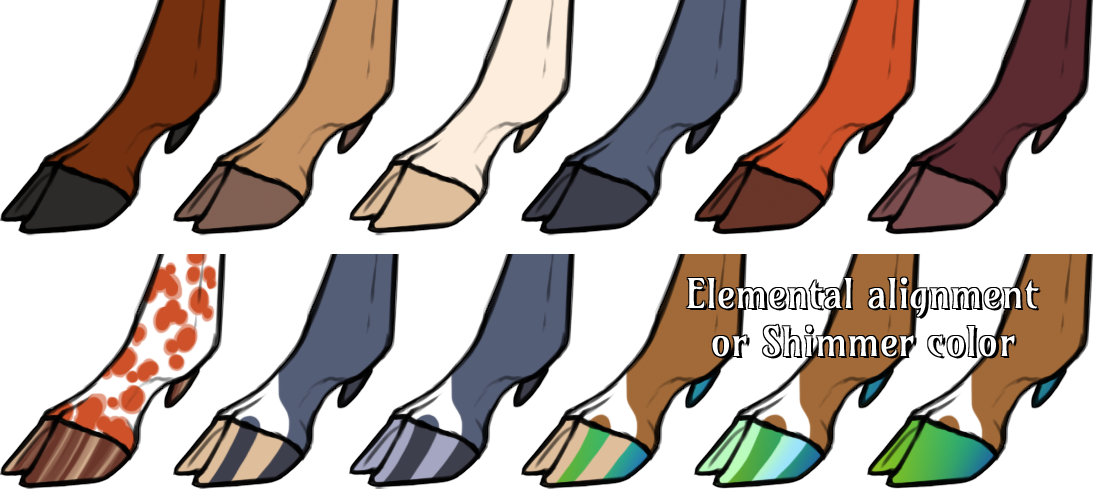
Examples of different Veilhorn hoof colors.
Top row shows different base colors and dilutions, bottom row shows how white markings can affect hoof color.
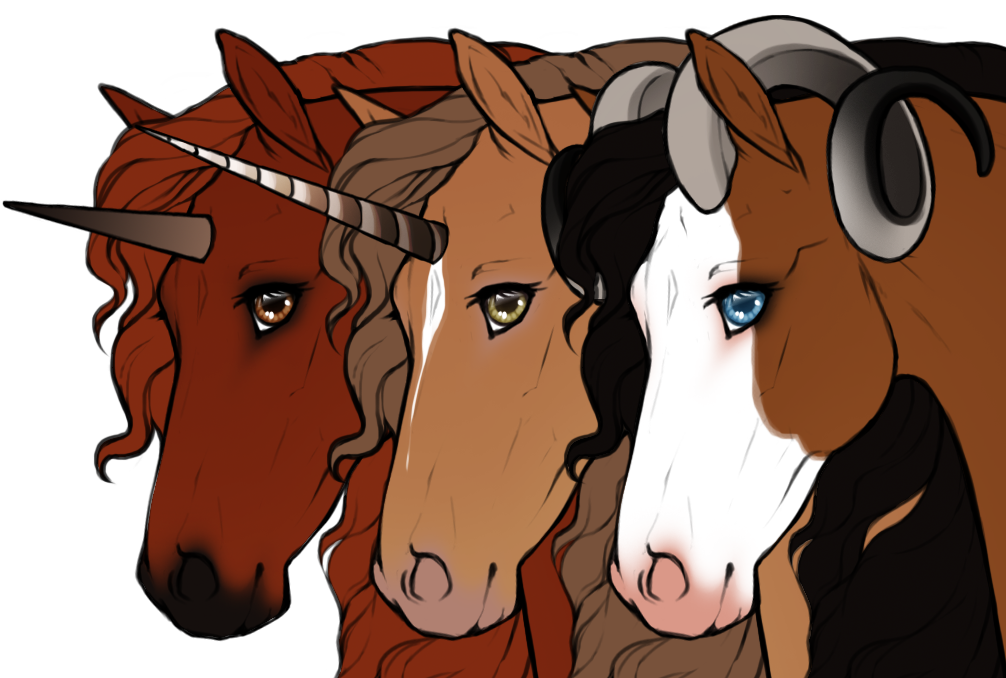
All horns are allowed to optionally be gradiented, regardless of color.
The gradient should lighten or darken the base/tips of the horns in a shade that looks natural compared to the horn's base color.
Natural colors
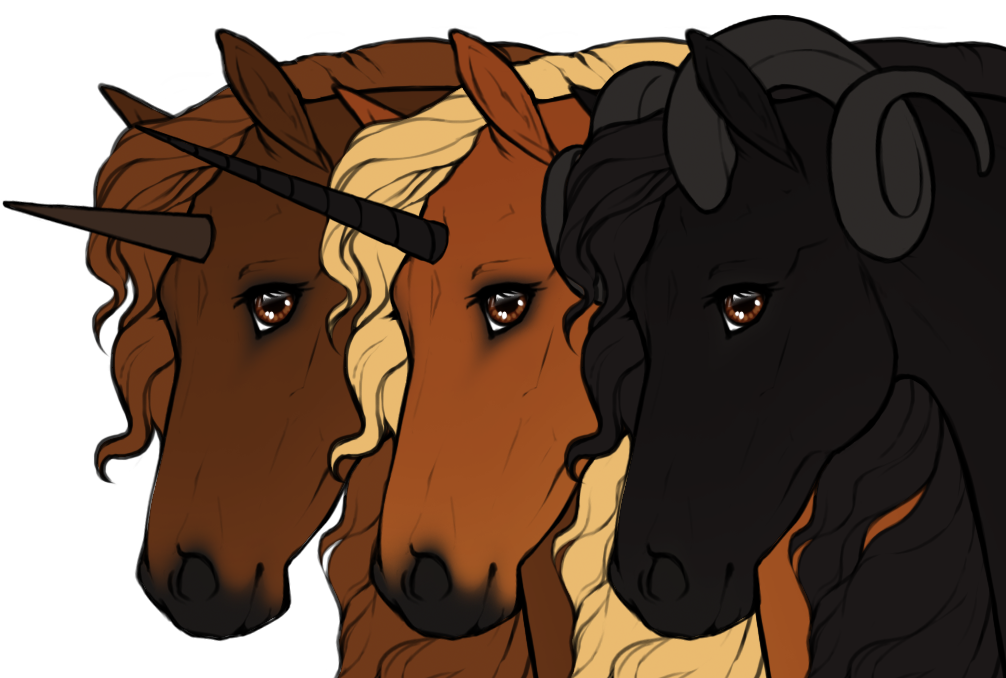
Dark
Caused by:
Any natural shade of dark grey - dark grey-brown. Can also be near-black.

Pseudo-albino
Caused by:
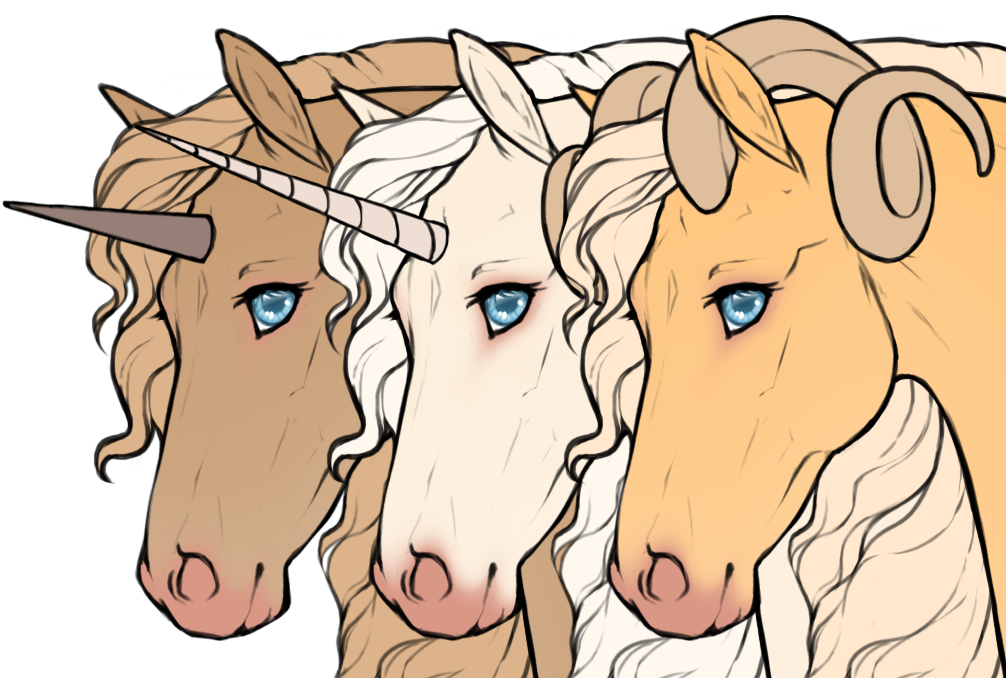
Light pink (not saturated) or near-white. If blue dilute is present the horns/hooves can optionally be a very very light baby blue, and if blue+tawny dilute is present then the horns/hooves can be a very very light purple/lavender.
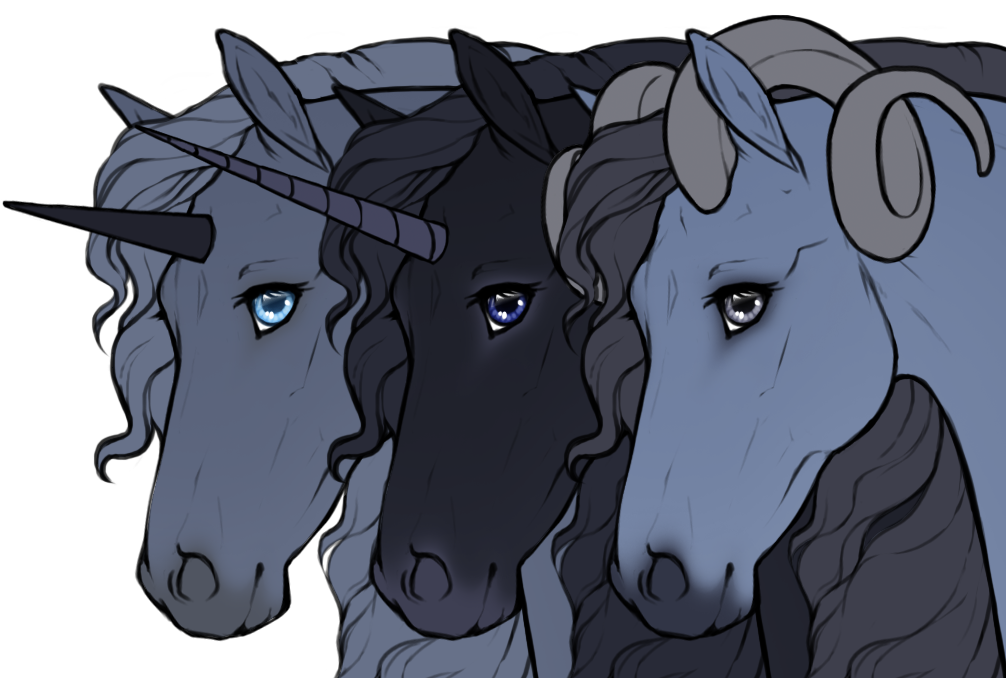

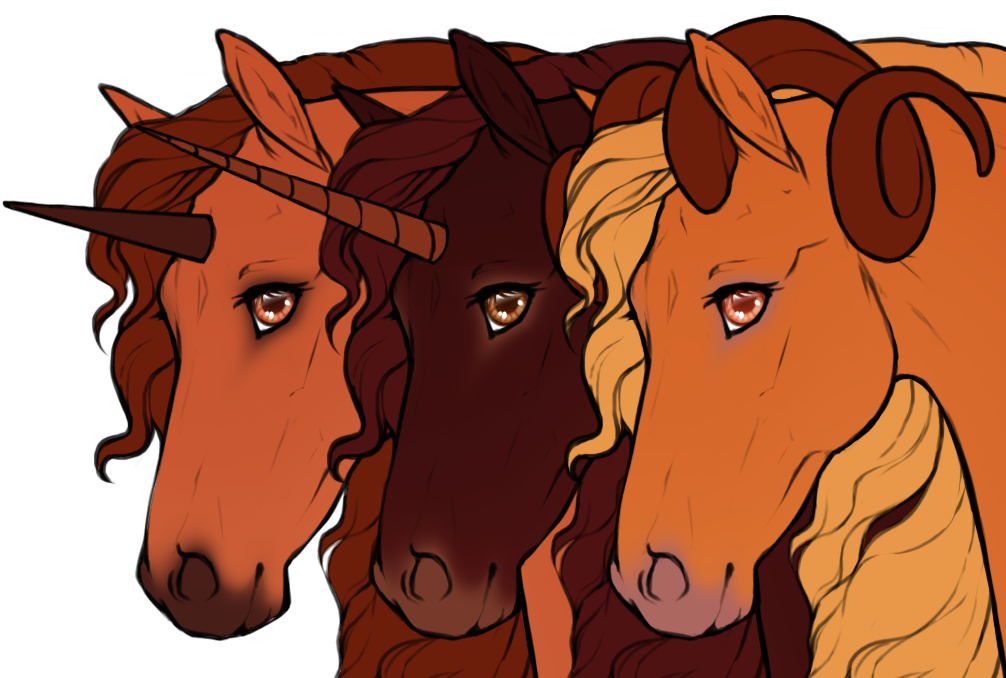
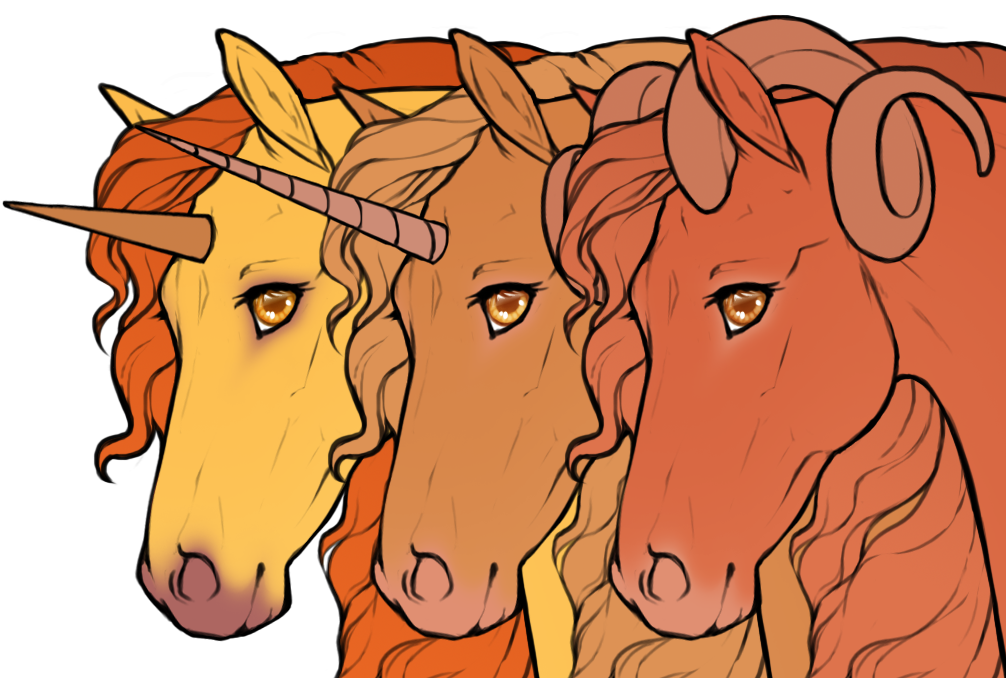
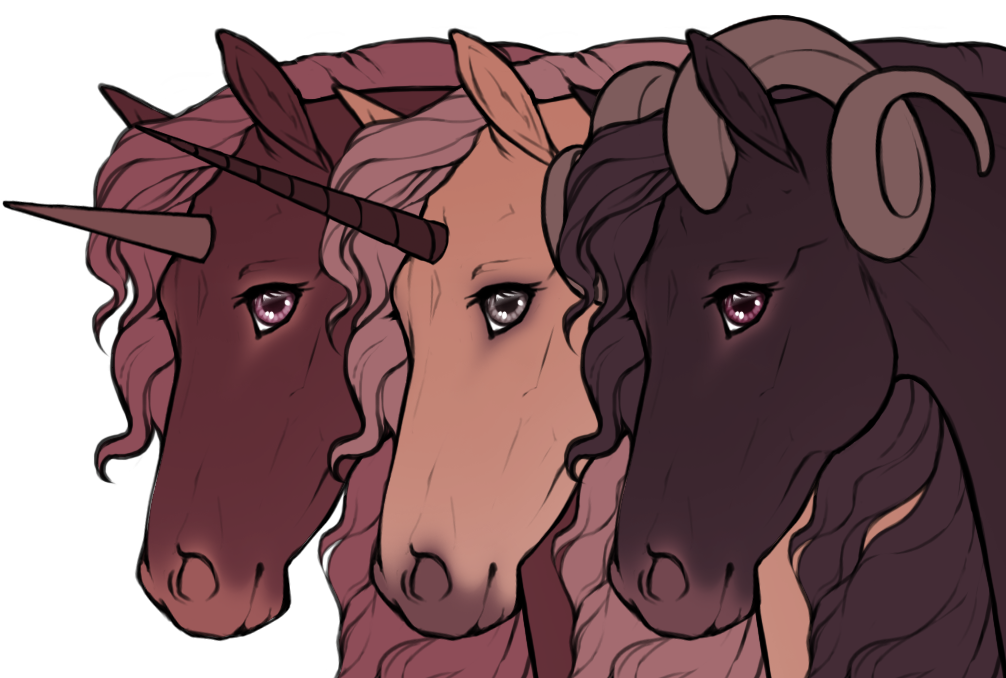
Blue tawny (purple)
Caused by:
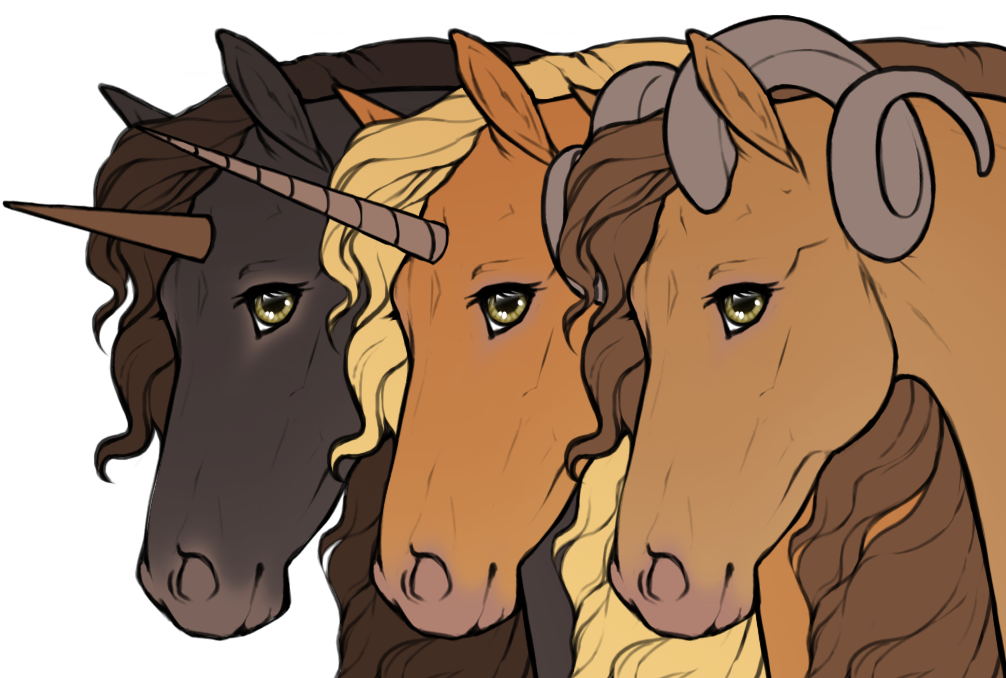
Desaturated mulberry purple or grey-ish mauve
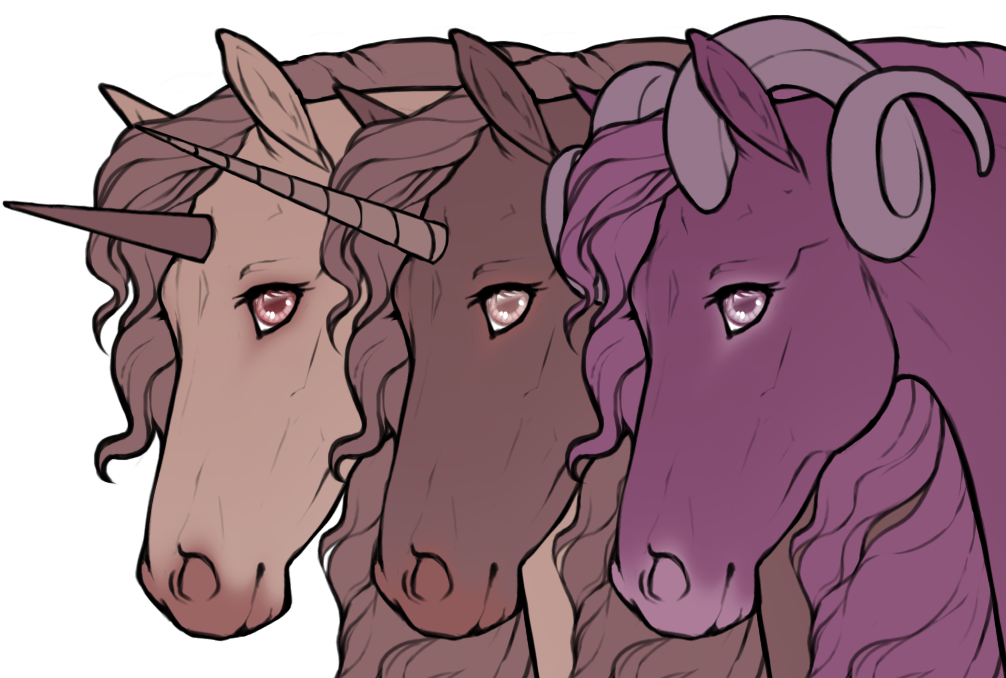
Diluted blue tawny (purple)
Caused by:
When blue and tawny is combined with one or more other dilutes the horns/hooves will be lighter. The more dilutions the lighter they will be.
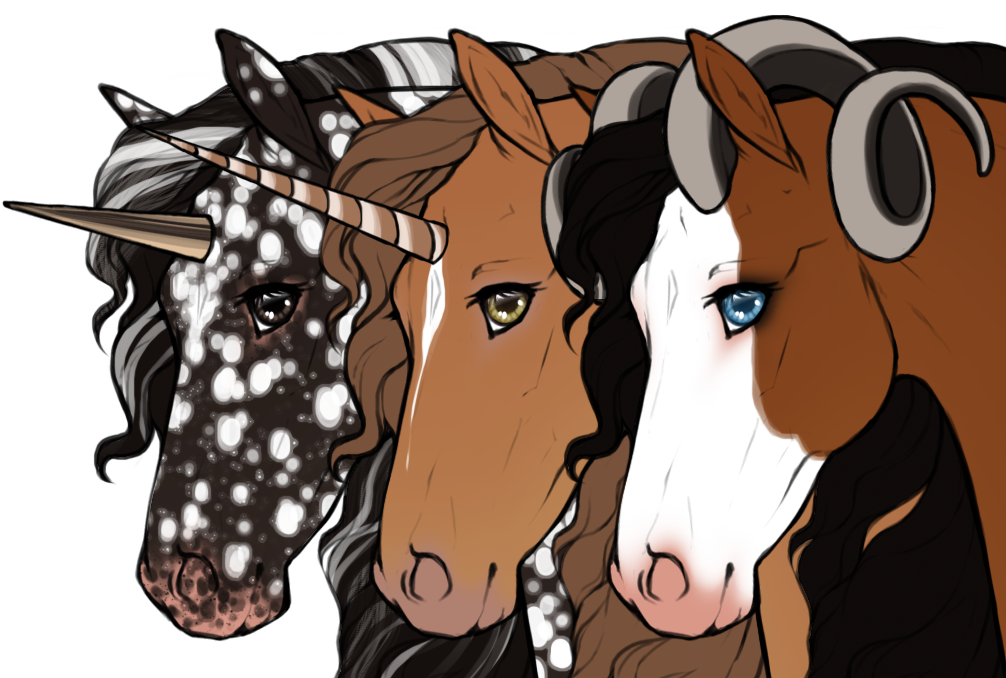
Light caused by white patterns
Caused by:
White patterns will cause the horns and hooves to be light, either in the color-range shown on the "light" example, or a lighter version of the "base" horn/hoof color.
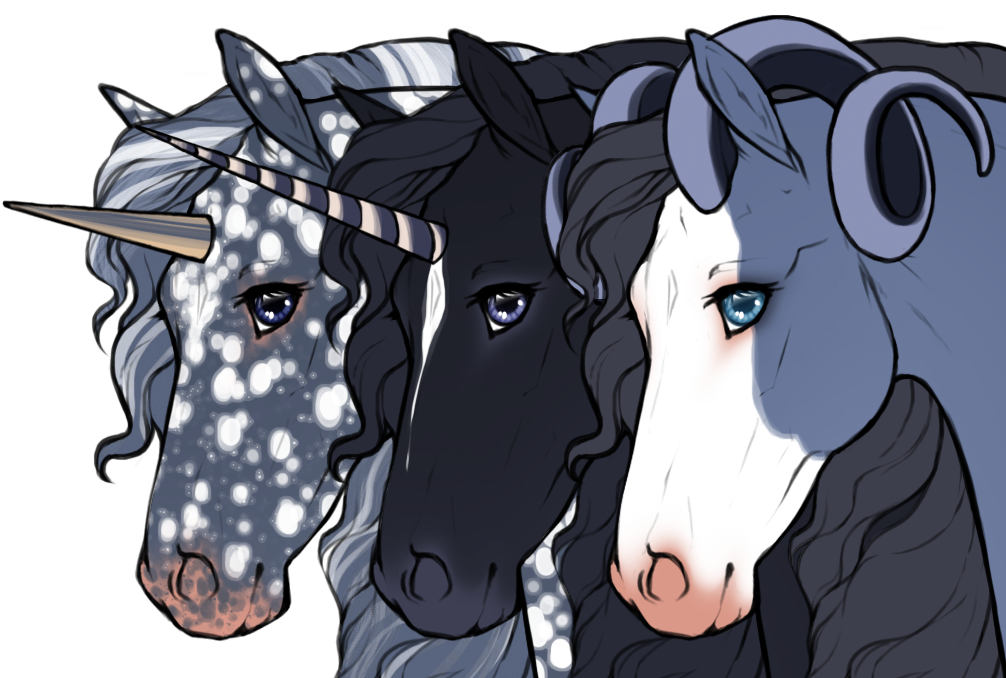
Examples of blue dilute with white
Caused by:
Horns and hooves can be lightened either to the "light" color-range or a lighter version of the "base" horn/hoof color.
Elemental colors and shimmer
See the Elemental Alignments guide and the Shimmer guide for their respective color palettes.
When white patterns are present you can chose if they affect horns/hooves or not.
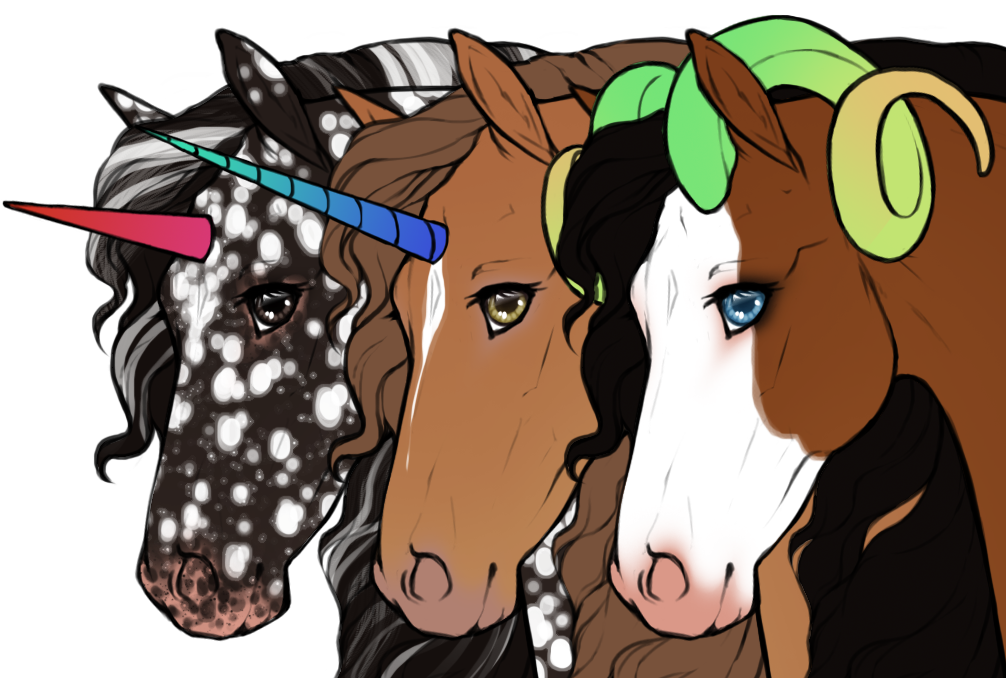
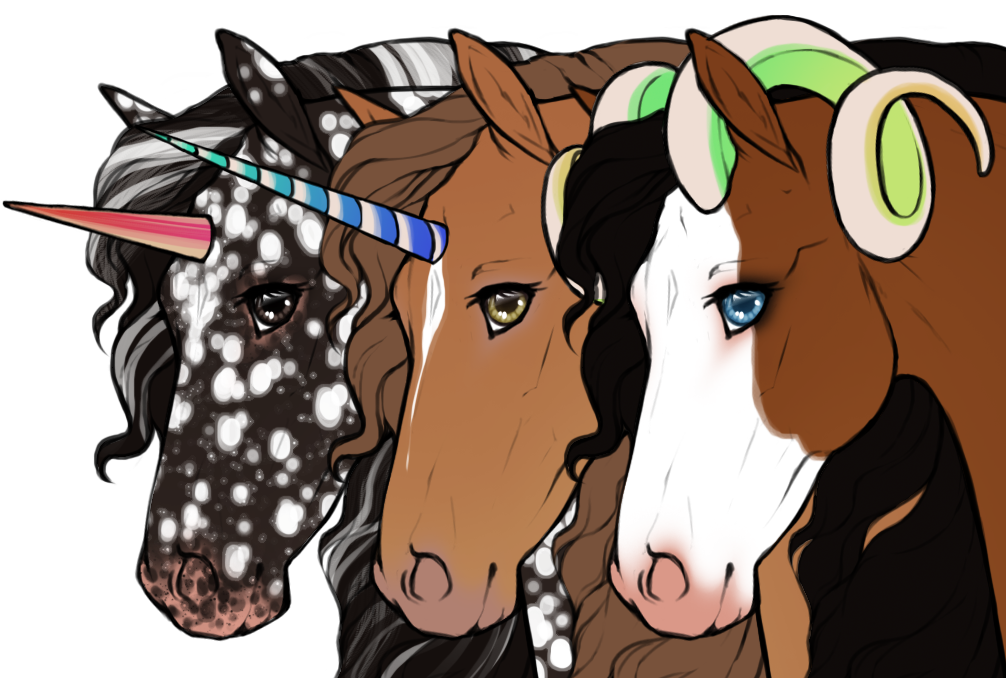
Unaffected by white patterns
Unnaturally colored horns, unaffected by white patterns.
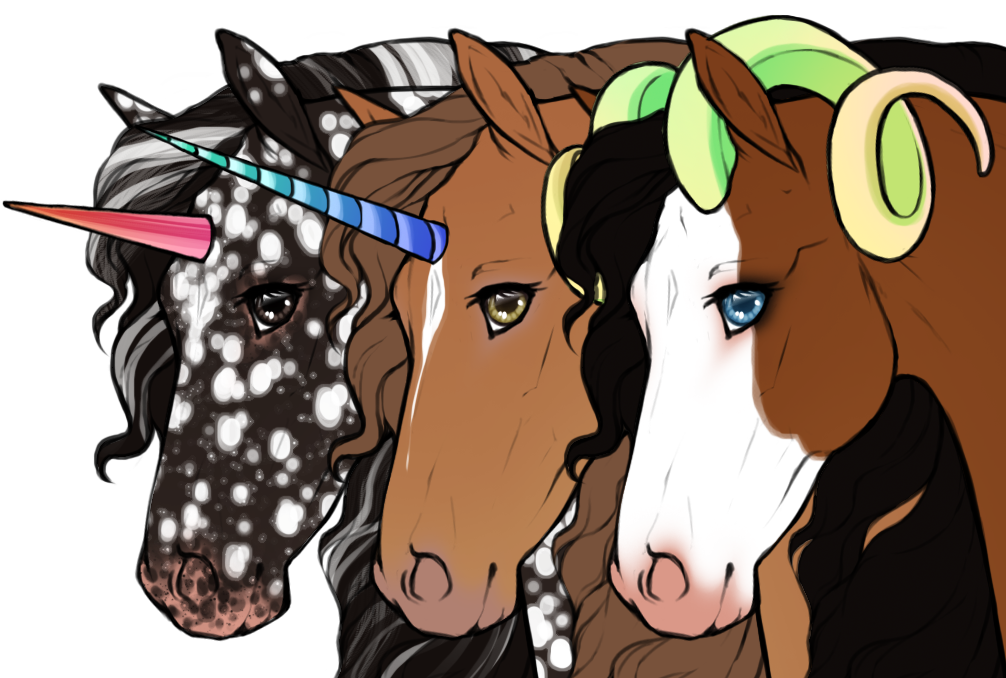
Affected by white patterns
Unnaturally colored horns, affected by white patterns (same palette as naturally "Light" horns/hooves).
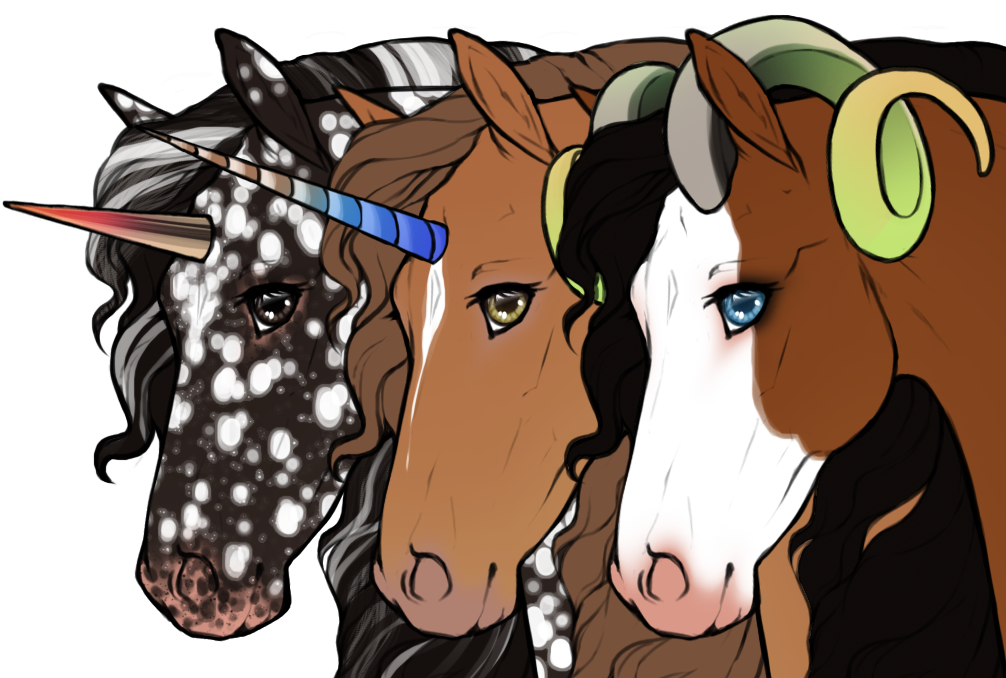
Affected by white patterns
Unnaturally colored horns, affected by white patterns (lighter than the "base" horn/hoof).
Gradient to natural color
Unnaturally colored horns, transitioning to natural color. Must have a soft/gradiented transition and must start from an accepted natural color and end in an accepted shimmer or elemental alignment color.
Mutations affecting horns and hooves
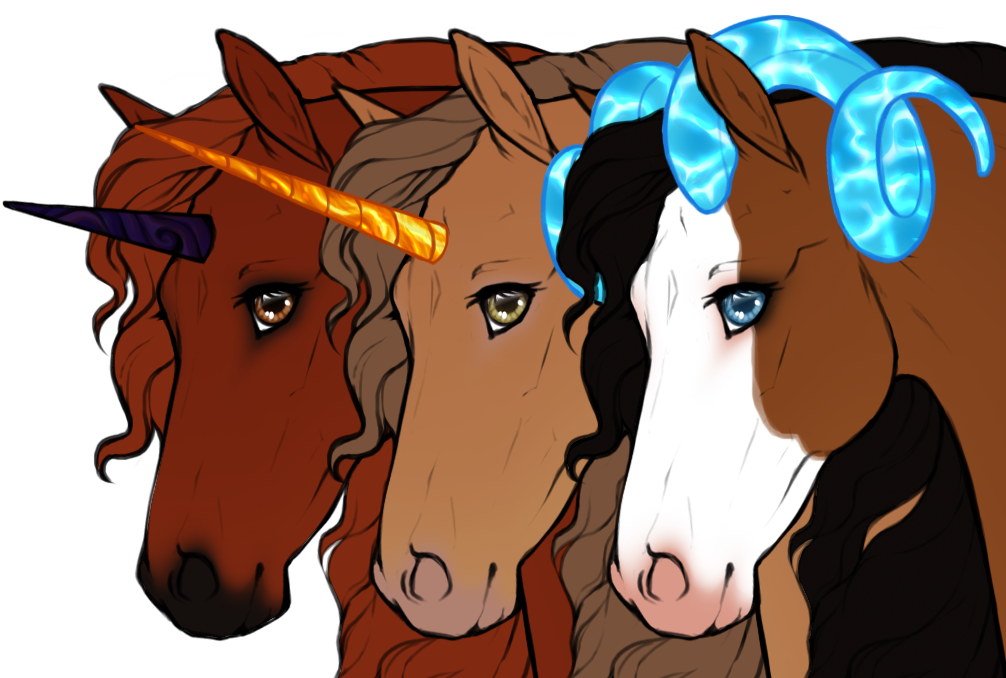
The following Mutations can optionally alter the color or appearance of horns and hooves.
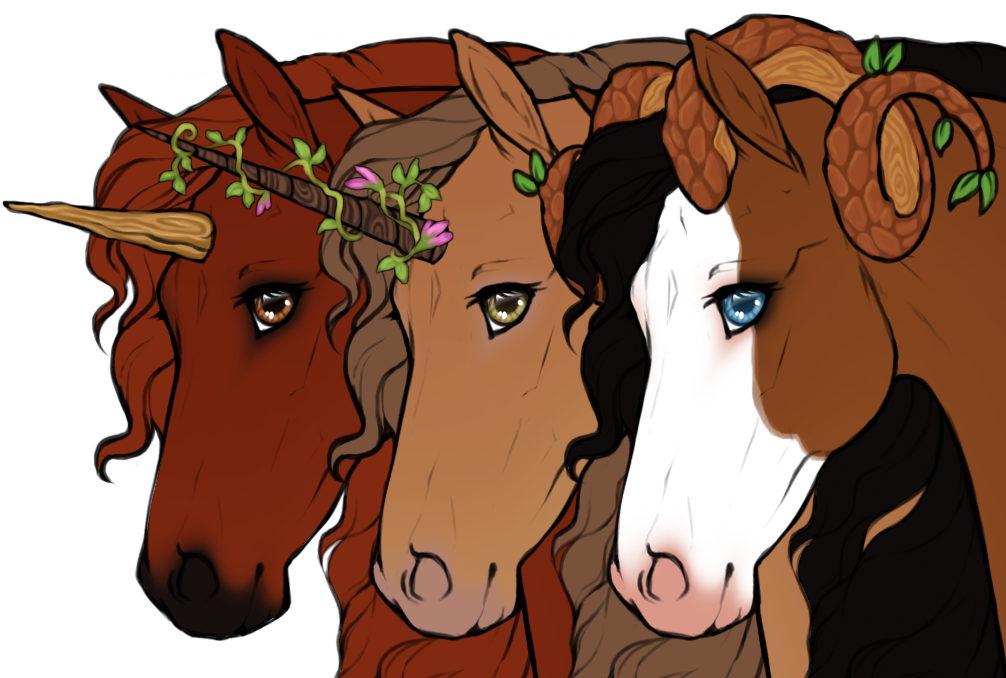
Wooden
Caused by:
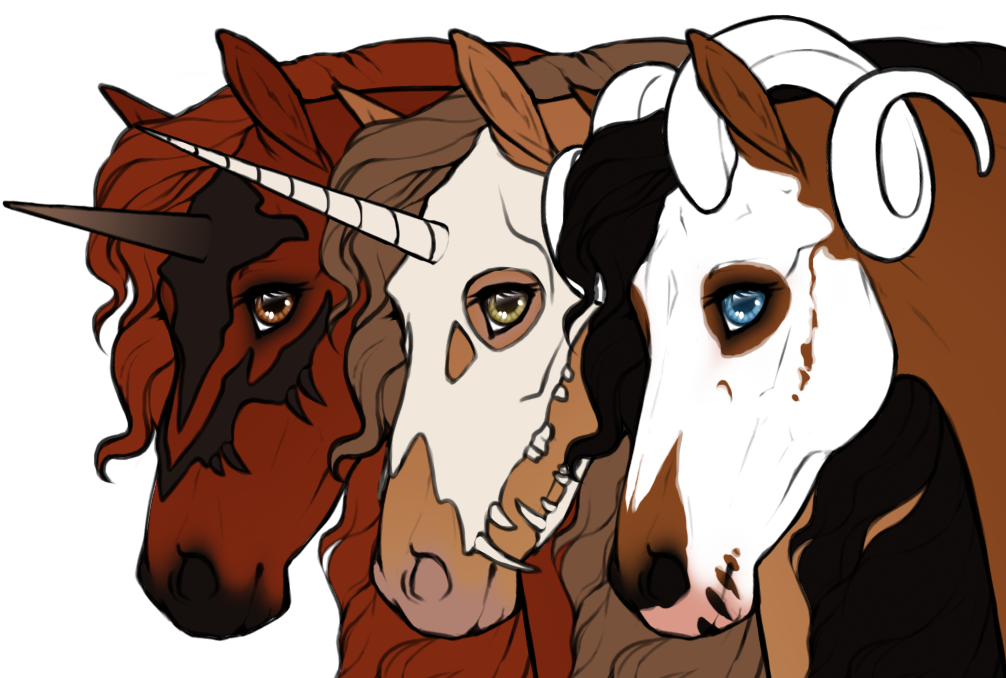
FloraCan make horns and hooves appear like tree branches. Can grow leaves and flowers. The horns must still have the correct shape and type, which means you can't have twigs/branches on the horns unless the horns are spined.
Crystal
Caused by:
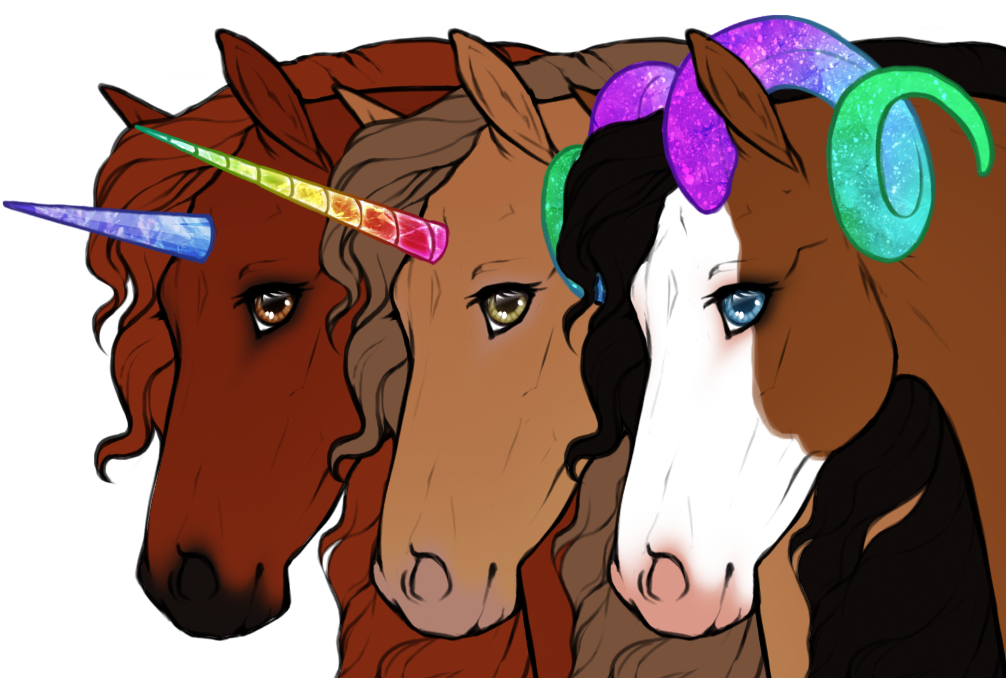
OpalHorns and hooves can have a crystalline or glass-like appearance and any color.
Eclipsed
Caused by:
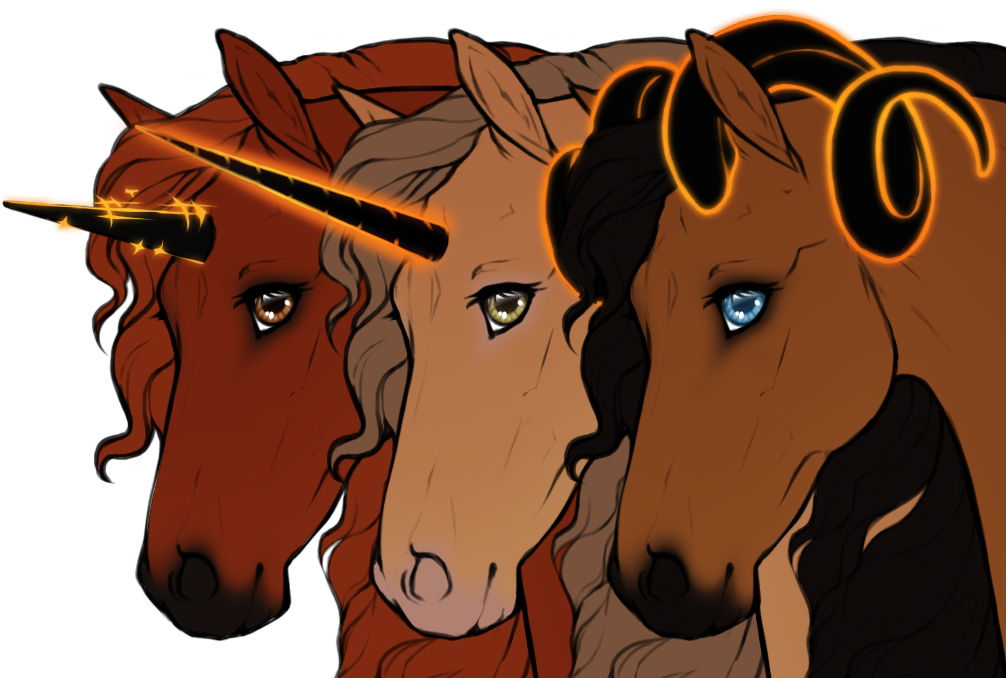
EclipseHorns and hooves will be turned completely black, with an eclipsed outline. The eclipsed outline should glow and can have a sunray-like appearance.