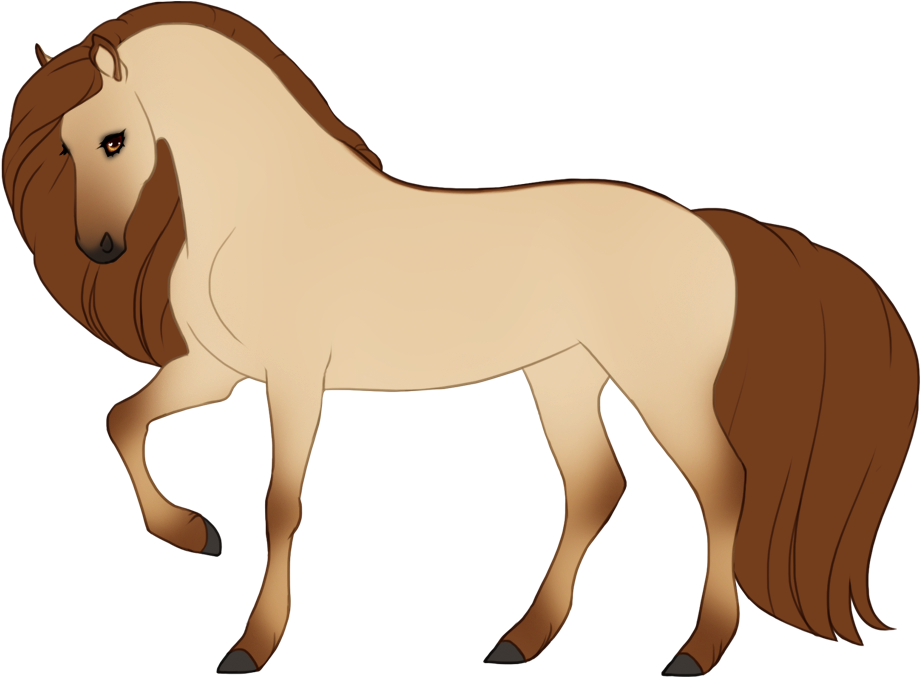
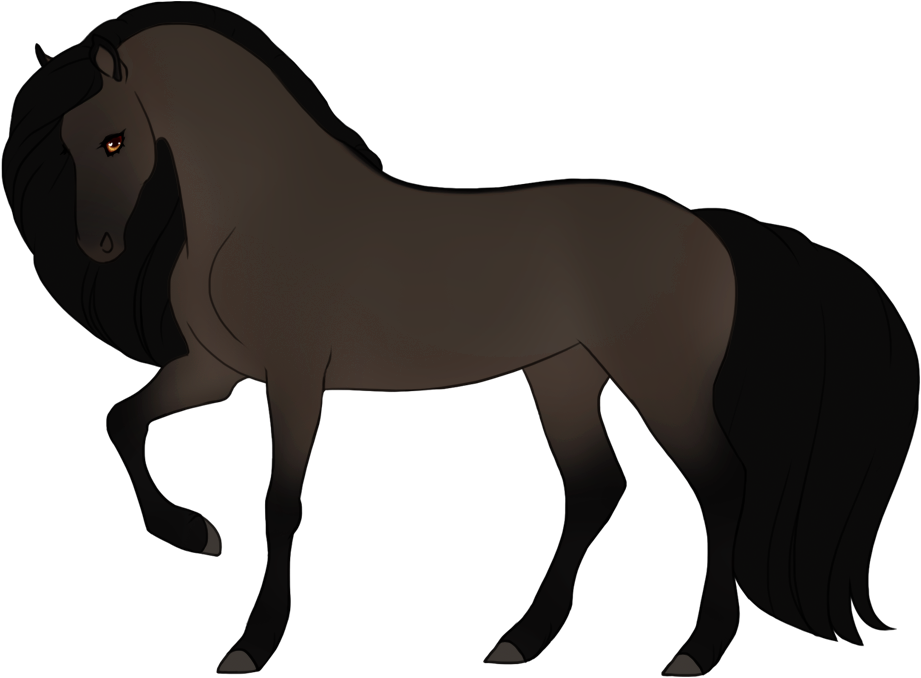
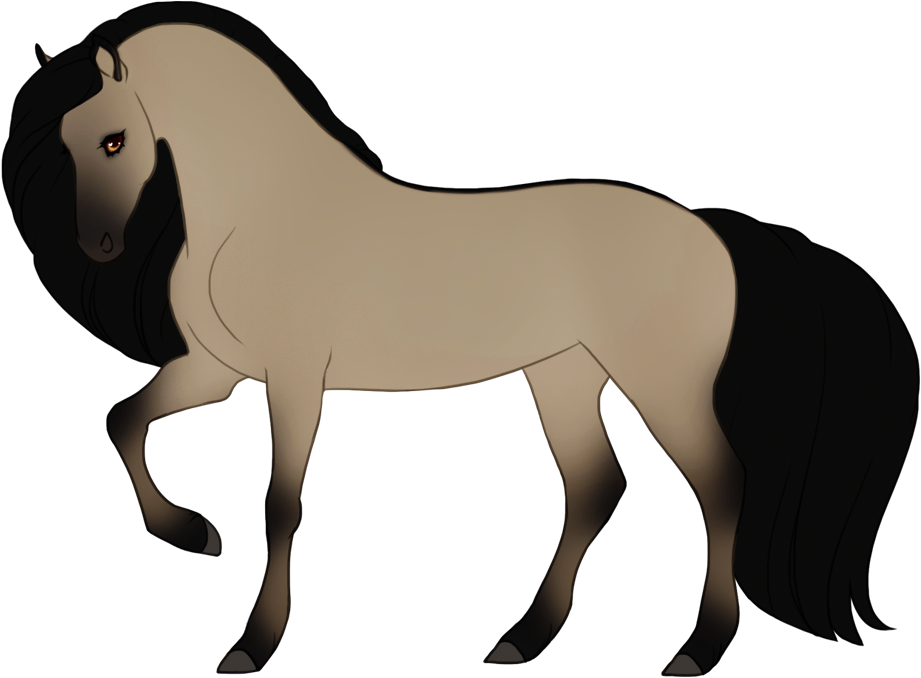
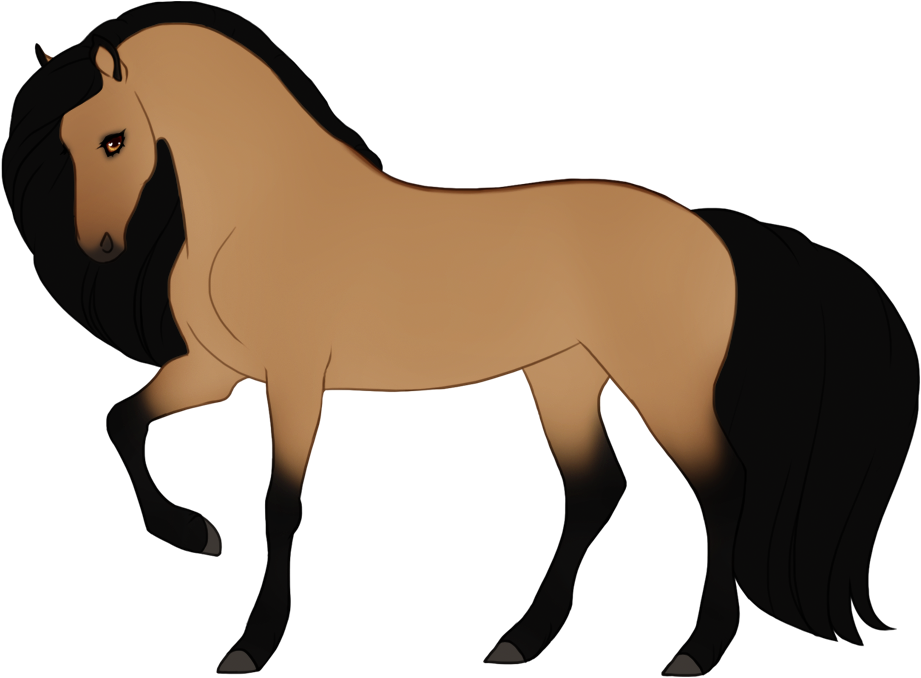
Dun
modifier
Genetics
Genotype options:
While Dun is technically a dilute and not a modifier, it's categorized as a modifier in Veilhorns due to how it can optionally interact with patterns.
Appearance
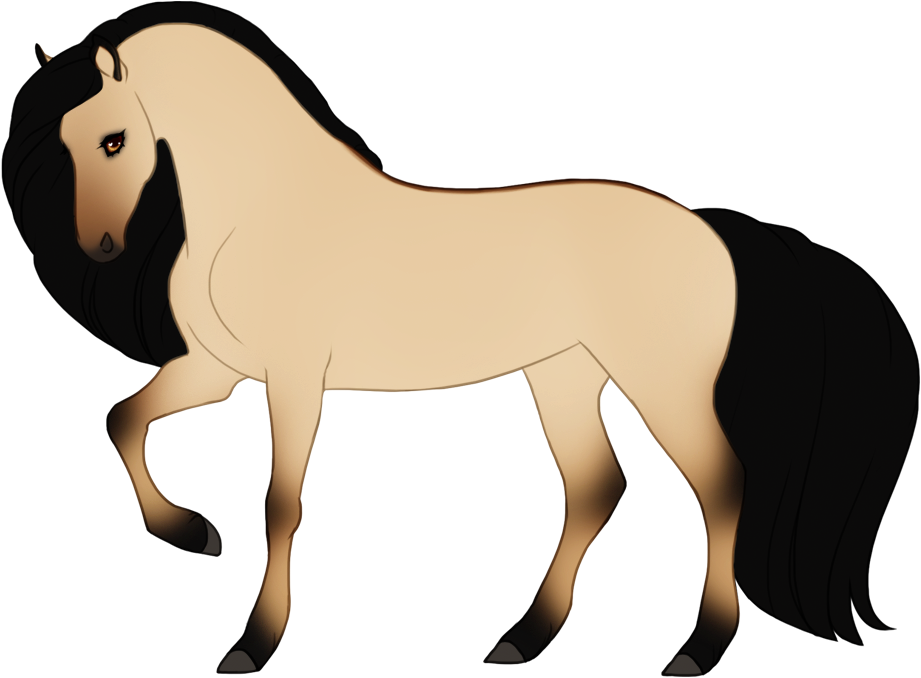
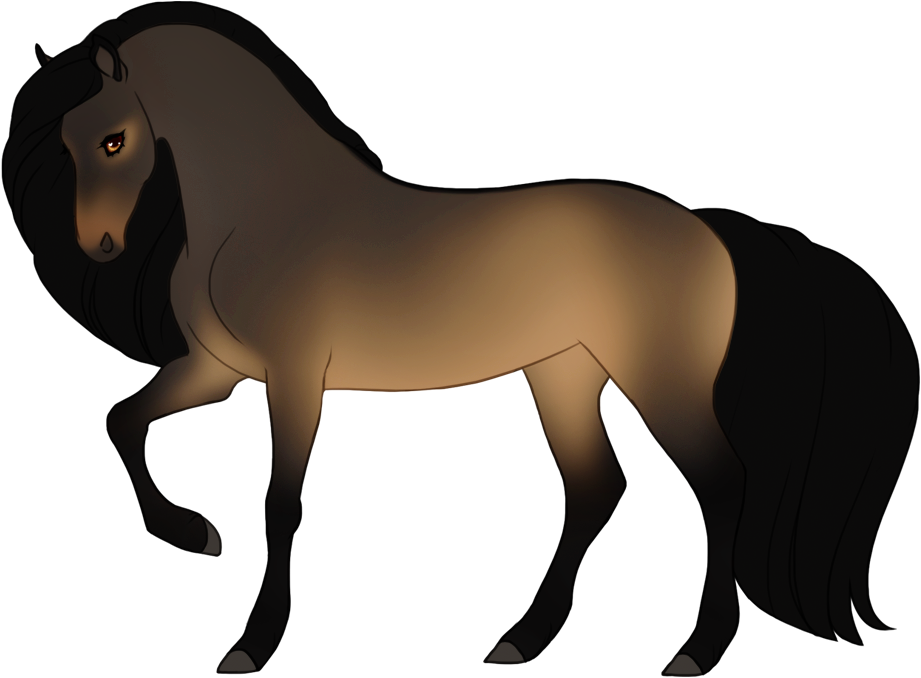
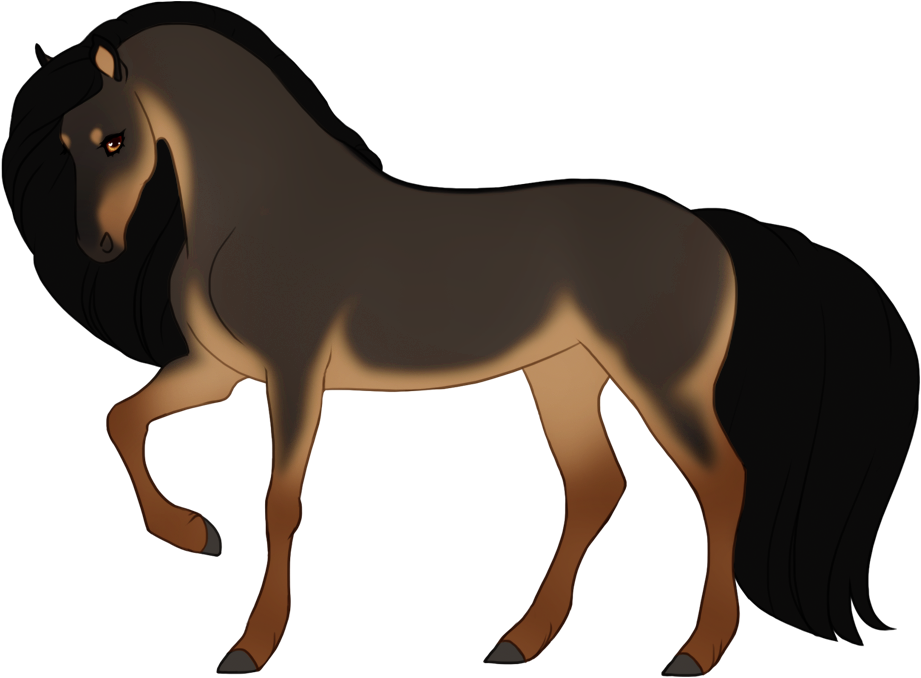
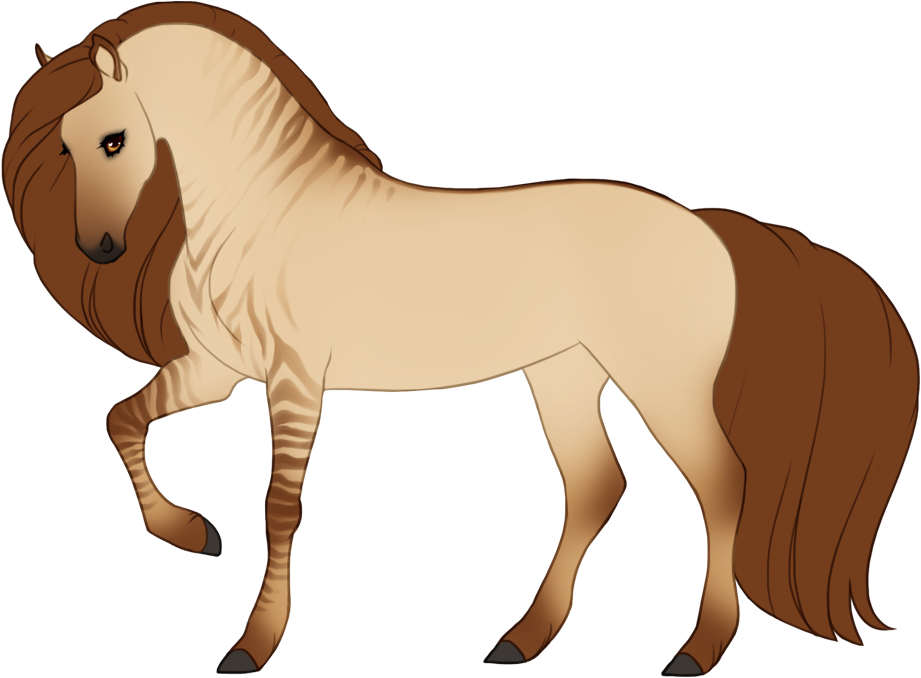
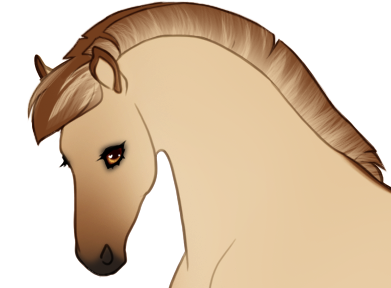
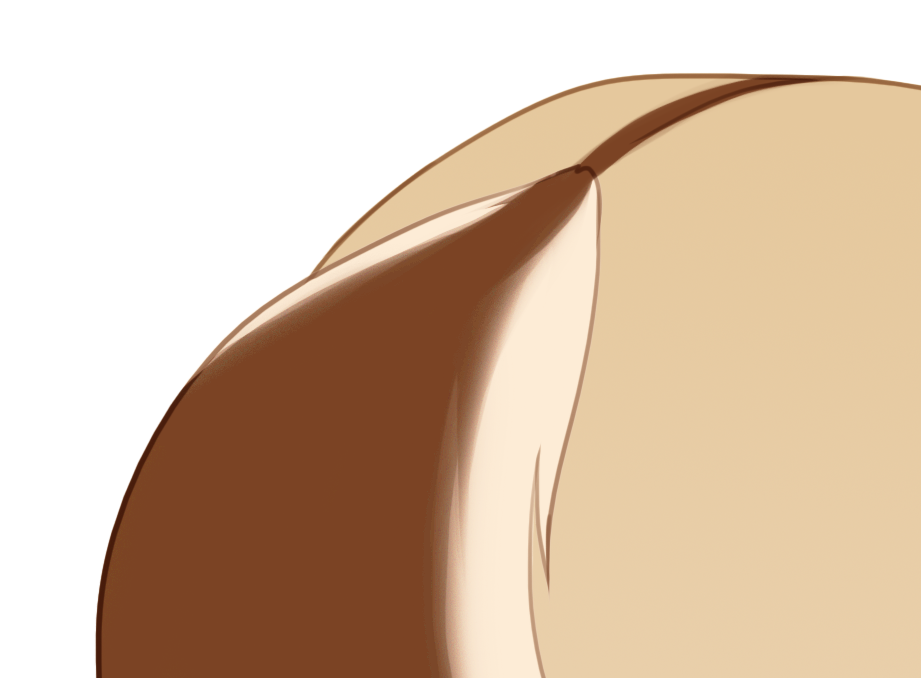
Dun dilutes most of the coat into a lighter shade, anywhere from very subtly lighter to a bright, creamy beige. Dun will always leave an undiluted "dorsal stripe" along the back/topline, undiluted rims on the ears, as well as undiluted legs or at the very minimum undiluted knees/hocks/fetlocks. The bottom/front of the face (between the muzzle to the eyes) should be undiluted as well, and may optionally extend further leaving most of the head undiluted.
Mane and tail should not be affected by dun, except for an optional "frosting" effect (see further below), diluting only the outer edges of the mane & tail.
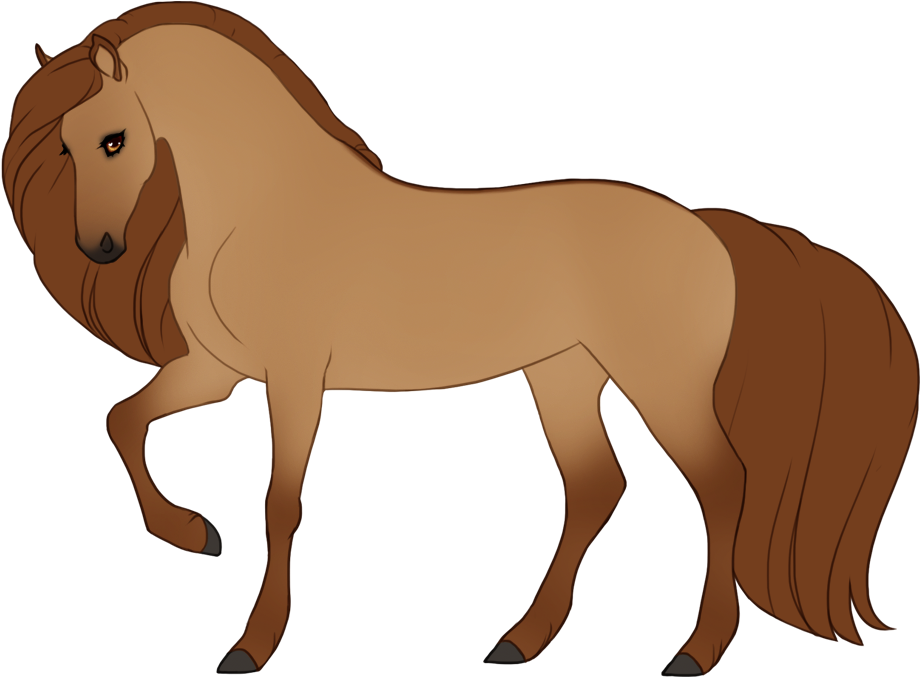
Minimum requirement:
- Must noticeably lighten the body.
- Must have undiluted lower face, knees/hocks/fetlocks, dorsal stripe, and rims of ears.
Minimum requirements can be reduced or completely removed by the [LINK] occlusion trait.
Allowed:
- Can be slightly lighter than the coat.
- Can be very light, near-white.
Not allowed:
- May not dilute the face, knees/hocks/fetlocks, dorsal stripe, or rims of ears.
Eye colour:
Doesn't affect eye colour.
Skin colour:
Doesn't affect skin colour.
Horn/hoof colour:
Doesn't affect horn or hoof colour.
Examples
Primitive markings
Primitive markings is an optional effect of Dun
The minimum requirements of Dun must still be met regardless if Primitive markings is shown or not.
Primitive markings is not listed in the phenotype, a Dun with Primitive markings is still only written as Dun.
Appearance
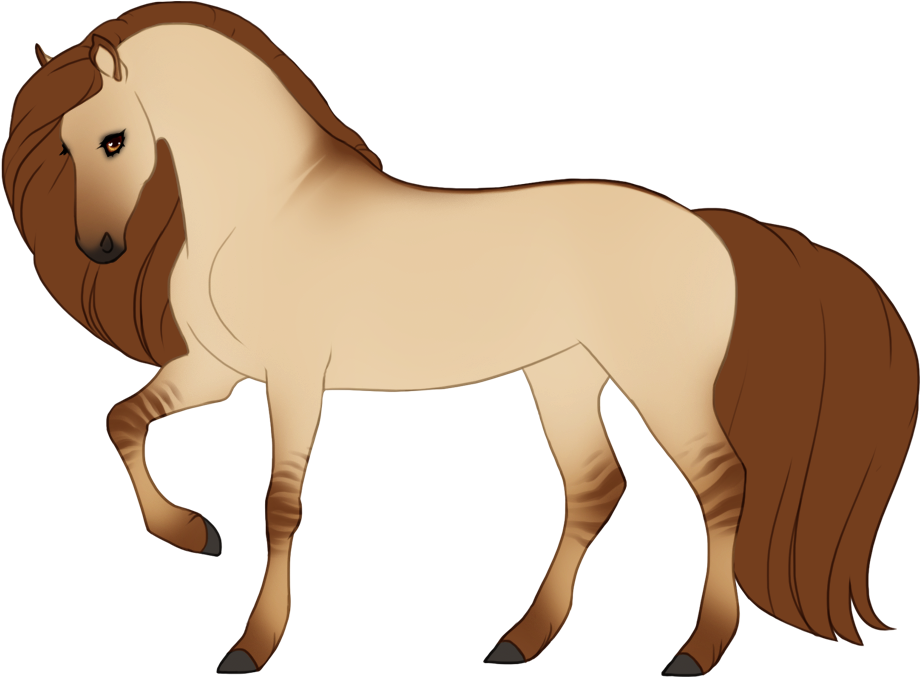
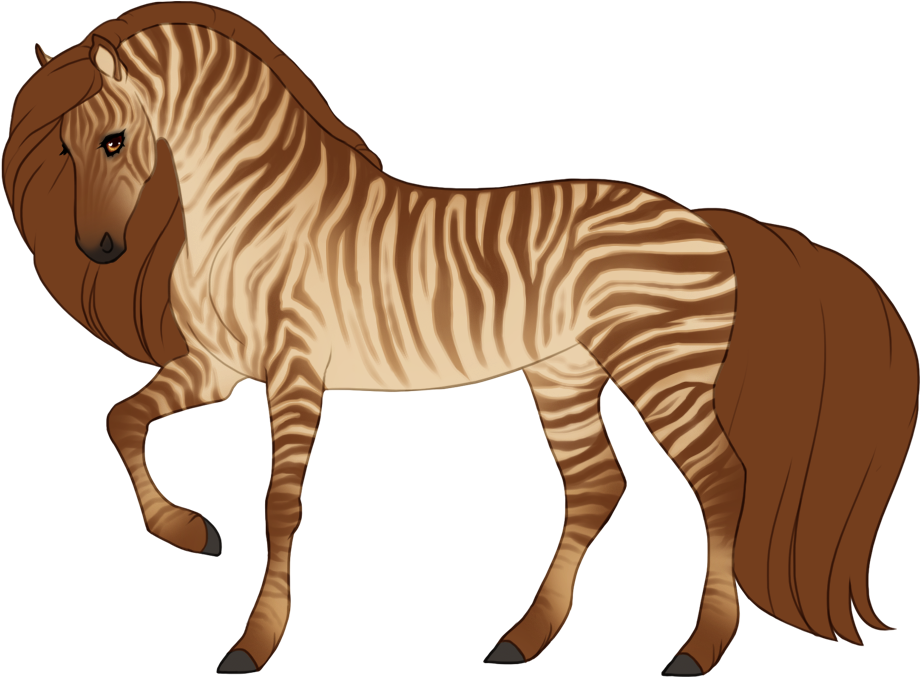
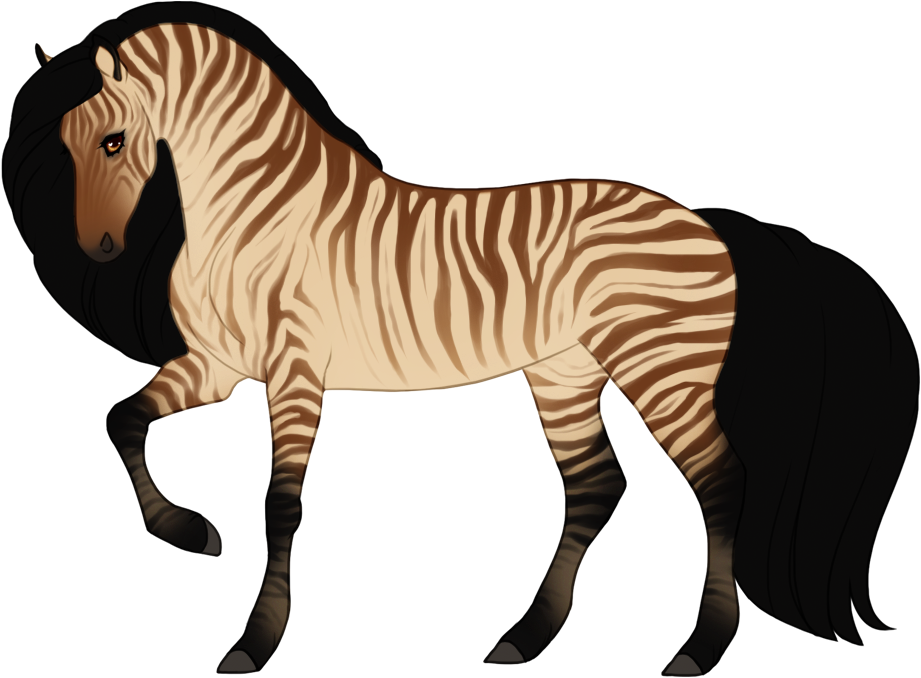
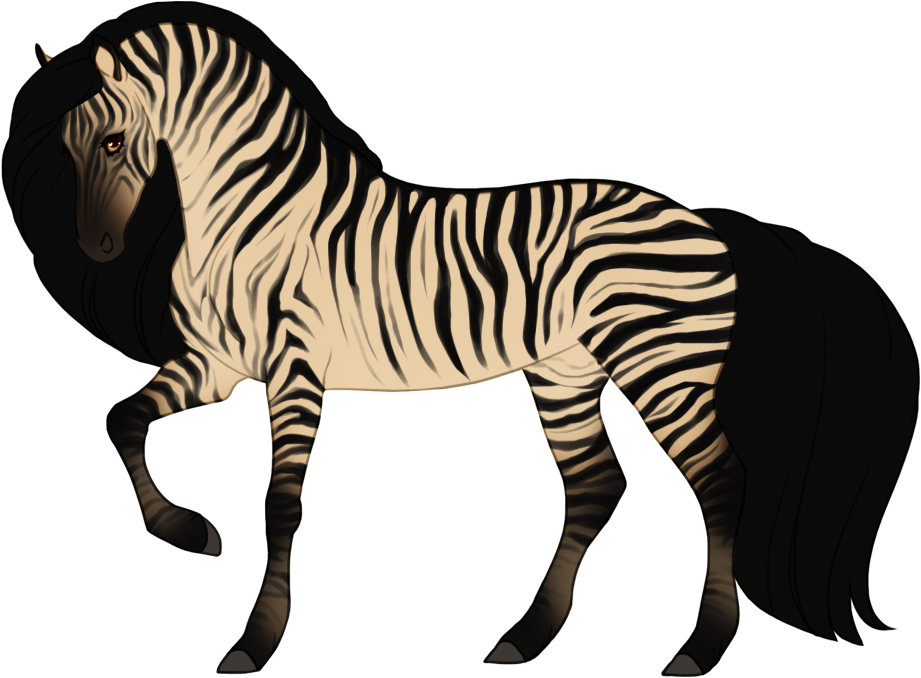
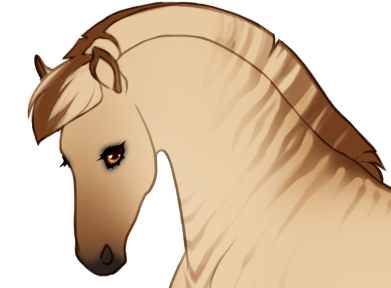
Common primitive markings are stripes on the knees/hocks ("leg barring"), stripes/barring around the withers, and "cobwebbing" on the forehead, but can also extend further.
Primitive markings should be the same color as the undiluted coat "under" the dun, and mimic the appearance of zebra or zorse stripes. This means primitive markings may not be significantly darker than the undiluted legs or the dorsal stripe, they should be the same color. On bay/seal/tanpoint-based coats, the primitive markings are allowed to be the same colour as the mane/tail.
Eye colour:
Doesn't affect eye colour.
Skin colour:
Doesn't affect skin colour.
Horn/hoof colour:
Doesn't affect horn or hoof colour.
Examples
Frosting
Frosting is an optional effect of Dun
The minimum requirements of Dun must still be met regardless if Frosting is shown or not.
Frosting is not listed in the phenotype, a Dun with Frosting is still only written as Dun.
Appearance
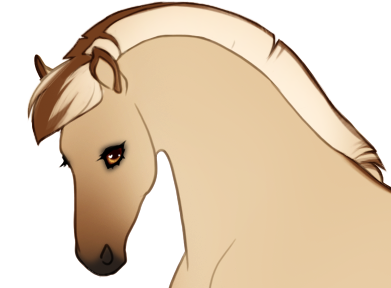
The mane and tail can optionally be affected, similar to Norwegian Fjord Horses, with lighter hairs on the outside edges of the mane and tail. A heavy frosting effect in the mane and tail can be even brighter than the diluted body coat hairs.
If primitive markings are present, the mane and tail will not show any frosting where the primitive markings "touch".
The undiluted dorsal stripe along the horse's topline causes the middle of the mane and tail to be unaffected by dun, giving it a two-colored appearance.
Eye colour:
Doesn't affect eye colour.
Skin colour:
Doesn't affect skin colour.
Horn/hoof colour:
Doesn't affect horn or hoof colour.