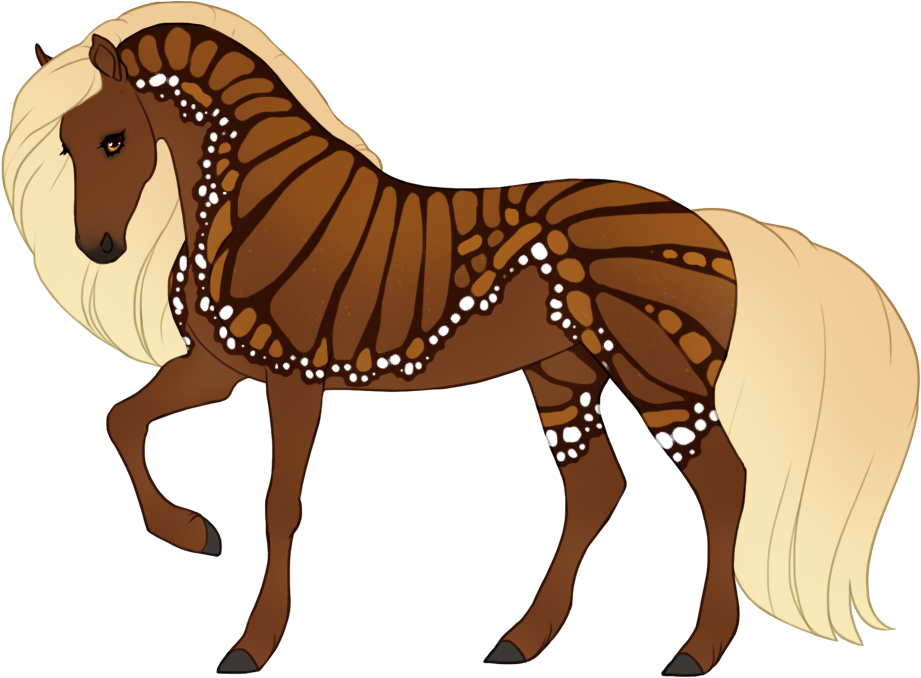
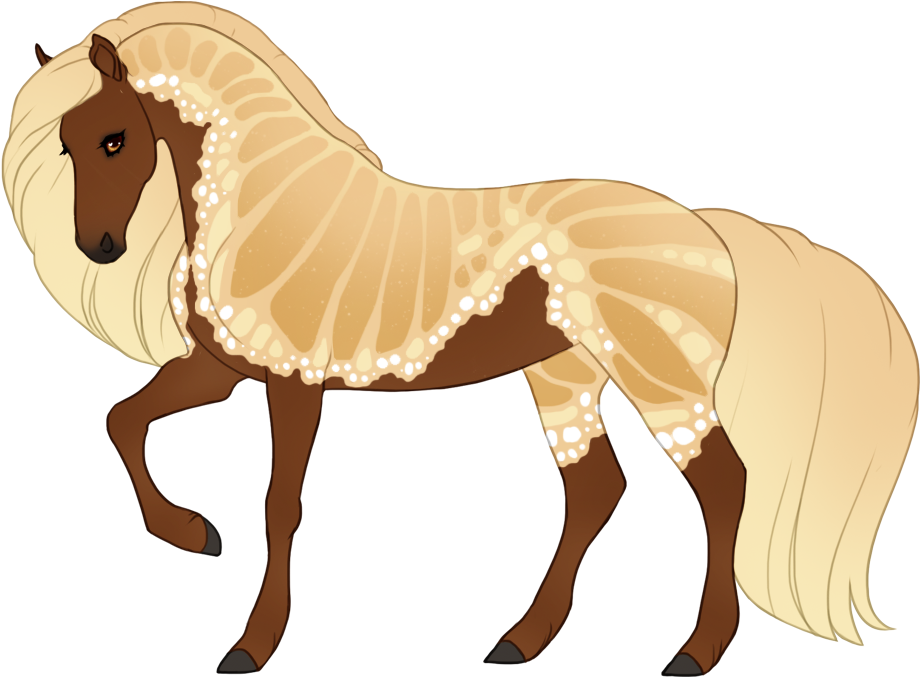
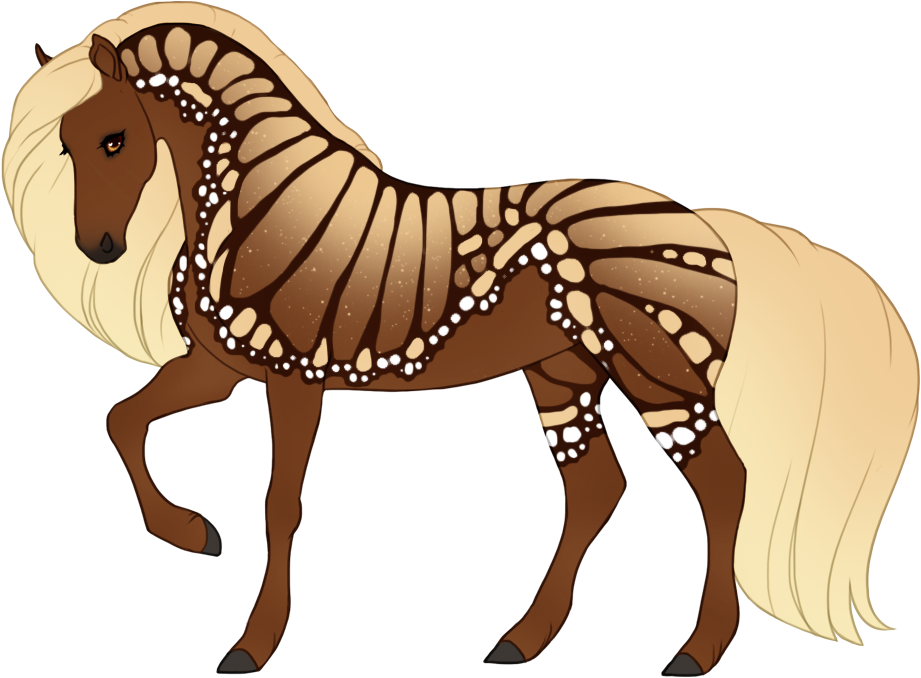
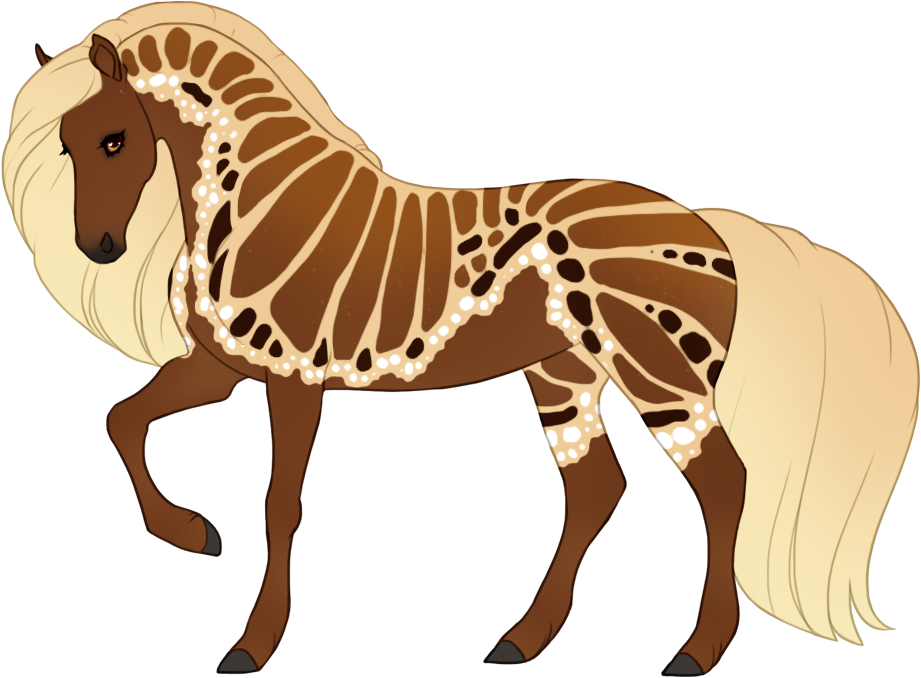
Veilhorn Steed

Basilisk

pattern

Shop info:

Genetics

Genotype options:

Appearance

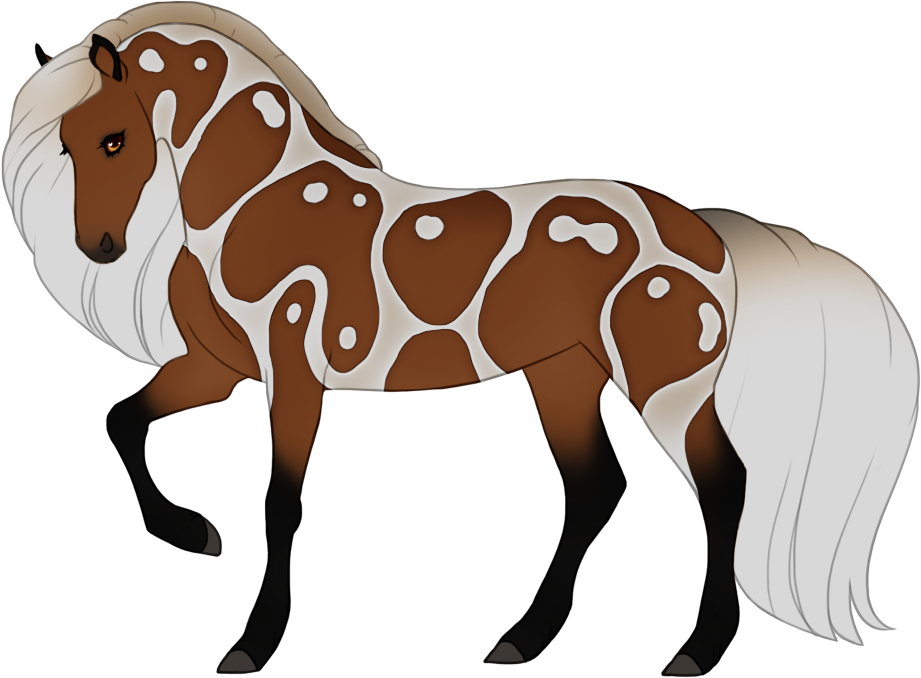
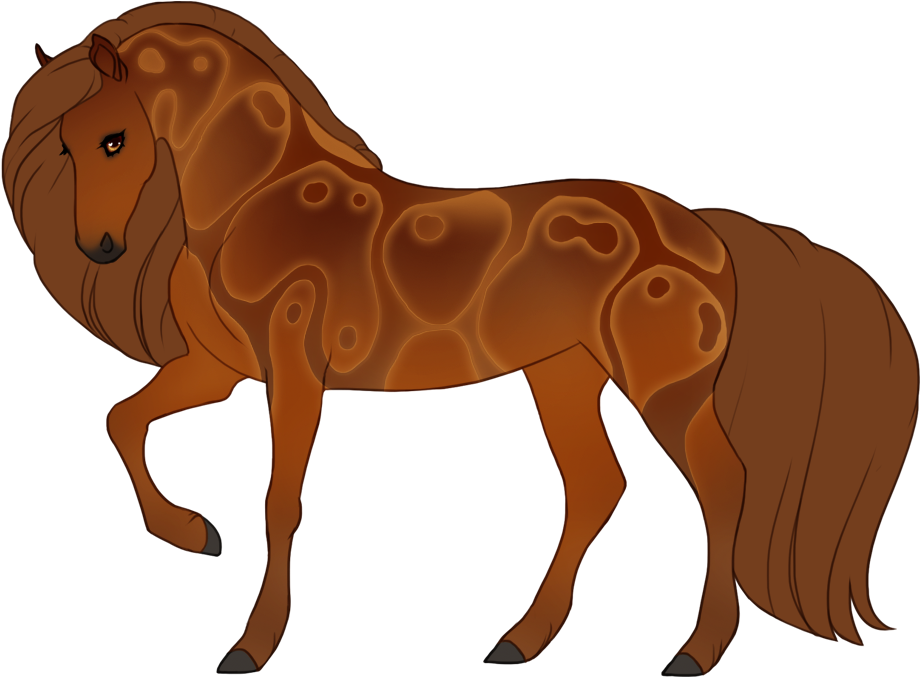
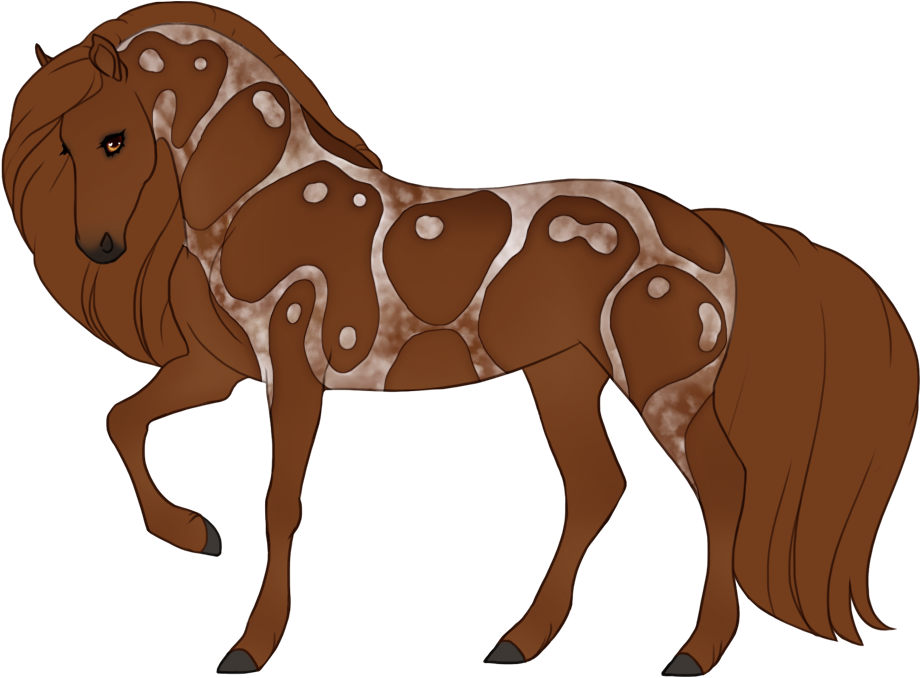
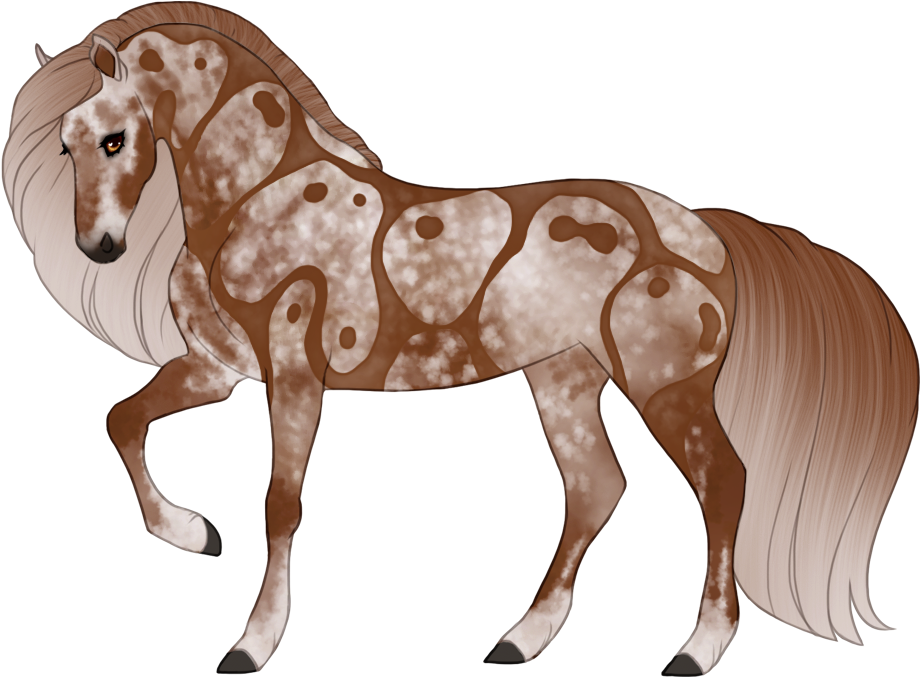
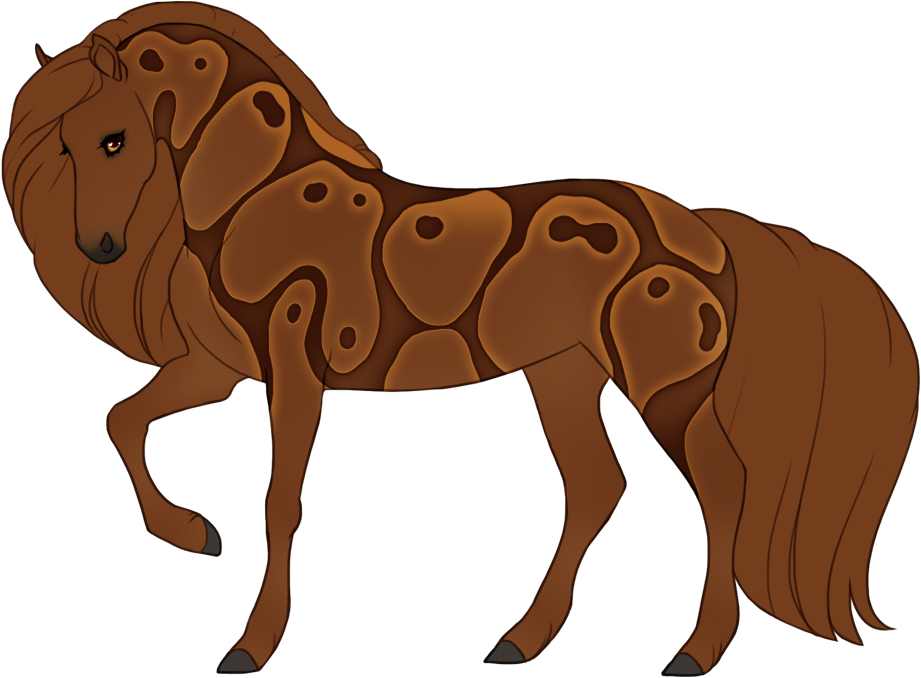
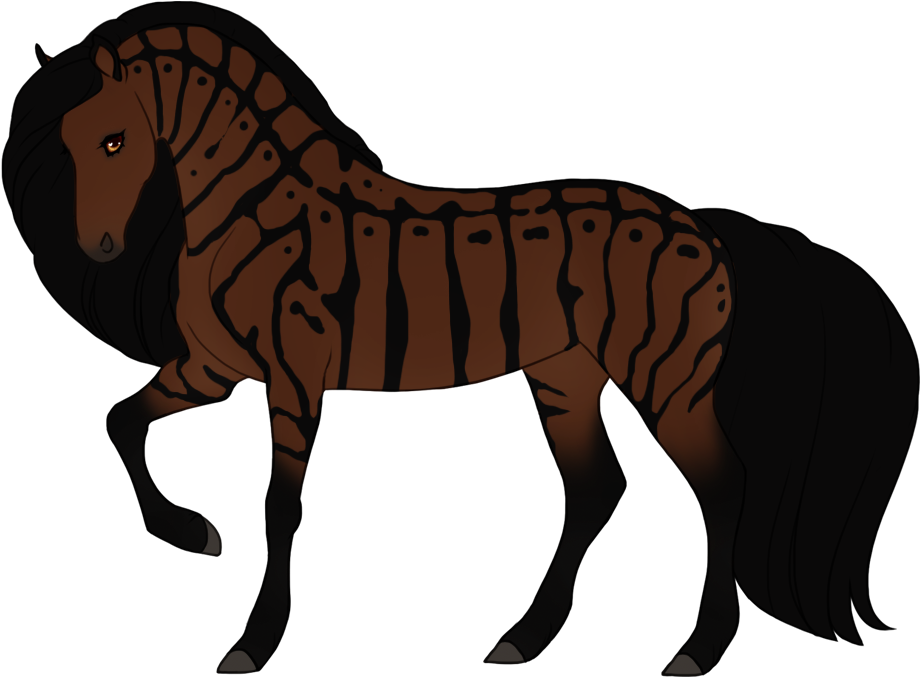
Basilisk causes stripes and spots similar to some ball python morphs. Lines can be thin or thick, and often have a "wobbly" appearance with soft curves around spots and blotches.

Basilisk patterns are always darker than the coat (anywhere from just slightly darker to black), and can optionally have lighter accents. Basilisk typically has darker inner borders and lighter outer borders, and optionally also a soft lighter gradient near the topline of any markings.

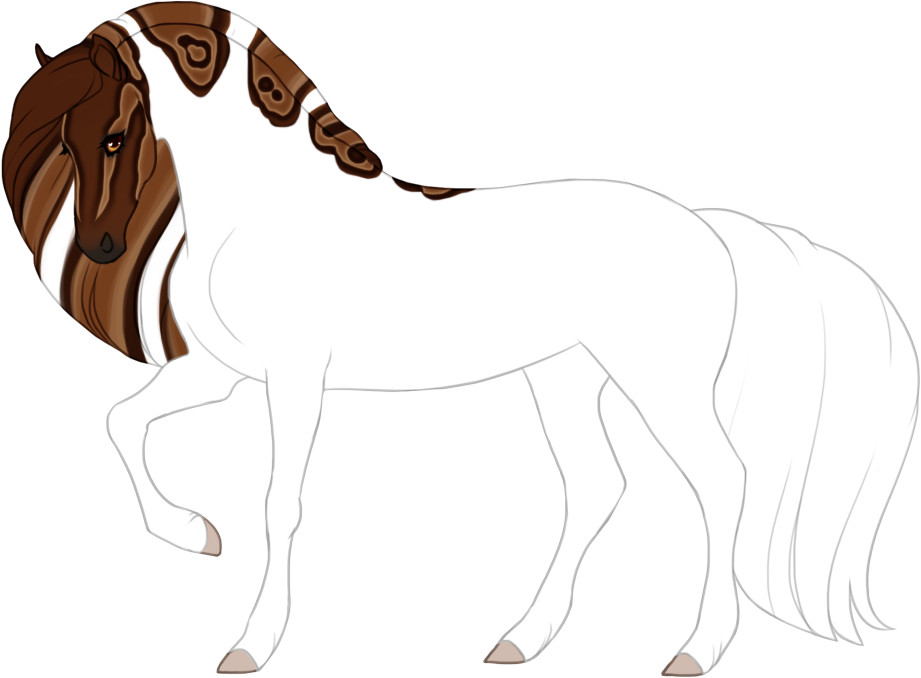
Always goes below white patterns, and can optionally cause borders or outlines around the white markings to fit the basilisk pattern, similar to pied ball pythons.
Minimum requirement:

  • Snake-like spotting and/or striping somewhere on the body.

Minimum requirements can be reduced or completely removed by the occlusion trait.

Allowed:

  • Can optionally affect mane and tail where it touches.
  • Can optionally cause dark basilisk outlines/borders around white patterns.

Not allowed:

  • Can not cause snake scales or the illusion of snake-scales.

Eye colour:

Doesn't affect eye colour.

Skin colour:

Can optionally affect skin where it touches. Dark patterns should darken skin while light patterns should lighten skin.

Horn/hoof colour:

Can optionally affect horns/hooves where it touches. Dark patterns should darken them while light patterns should lighten them.

Examples

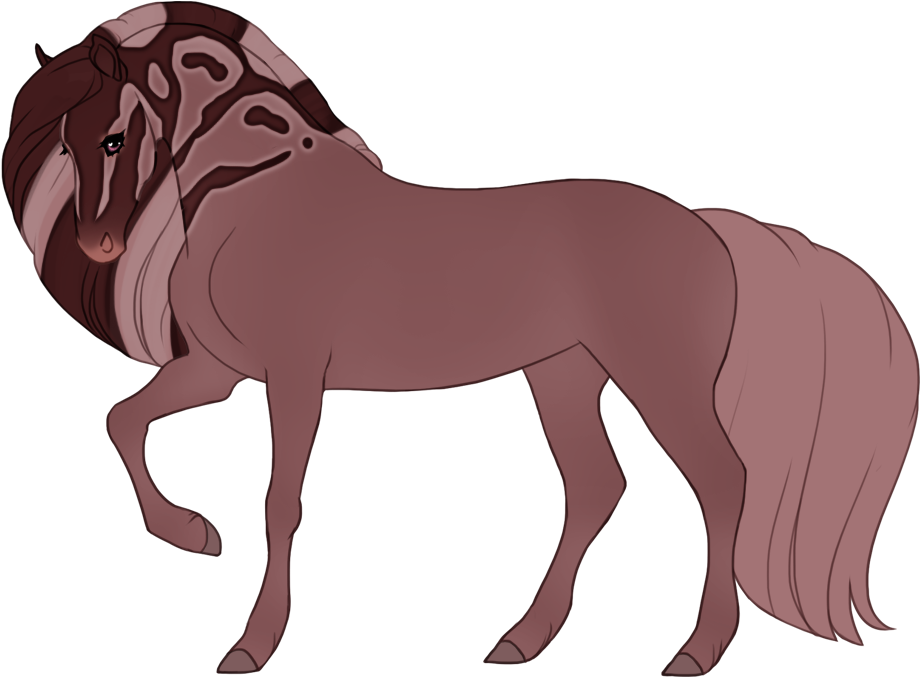
Dark patterns with even darker outlines, and light accents

Dark patterns with even darker outlines, and light accents

chestnut + Basilisk

Black patterns without accents

Black patterns without accents

bay + Basilisk

Dark patterns with light accents, affecting mane

Dark patterns with light accents, affecting mane

blue honey + Basilisk

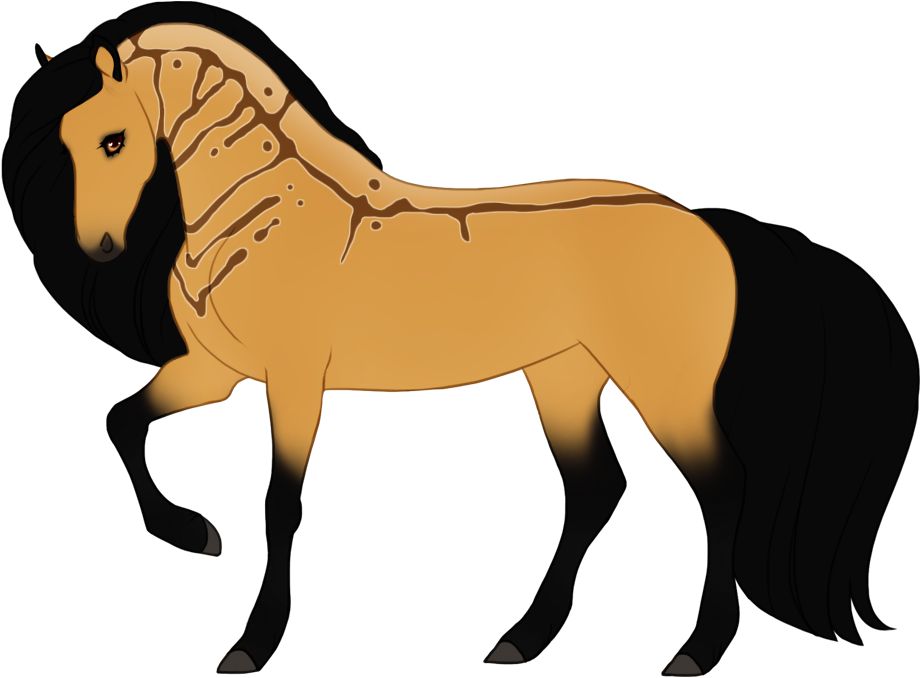
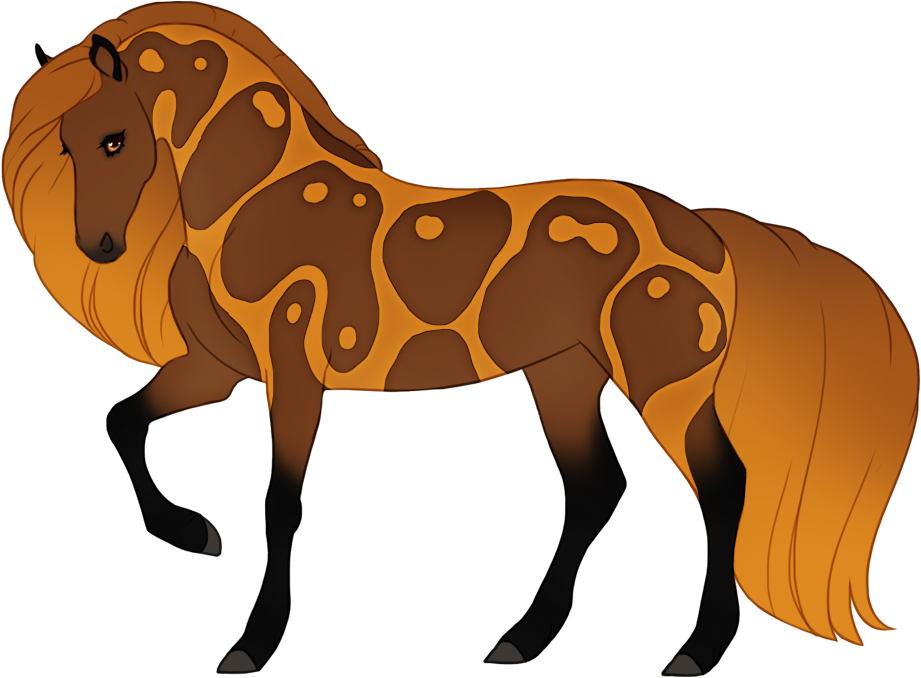
Dark patterns with light accents

Dark patterns with light accents

buckskin + Basilisk

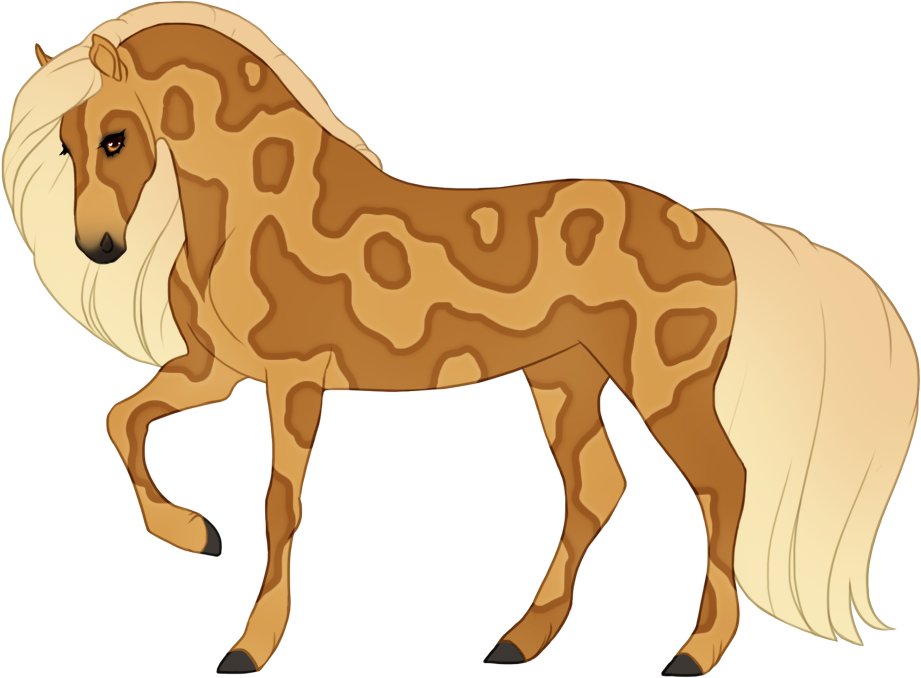
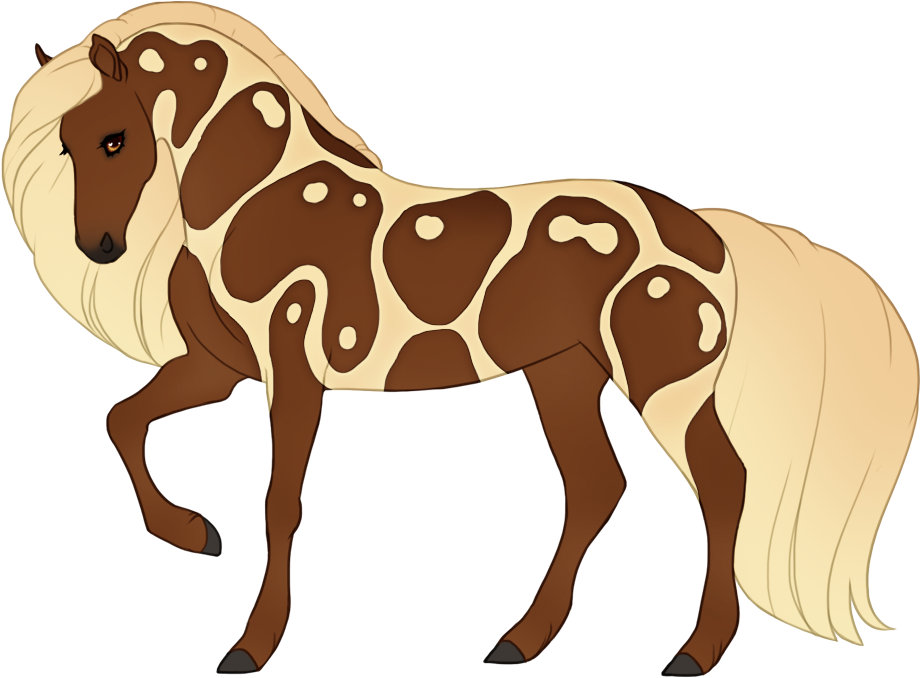
Thick and "wobbly" patterns, with darker outlines and lighter accents

Thick and "wobbly" patterns, with darker outlines and lighter accents

palomino + Basilisk

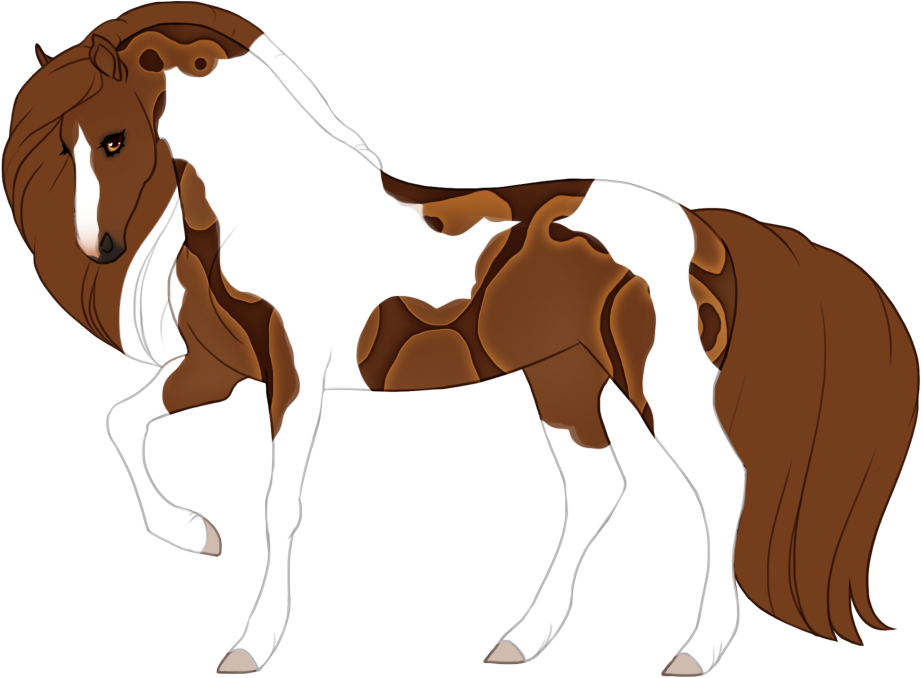
Always goes below white patterns

Always goes below white patterns

chestnut + Basilisk + Tobiano

Always goes below white patterns

Always goes below white patterns

chestnut + Roan + Basilisk

"Pied" creating dark outlines at the edges of white patterns

"Pied" creating dark outlines at the edges of white patterns

chestnut + Basilisk + Cowl

Modifiers

  • Bronze turns patterns into a light and/or rich brown.
  • Flaxen turns patterns creamy white or lighter than the base coat. (only affects chestnut-based (ee) coats)
  • Silver turns patterns white or lighter than the base coat. (only affects black-based (EE or Ee) coats)
  • Chromatic can change the pattern's brightness and/or saturation.
  • Grey can leave the patterns unaffected (doesn't grey out), or leave the entire body unaffected and only the patterns grey out.

Mutations

  • Astral can cause the patterns to become starry/sparkly, in any colour.
  • Aurora can cause the patterns to glow in any colour.
  • Eclipse can cause the patterns to have an eclipsed outline/border.
  • Opulent can make the patterns appear metallic/shiny and a golden/silver/copper colour.
  • Primal can cause the patterns to be the same colour as their elemental alignment.

Shimmer

  • Shimmer can turn the pattern into any colour available on each shimmer's palette, depending on which shimmer is present.
Bronze basilisk

Bronze basilisk

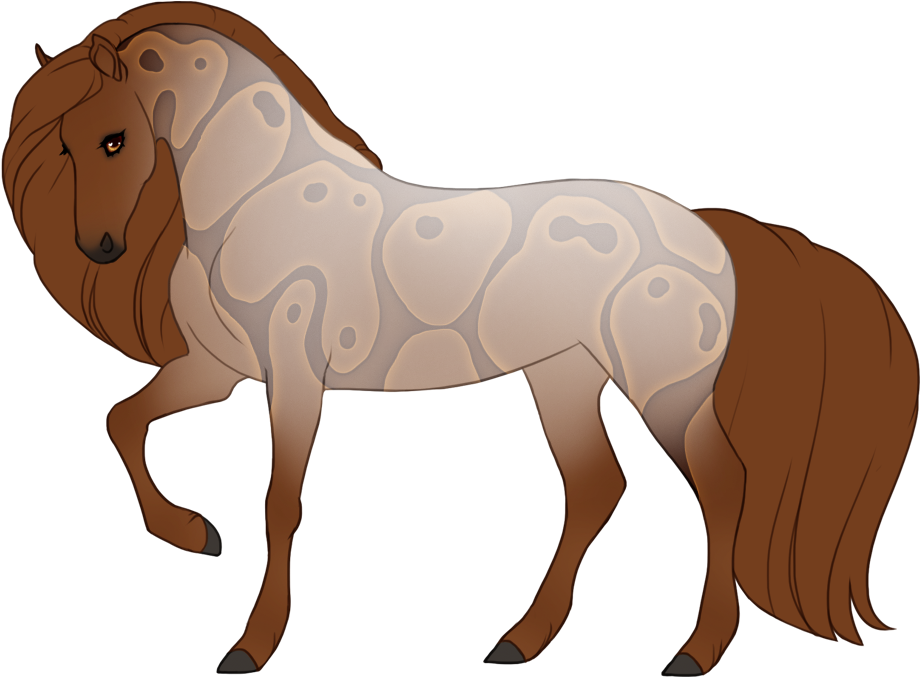
bay + Basilisk + Bronze

Flaxen basilisk

Flaxen basilisk

chestnut + Basilisk + Flaxen

Silver basilisk

Silver basilisk

bay + Basilisk + Silver

Chromatic basilisk

Chromatic basilisk

chestnut + Basilisk + Chromatic

Grey basilisk

Grey basilisk

chestnut + Basilisk + Grey

Grey basilisk

Grey basilisk

chestnut + Basilisk + Grey


Partial interactions

If your Veilhorn has Modifiers, Mutations, or Shimmer that can alter the colour of patterns, the effects can be applied either fully or partially. See the list above for which traits can alter the colour of patterns.

The examples below show Flaxen (a modifier) interacting with Pard (a pattern) and Papilio (a pattern), but the principle applies to all patterns. These examples are not exhaustive, you can choose how much the pattern is affected.

modifier pattern interaction example

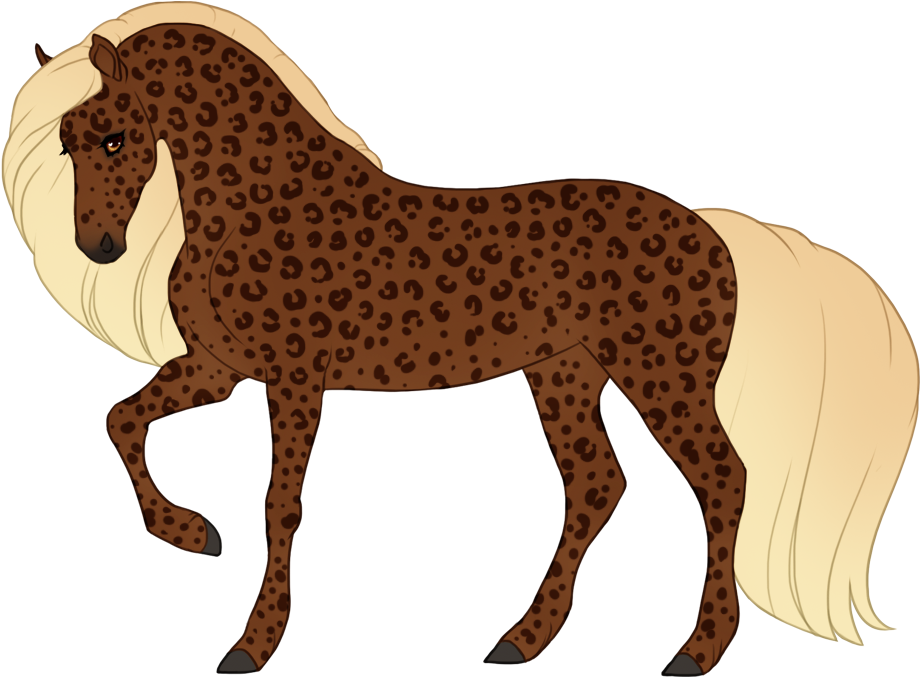
Flaxen not affecting Pard at all

modifier pattern interaction example

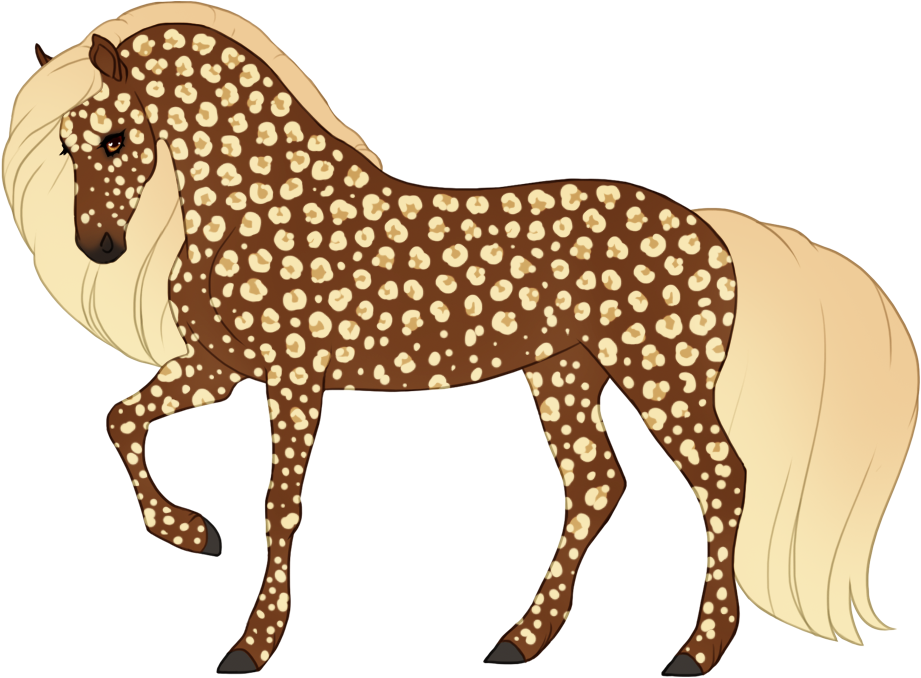
Flaxen fully affecting Pard

modifier pattern interaction example

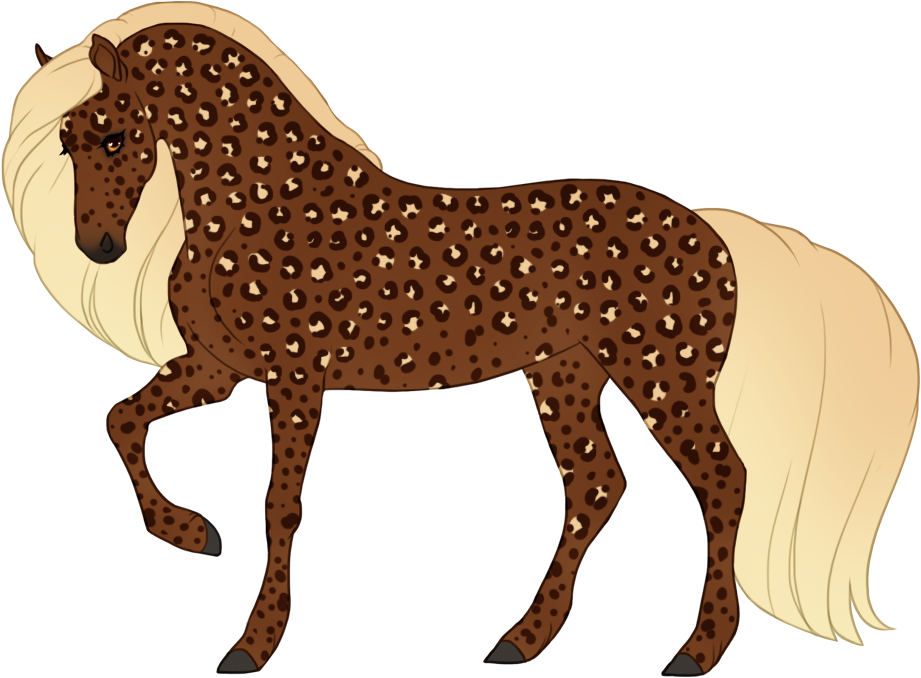
Flaxen affecting some accents only

modifier pattern interaction example

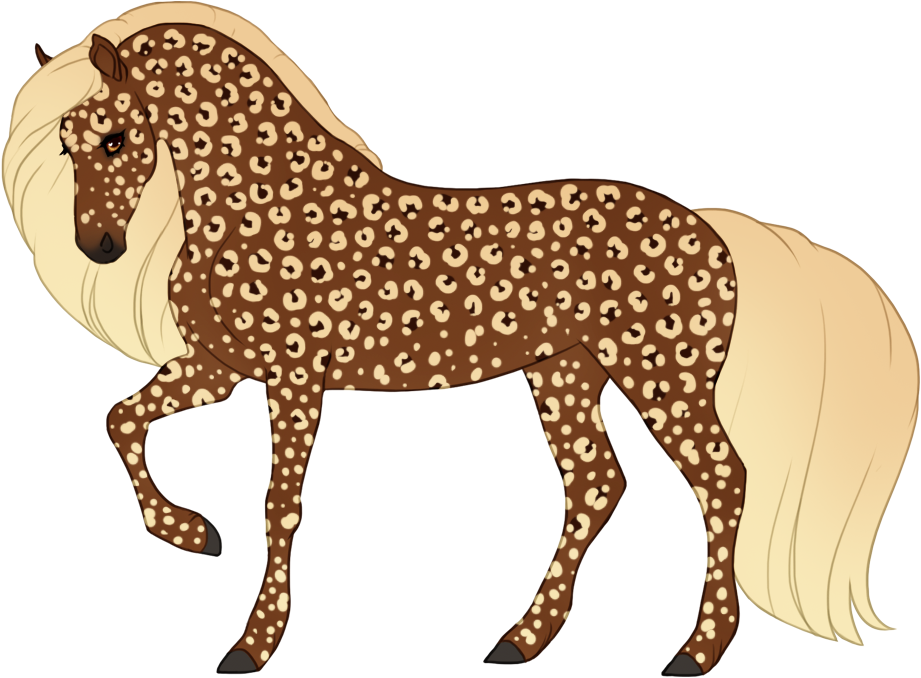
Flaxen affecting the pattern but not the accents

modifier pattern interaction example

Flaxen not affecting Papilio at all

modifier pattern interaction example

Flaxen fully affecting Papilio

modifier pattern interaction example

Flaxen affecting some accents only

modifier pattern interaction example

Flaxen affecting the pattern but not the accents