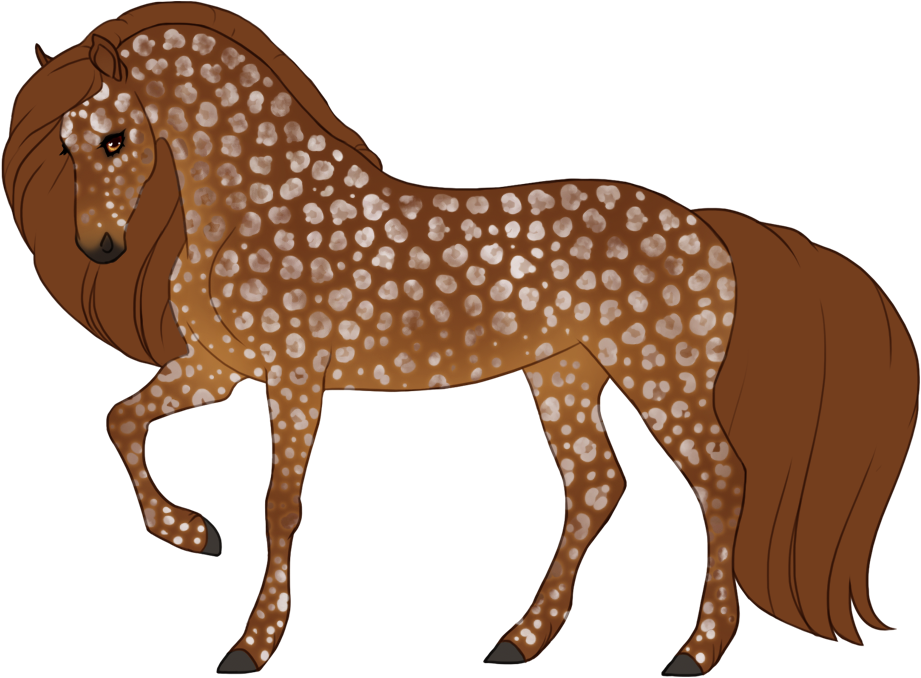
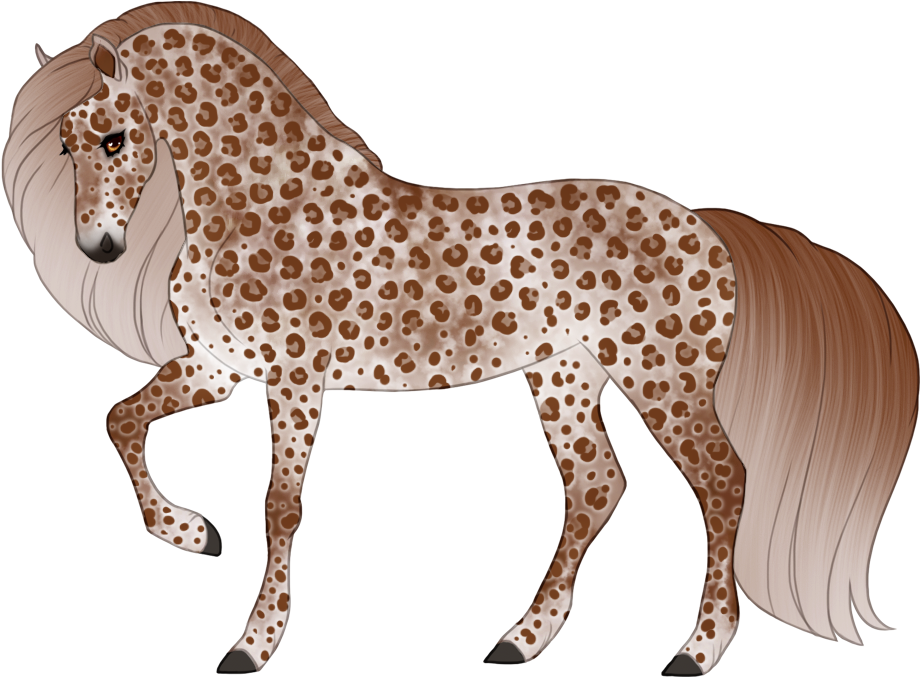
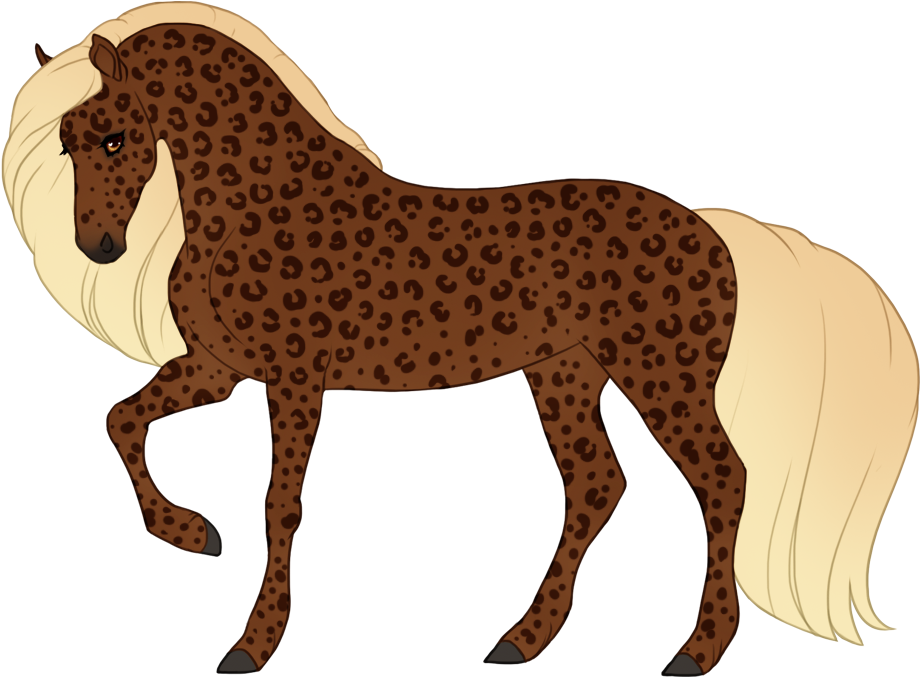
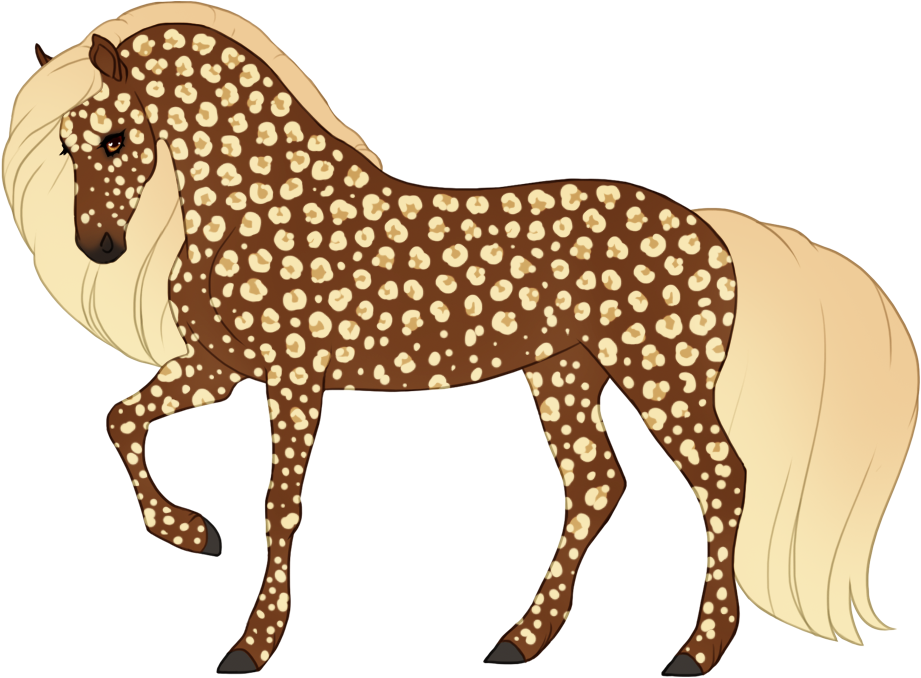
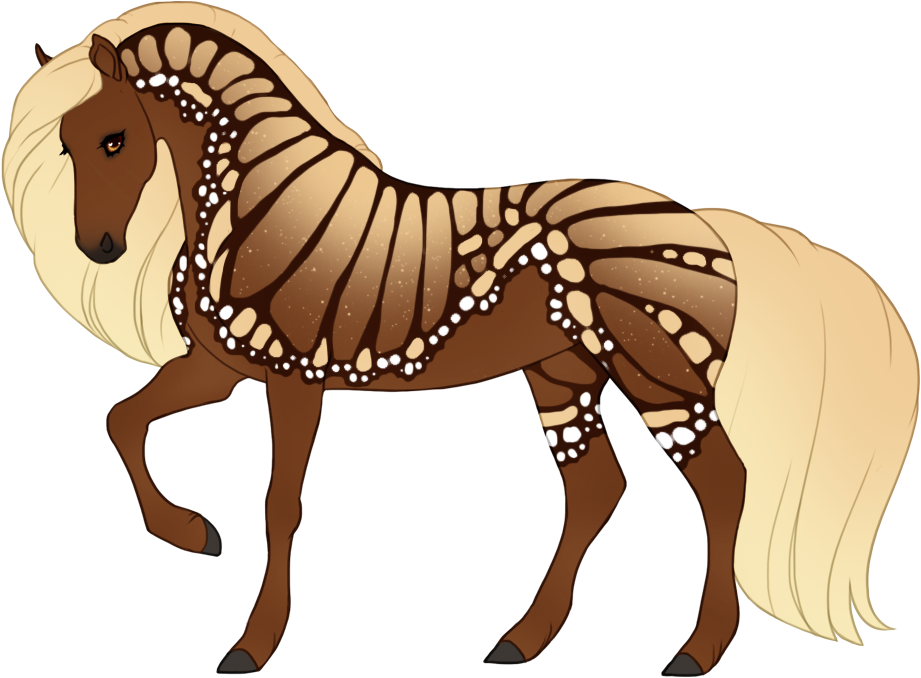
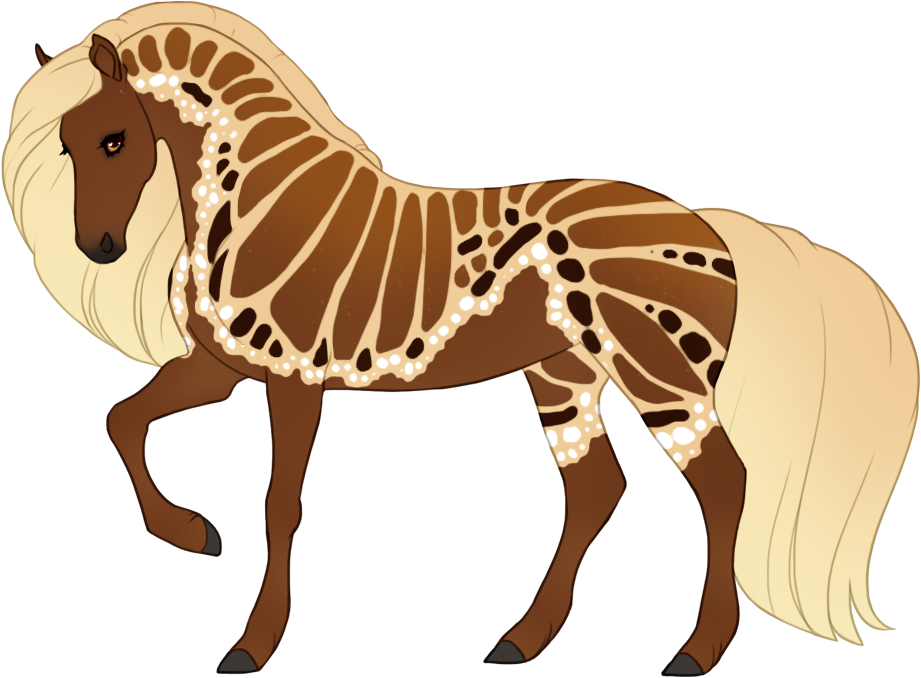
Veilhorn Steed

Shop info:

Genetics

Genotype options:

Appearance

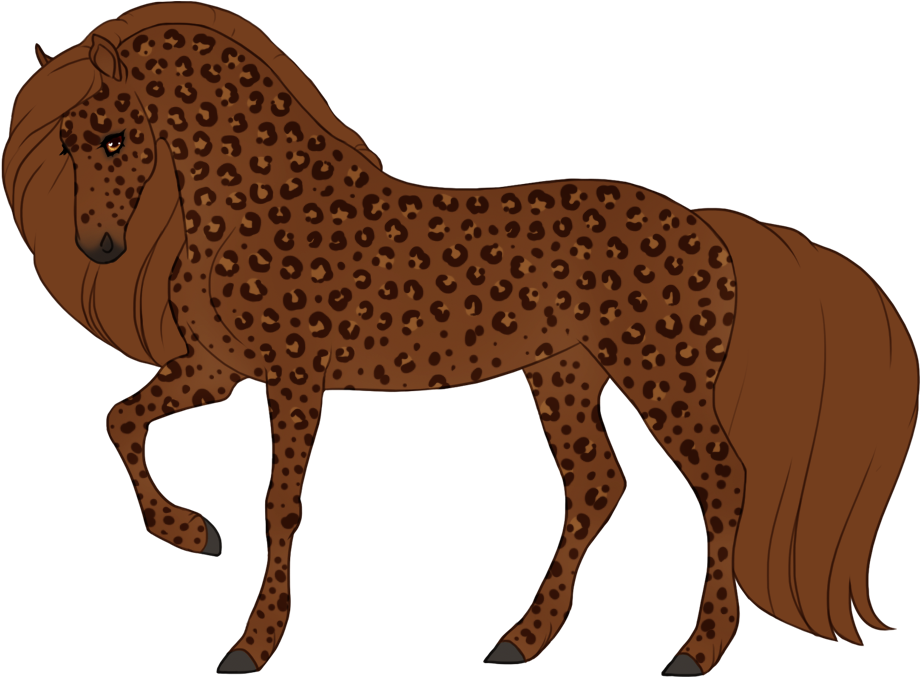
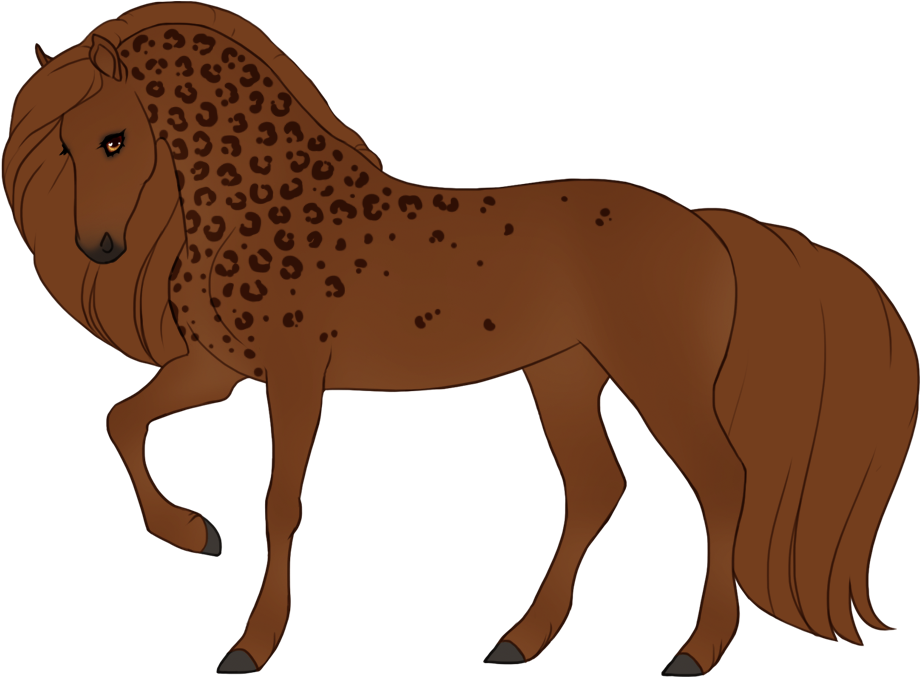
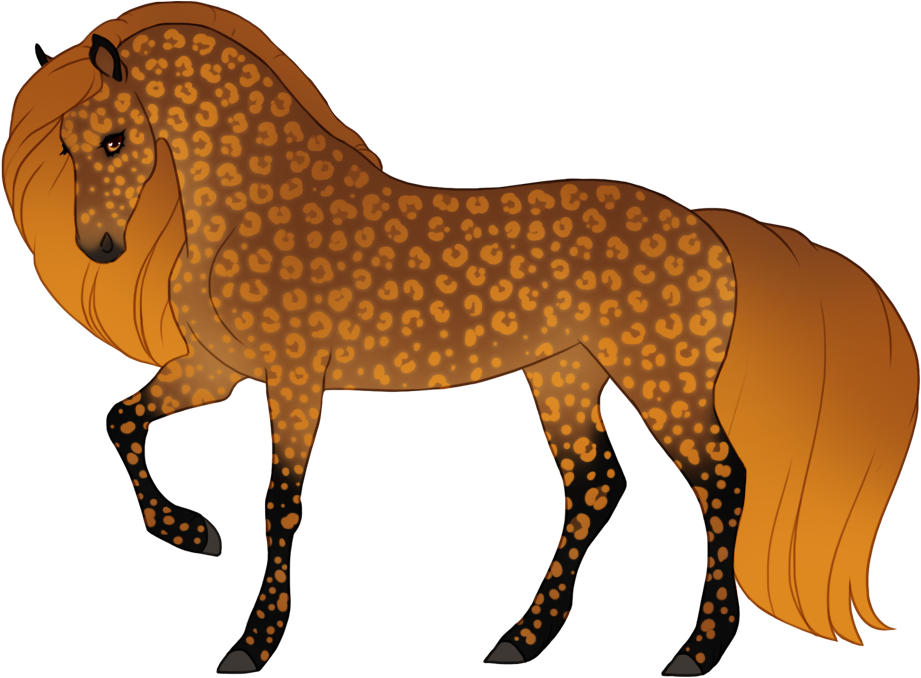
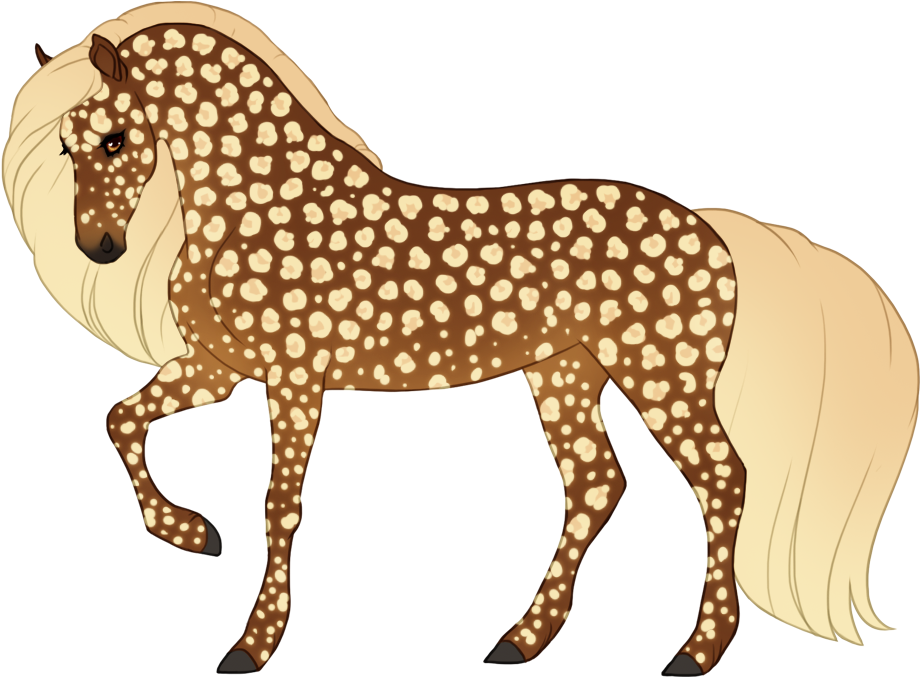
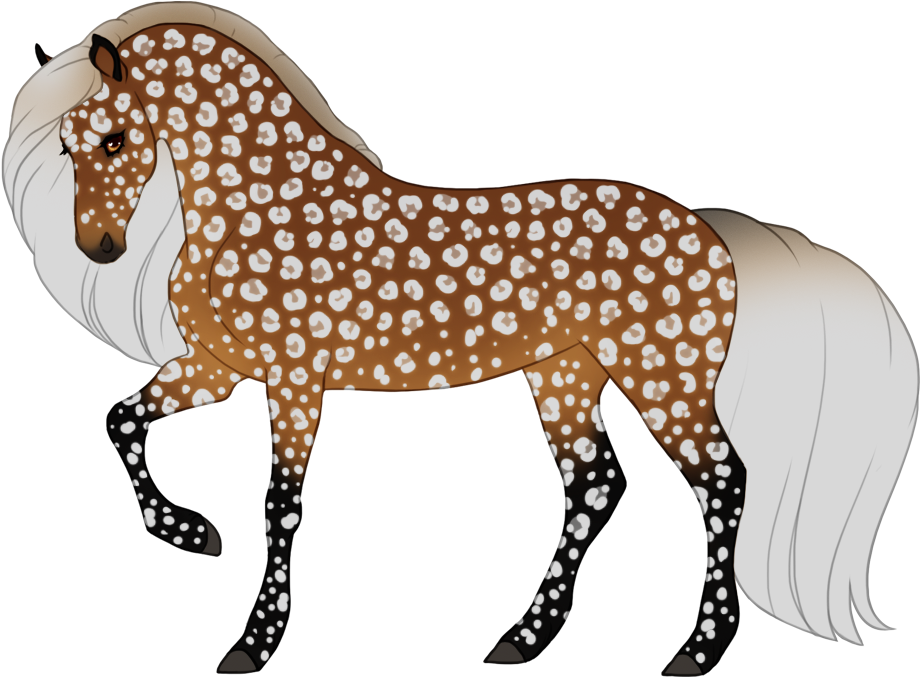
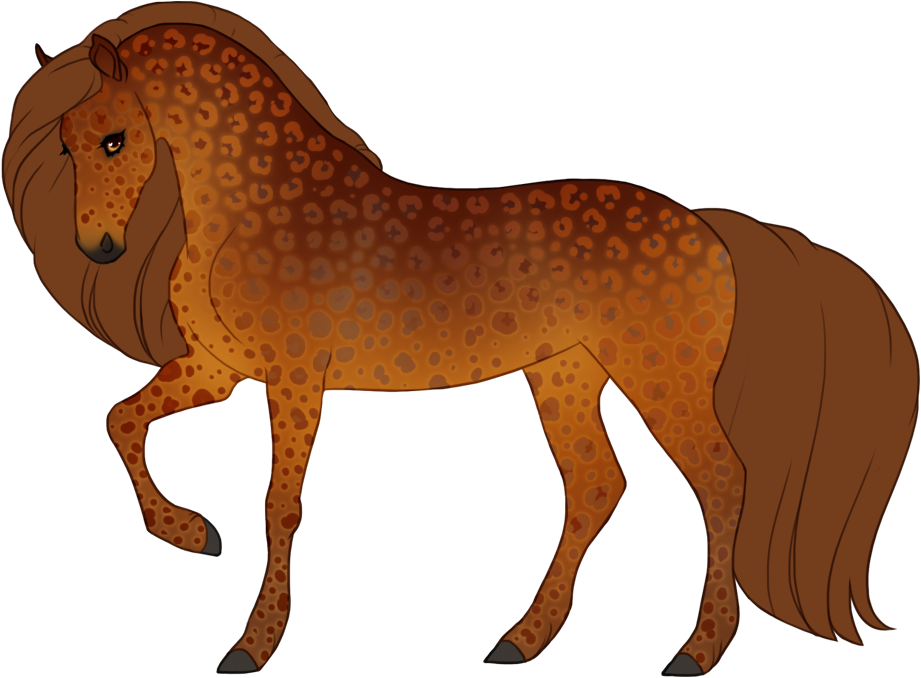
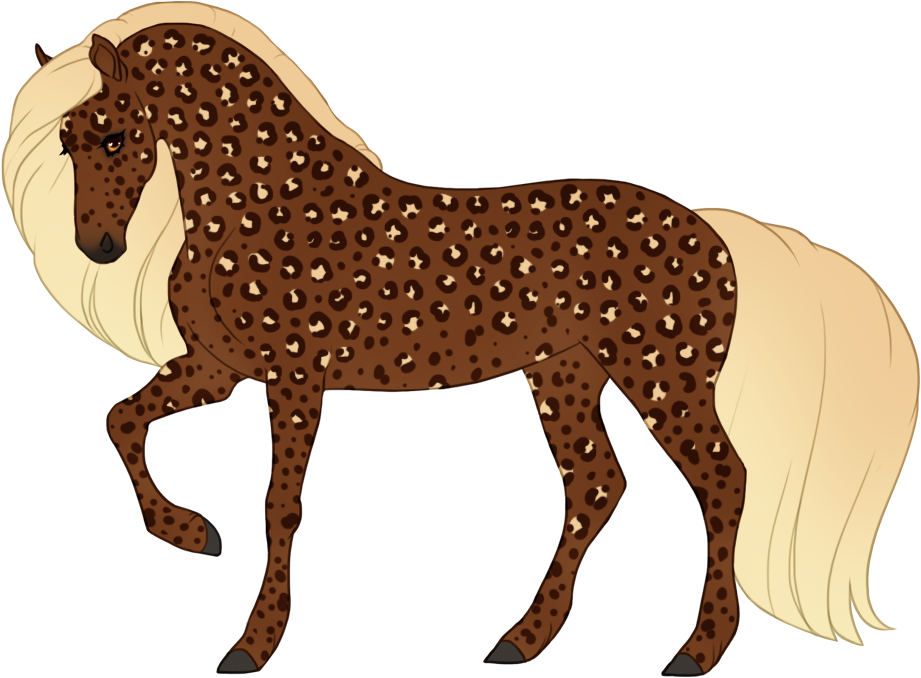
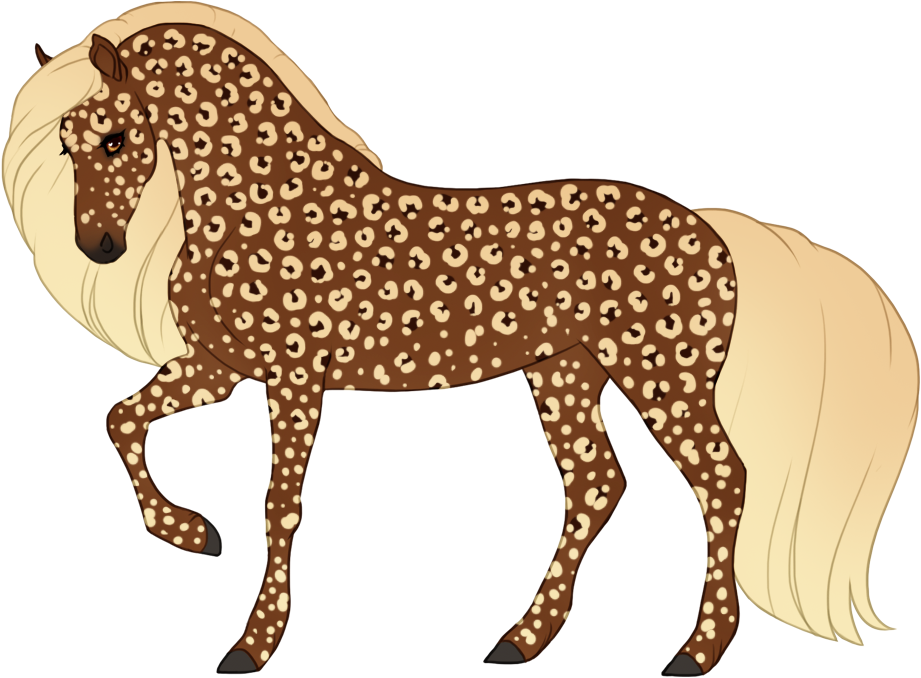
Pard appears as small spots or rosettes similar to leopard or cheetah spots. Pard can cover the entire body or just a part, but should have a clearly spotted appearance.

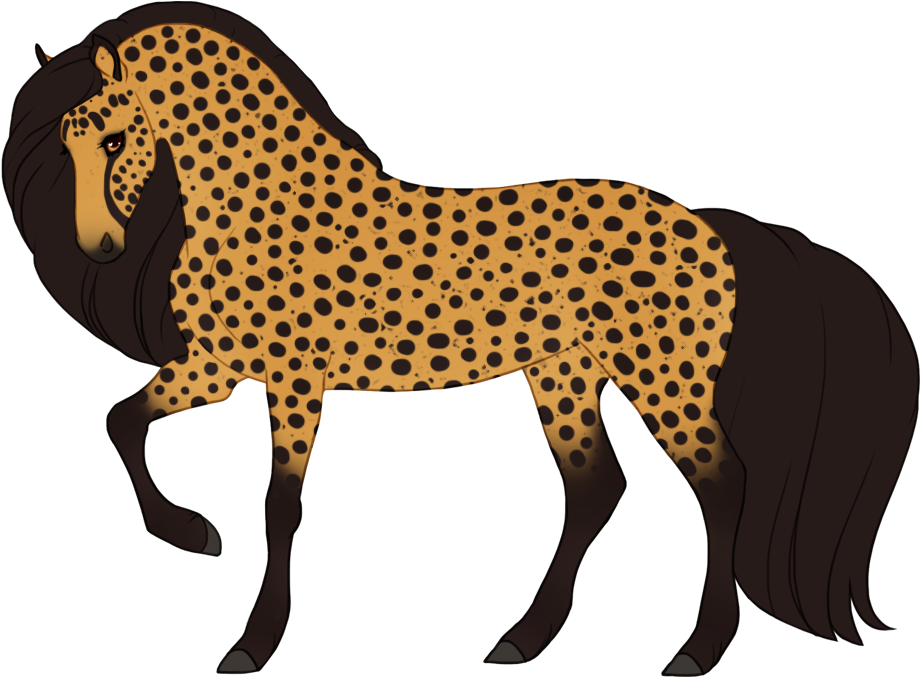
Elongated/broken spots, or even a line going from the eye to the muzzle similar to the appearance of a cheetah is allowed as long as the rest of the design is clearly spotted and recognizable as pard - the design should not be mistaken for Tabby (unless tabby is also present).

Pard spots should always be darker than the coat colour (anywhere from slightly darker to complete black). Light accents can outline the spots, lighten the inside of spots, and/or lighten the underside/belly of the horse.

Always goes below white patterns.
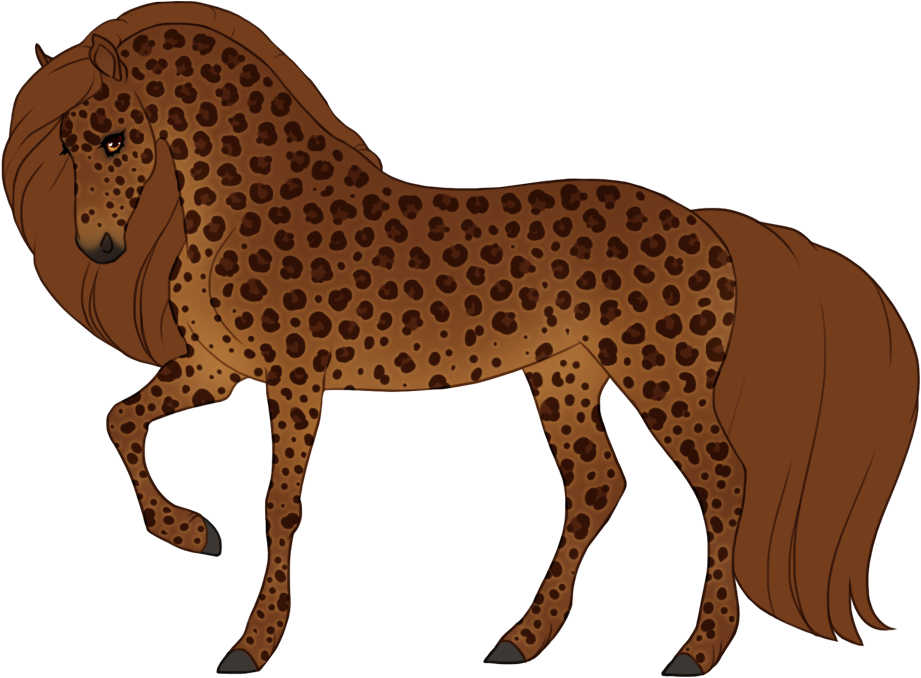
Minimum requirement:

  • A few spots anywhere on the coat.

Minimum requirements can be reduced or completely removed by the occlusion trait.

Allowed:

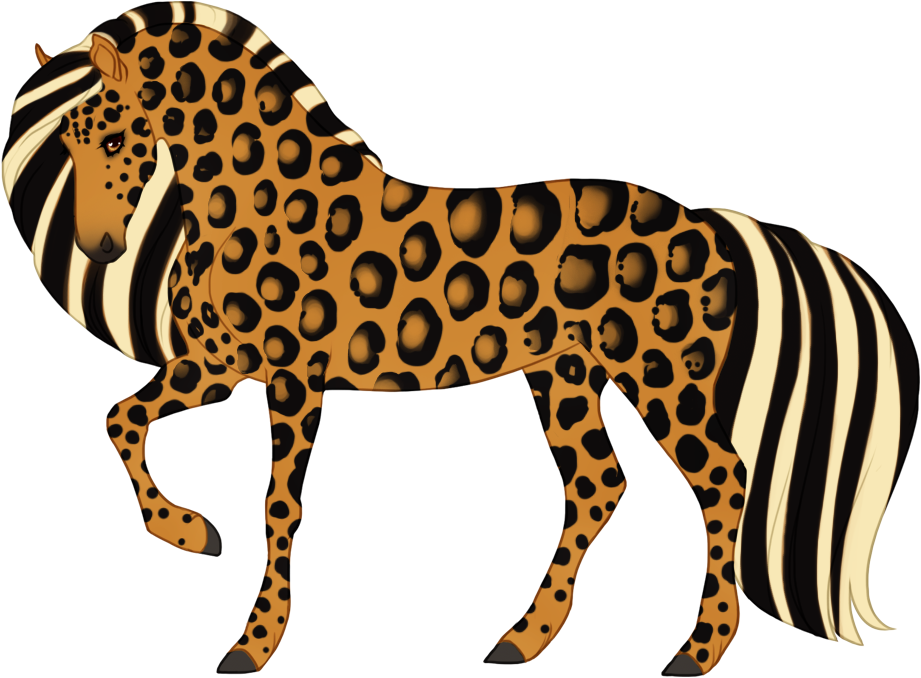
  • Can optionally affect mane and tail where it touches.
  • Can optionally have minimal striping on the face as long as the majority of Pard markings are spots.

Not allowed:

  • Can not cause stripes anywhere except on the face. The pattern should be clearly spotted.
  • Can not have face stripes unless spots are also present and clearly visible.

Eye colour:

Doesn't affect eye colour.

Skin colour:

Can optionally affect skin where it touches. Dark patterns should darken skin while light patterns should lighten skin.

Horn/hoof colour:

Can optionally affect horns/hooves where it touches. Dark patterns should darken them while light patterns should lighten them.

Examples

Dark spots with light accents and dark spot center

Dark spots with light accents and dark spot center

chestnut + Pard

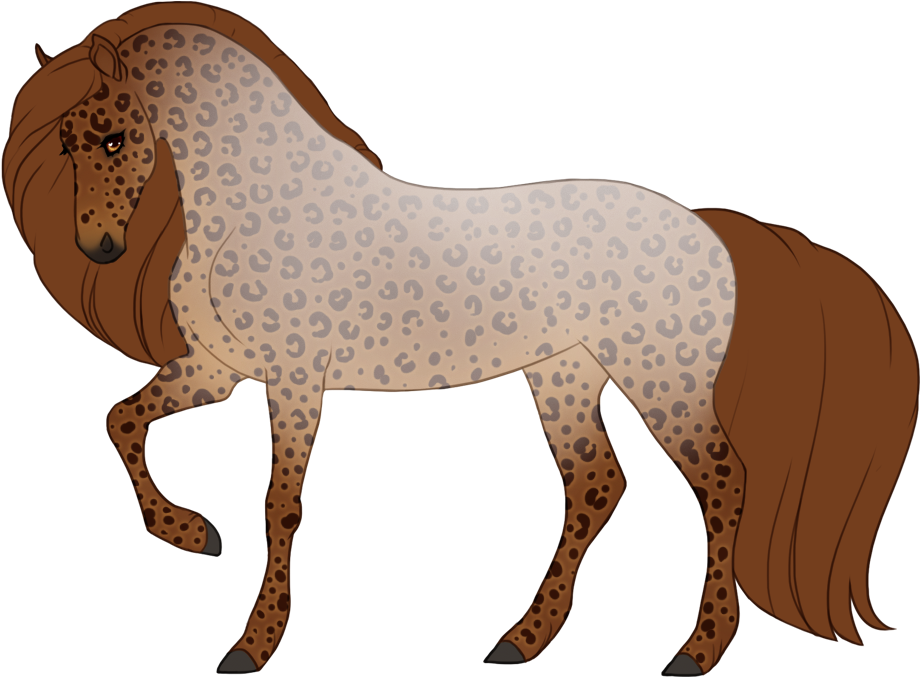
Dark spots with light spot center

Dark spots with light spot center

chestnut + Pard

Partial pard with plain spots

Partial pard with plain spots

chestnut + Pard

Cheetah spots, with face stripe

Cheetah spots, with face stripe

buckskin + Pard

Large rosette spots, affecting mane and tail

Large rosette spots, affecting mane and tail

palomino + Pard

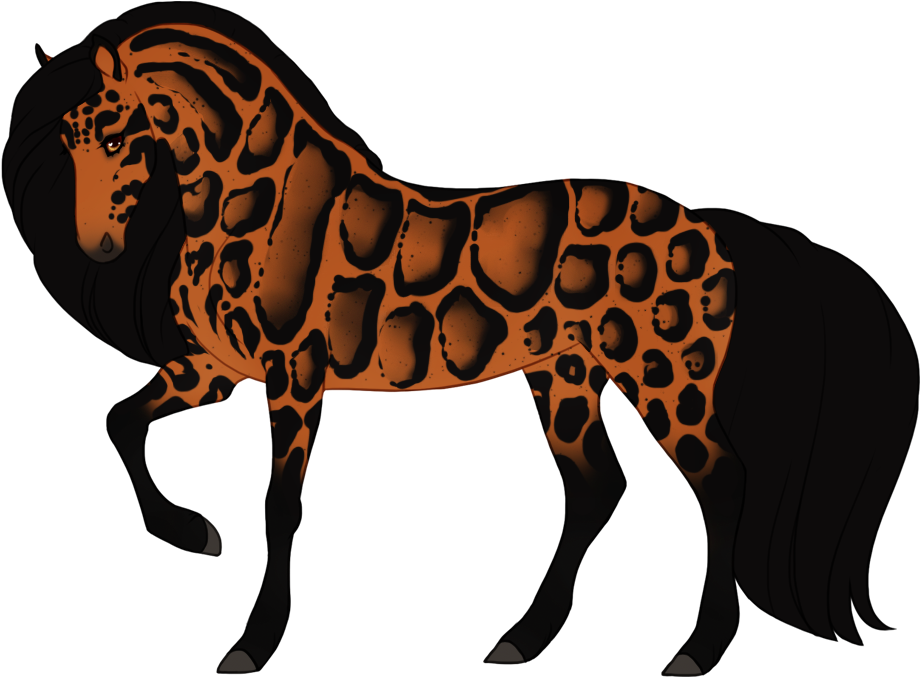
Clouded leopard rosettes, with some elongated or "broken" rosettes and face stripes

Clouded leopard rosettes, with some elongated or "broken" rosettes and face stripes

bay + Pard

Always goes below white patterns

Always goes below white patterns

chestnut + Pard + Roan

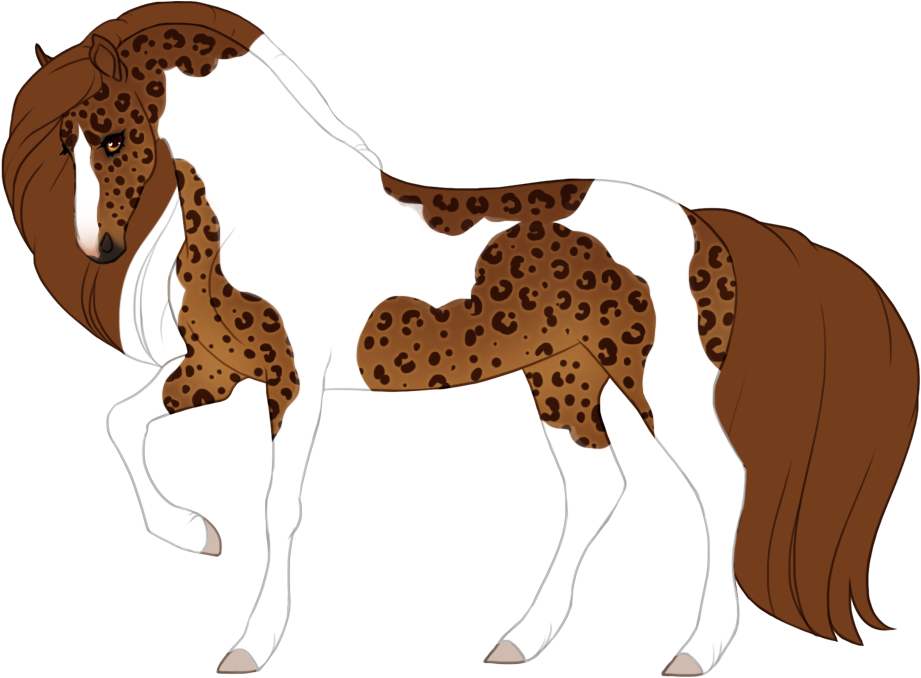
Always goes below white patterns

Always goes below white patterns

chestnut + Pard + Tobiano

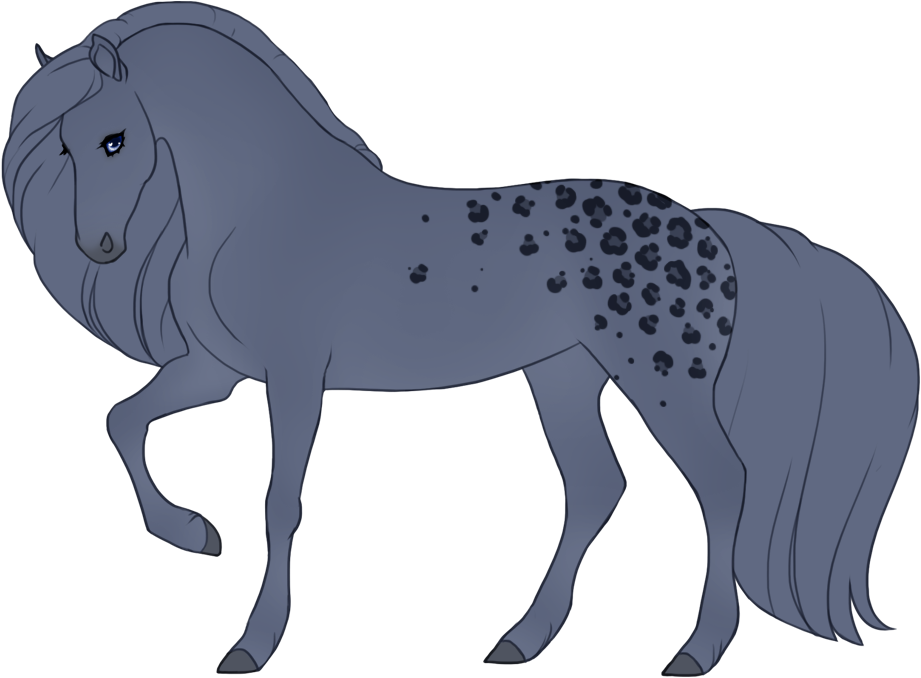
Rosettes and spots

Rosettes and spots

blue chestnut + Pard

Modifiers

  • Bronze turns patterns into a light and/or rich brown.
  • Flaxen turns patterns creamy white or lighter than the base coat. (only affects chestnut-based (ee) coats)
  • Silver turns patterns white or lighter than the base coat. (only affects black-based (EE or Ee) coats)
  • Chromatic can change the pattern's brightness and/or saturation.
  • Grey can leave the patterns unaffected (doesn't grey out), or leave the entire body unaffected and only the patterns grey out.

Mutations

  • Astral can cause the patterns to become starry/sparkly, in any colour.
  • Aurora can cause the patterns to glow in any colour.
  • Eclipse can cause the patterns to have an eclipsed outline/border.
  • Opulent can make the patterns appear metallic/shiny and a golden/silver/copper colour.
  • Primal can cause the patterns to be the same colour as their elemental alignment.

Shimmer

  • Shimmer can turn the pattern into any colour available on each shimmer's palette, depending on which shimmer is present.
Bronze pard

Bronze pard

bay + Pard + Bronze

Flaxen pard

Flaxen pard

chestnut + Pard + Flaxen

Silver pard

Silver pard

bay + Pard + Silver

Chromatic pard

Chromatic pard

chestnut + Pard + Chromatic

Grey pard

Grey pard

chestnut + Pard + Grey

Grey pard

Grey pard

chestnut + Pard + Grey


Partial interactions

If your Veilhorn has Modifiers, Mutations, or Shimmer that can alter the colour of patterns, the effects can be applied either fully or partially. See the list above for which traits can alter the colour of patterns.

The examples below show Flaxen (a modifier) interacting with Pard (a pattern) and Papilio (a pattern), but the principle applies to all patterns. These examples are not exhaustive, you can choose how much the pattern is affected.

modifier pattern interaction example

Flaxen not affecting Pard at all

modifier pattern interaction example

Flaxen fully affecting Pard

modifier pattern interaction example

Flaxen affecting some accents only

modifier pattern interaction example

Flaxen affecting the pattern but not the accents

modifier pattern interaction example

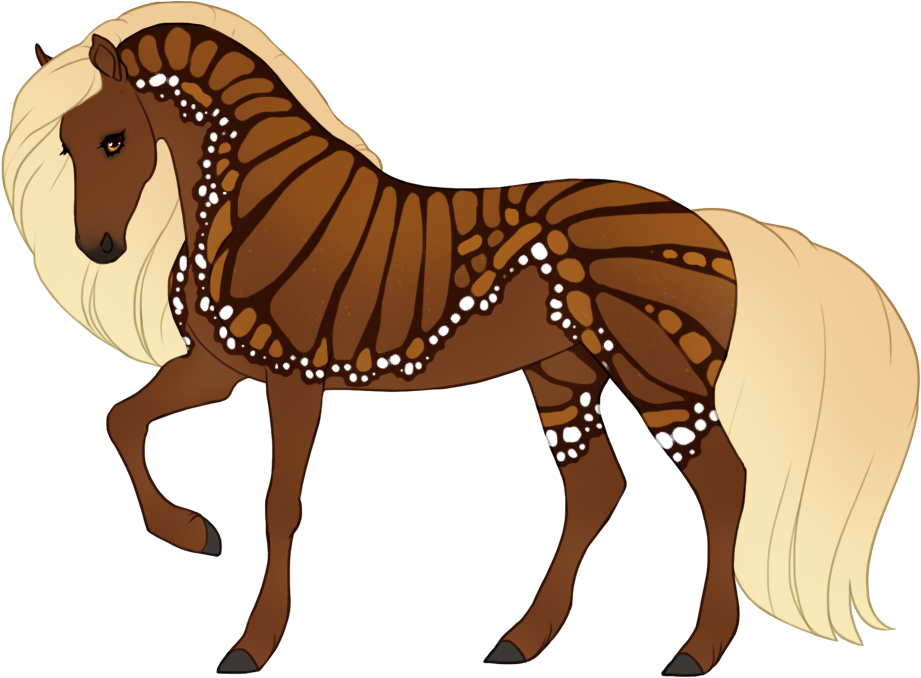
Flaxen not affecting Papilio at all

modifier pattern interaction example

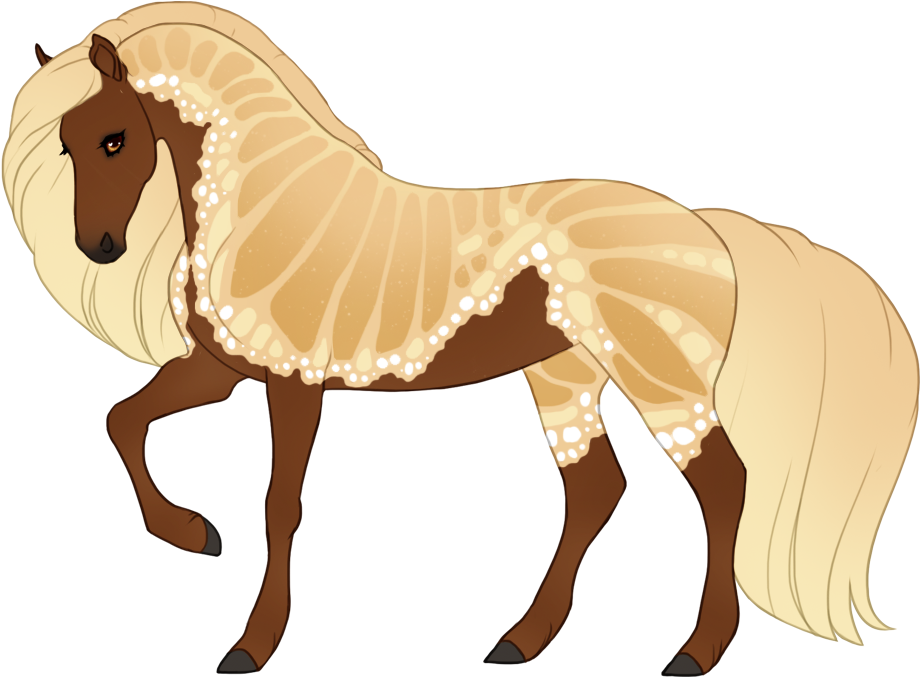
Flaxen fully affecting Papilio

modifier pattern interaction example

Flaxen affecting some accents only

modifier pattern interaction example

Flaxen affecting the pattern but not the accents